MOTS-c Levels and Sarcopenia Risk in Chronic Peritoneal Dialysis Patients: A Pilot Study
Mariateresa Zicarelli, Marta Greco, Stefanos Roumeliotis, Maria Elisa Lo Vasco, Francesco Dragone, Christodoula Kourtidou, Ioannis Alekos, Roberta Misiti, Daniela Patrizia Foti, Giuseppe Coppolino, Vassilios Liakopoulos, Evangelia Dounousi, Davide Bolignano

TL;DR
This pilot study explores the link between MOTS-c levels and sarcopenia risk in patients on chronic peritoneal dialysis.
Contribution
The study identifies MOTS-c as a potential biomarker for sarcopenia risk in peritoneal dialysis patients.
Findings
Patients with high sarcopenia risk had lower serum and higher dialysate MOTS-c levels.
sMOTS-c levels correlated with better muscle performance, while dMOTS-c levels showed the opposite.
MOTS-c, combined with physical assessments, shows diagnostic potential for identifying sarcopenia risk.
Abstract
Background and Objectives: Sarcopenia is exceedingly frequent in end-stage kidney disease (ESKD) patients on dialysis, including those undergoing peritoneal dialysis (PD), and is of multifactorial origin. MOTS-c is a mitochondrial-derived peptide that promotes muscle growth whose levels are unbalanced in ESKD. In this study, we evaluated MOTS-c balance and its relationship with sarcopenia risk in an ESKD-PD cohort. Materials and Methods: MOTS-c was measured in serum, urine, and dialysate samples of 32 chronic PD patients. Patients were thus screened for sarcopenia risk by the SARC-F tool, anthropometric measurements, and physical performance tests. Results: PD patients with a very high sarcopenia risk (SARC-F ≥ 2) had significantly lower serum (sMOTS-c) and higher dialysate (dMOTS-c) levels, suggesting an increased peritoneal clearance of this substance (d/s MOTS-c). sMOTS-c levels were…
Genes, proteins, chemicals, diseases, species, mutations and cell lines named across the full text — each resolved to its canonical identifier and authoritative record.
Click any figure to enlarge with its caption.
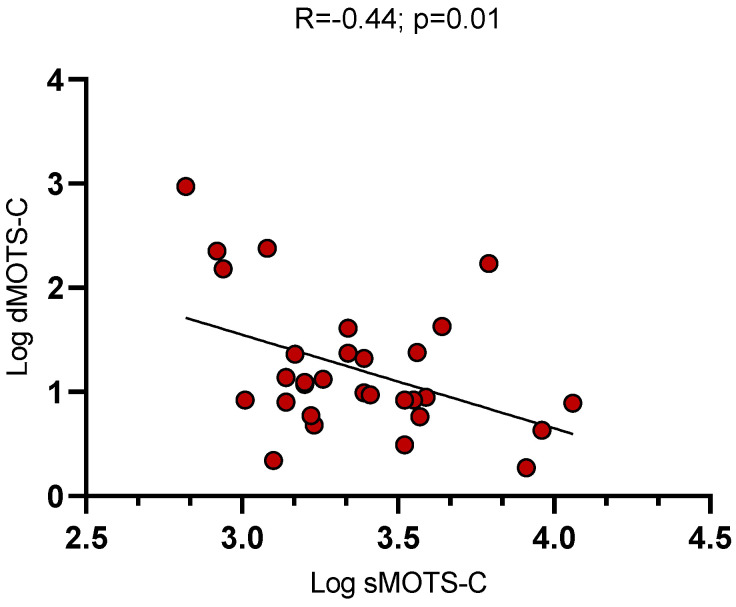 Figure 1
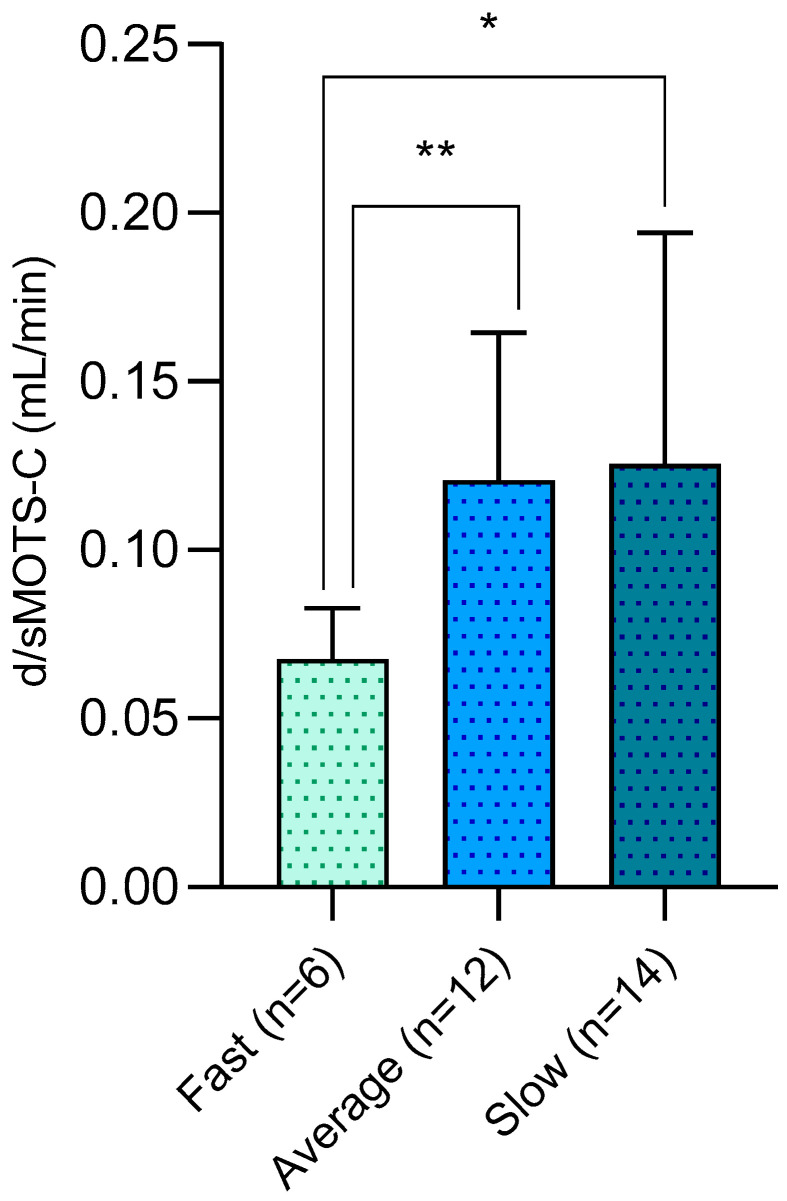 Figure 2
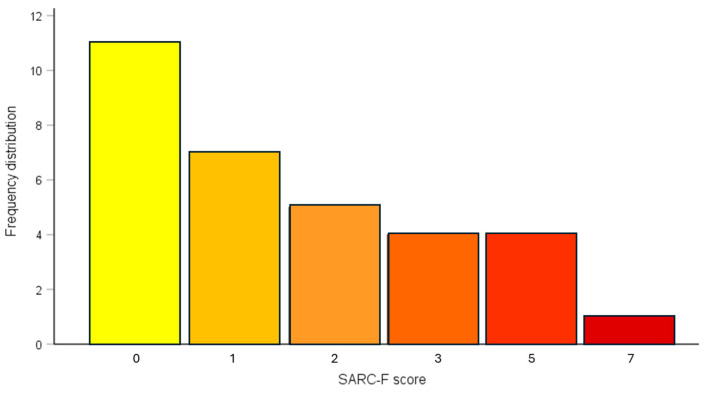 Figure 3
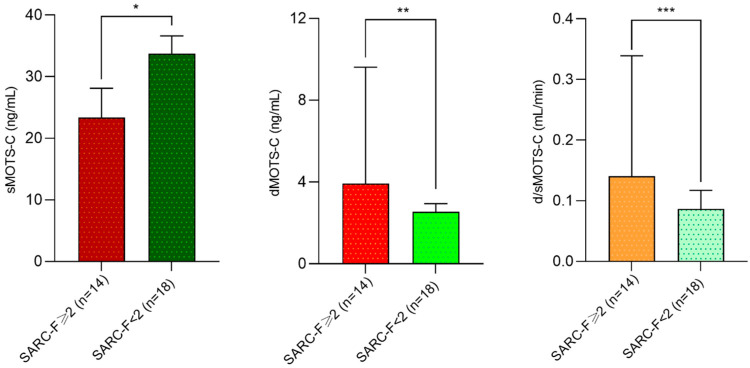 Figure 4
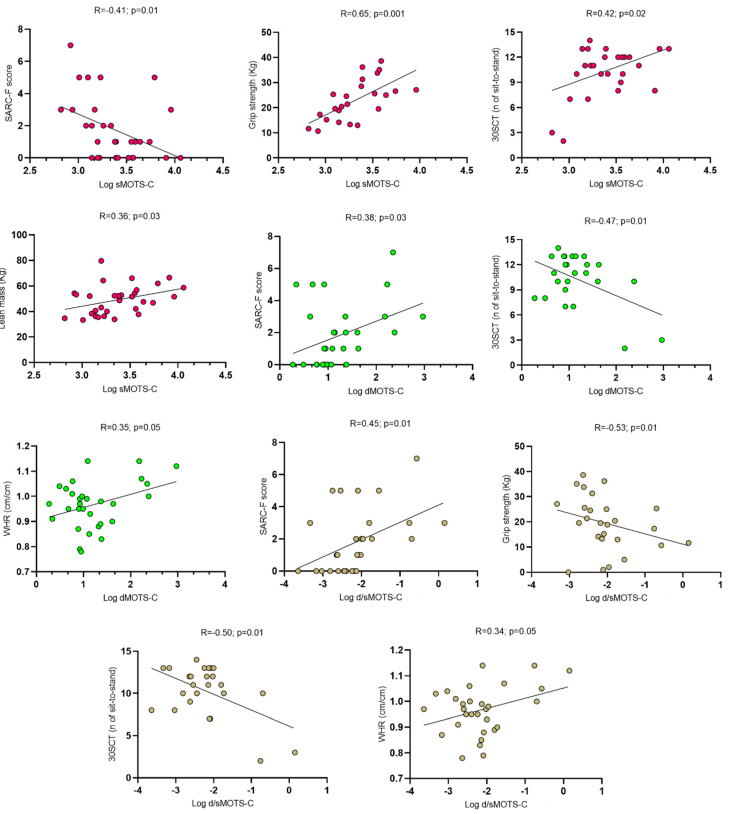 Figure 5
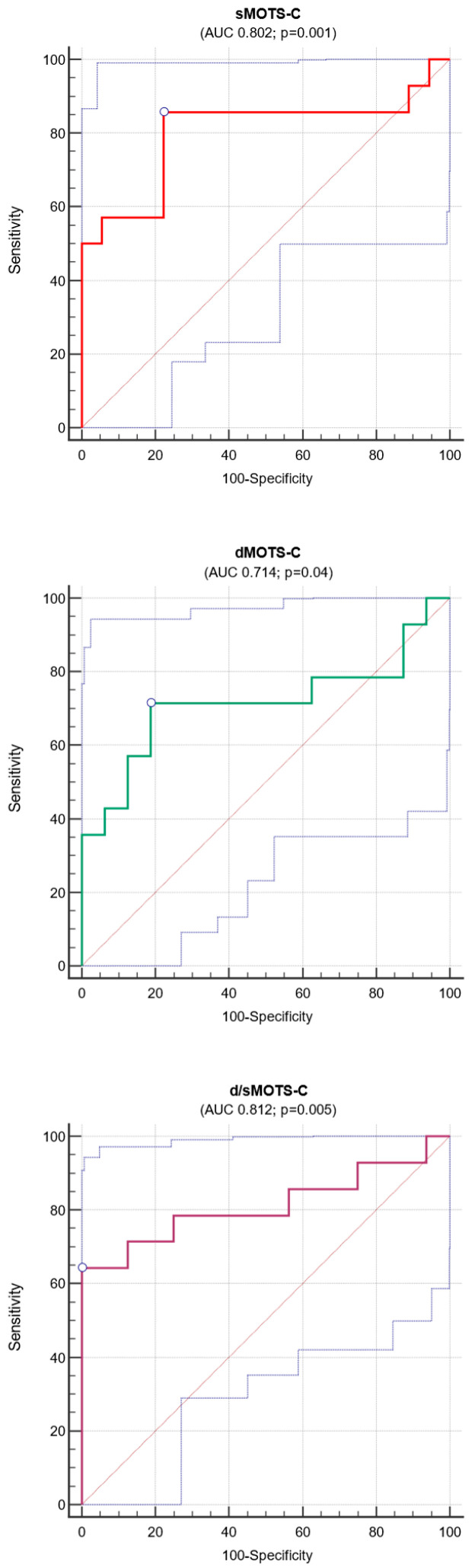 Figure 6
Peer Reviews
No public reviews on file for this paper yet. If you reviewed it on a platform where reviews are public (OpenReview, ICLR, NeurIPS, ICML), you can paste yours below so the community can read it here.
Videos
No videos yet. Explain this paper in a talk, walkthrough, or lecture? Add one.
Taxonomy
TopicsNutrition and Health in Aging · GDF15 and Related Biomarkers · Frailty in Older Adults