Comparison of Lower Limb Joint Reaction Forces in Patients with Cerebral Palsy and Typically Developing Individuals
Yasar Mahsut Dincel, Alina Nawab Kidwai, Kerim Atmaca, Nese Aral Sozener, Yunus Ziya Arslan

TL;DR
This study compares joint reaction forces in children with cerebral palsy and typically developing children to better understand movement differences and improve treatment planning.
Contribution
The study provides a detailed comparison of lower limb joint reaction forces in CP and TD children using simulation-based methods.
Findings
Hip joint reaction forces in CP children were lower in anterior-posterior and vertical components compared to TD children.
Knee joint reaction forces in CP children were higher across all anatomical axes compared to TD children.
Ankle joint reaction forces showed mixed differences, with lower anterior-posterior but higher vertical forces in CP children.
Abstract
Background and Objectives: Kinematic and kinetic data from gait analysis are commonly used for clinical decision making in cerebral palsy (CP). However, these data may not fully capture the underlying causes of movement pathologies or effectively monitor post-treatment changes. Joint reaction forces (JRFs), estimated through simulation-based methods, provide valuable insights into the functional state of musculoskeletal components. Despite their importance, comprehensive evaluations of lower limb JRFs in CP are limited, and comparisons with typically developing (TD) individuals remain underexplored. This study aimed to provide a detailed comparison of lower limb JRFs between children with CP exhibiting mild crouch gait and age-matched TD children during self-selected walking speeds. Materials and Methods: Open-access gait datasets from eight children with CP and eight TD children were…
Genes, proteins, chemicals, diseases, species, mutations and cell lines named across the full text — each resolved to its canonical identifier and authoritative record.
Click any figure to enlarge with its caption.
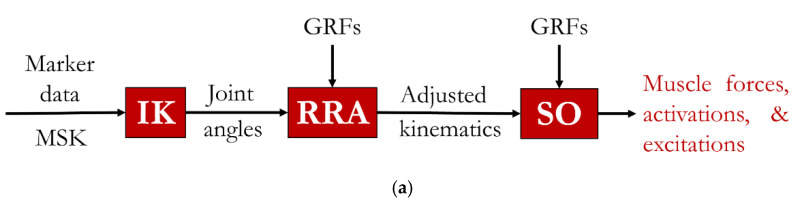 Figure 1
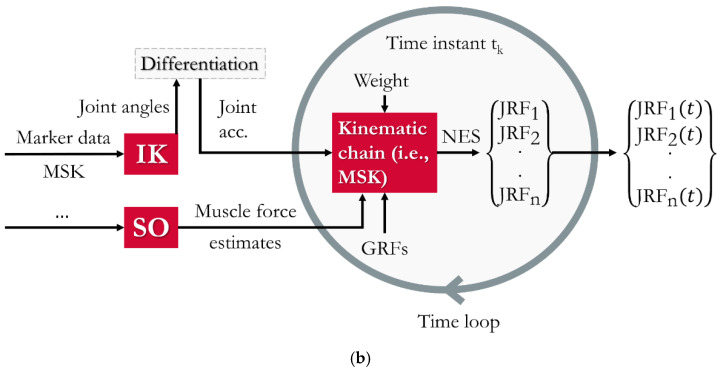 Figure 2
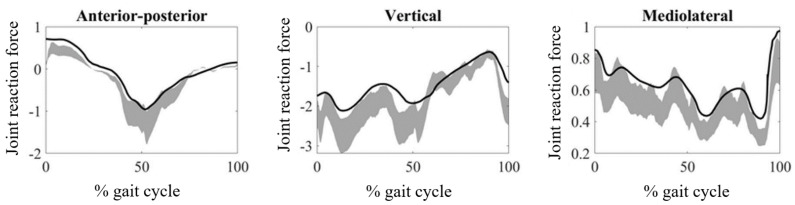 Figure 3
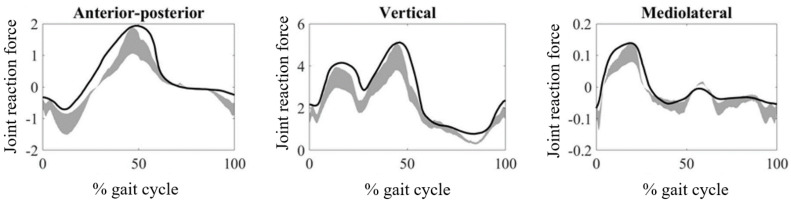 Figure 4
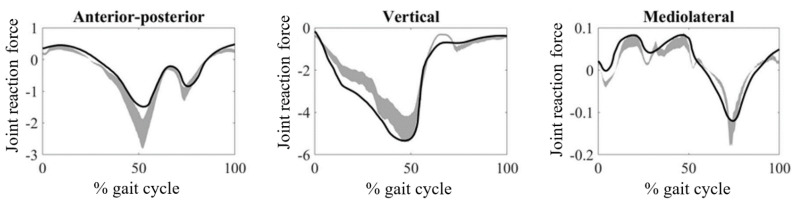 Figure 5
Peer Reviews
No public reviews on file for this paper yet. If you reviewed it on a platform where reviews are public (OpenReview, ICLR, NeurIPS, ICML), you can paste yours below so the community can read it here.
Videos
No videos yet. Explain this paper in a talk, walkthrough, or lecture? Add one.
Taxonomy
TopicsCerebral Palsy and Movement Disorders · Muscle activation and electromyography studies · Botulinum Toxin and Related Neurological Disorders