Modeling the Reaction Process for the Synthesis of Ethyl Chrysanthemate from Ethyl Diazoacetate in a Micro-Flow Platform
Dawei Xin, Yangcheng Lu

TL;DR
Researchers used a micro-flow platform to study and model the synthesis of ethyl chrysanthemate, a key chemical for pesticides, to improve reaction efficiency.
Contribution
The study introduces a micro-flow platform and a predictive kinetic model for the cyclopropanation reaction of ethyl diazoacetate.
Findings
A micro-flow platform was developed to study the cyclopropanation reaction of ethyl diazoacetate.
A kinetic model with good predictive capacity was established for a wide range of operating conditions.
The model can guide the optimization of reaction conditions for efficient ethyl chrysanthemate synthesis.
Abstract
Ethyl diazoacetate can react with 2,5-dimethyl-2,4-hexadiene to yield ethyl chrysanthemumate, an important raw material for synthesizing various pesticides. In conventional conditions, this cyclopropanation process suffers from low efficiency and yield due to ethyl diazoacetate. This demands more understanding of the catalytic process from the mechanism and modeling to find a solution. In this work, we set up a micro-flow platform to carefully study the kinetic characteristics of the cyclopropanation reaction of ethyl diazoacetate catalyzed by a complex of copper stearate and phenylhydrazine. Through a reasonable simplification of the reaction network, we established a reaction kinetic model with good prediction capacity within a wide range of operating conditions. It provides a basis for guiding the development of efficient conversion processes and condition optimization.
Genes, proteins, chemicals, diseases, species, mutations and cell lines named across the full text — each resolved to its canonical identifier and authoritative record.
Click any figure to enlarge with its caption.
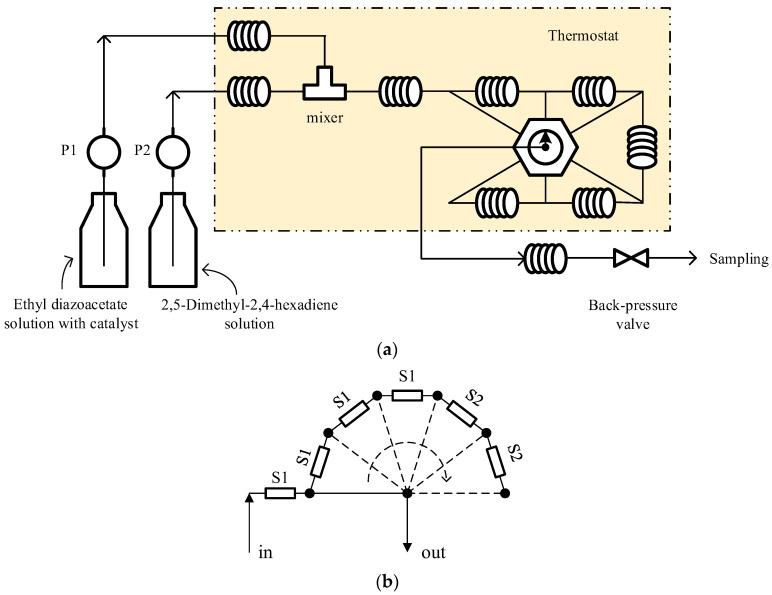 Figure 1
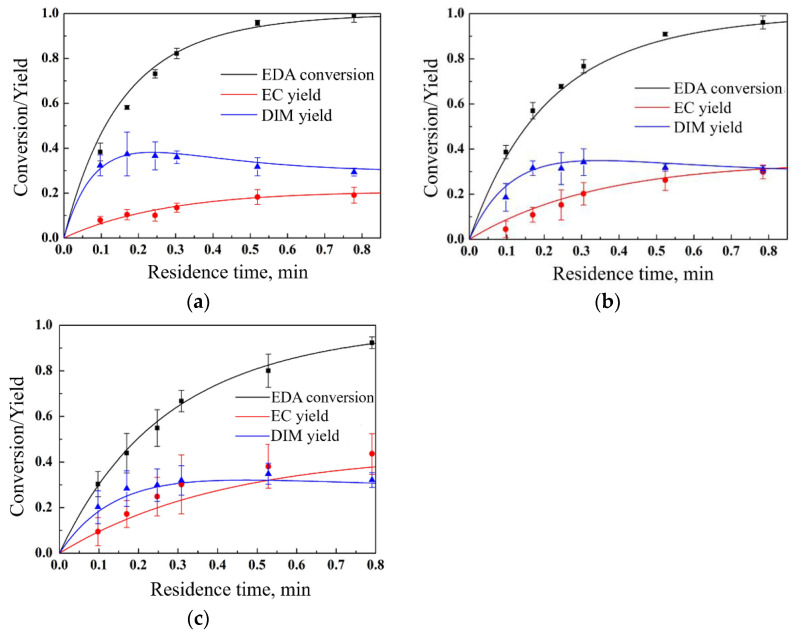 Figure 2
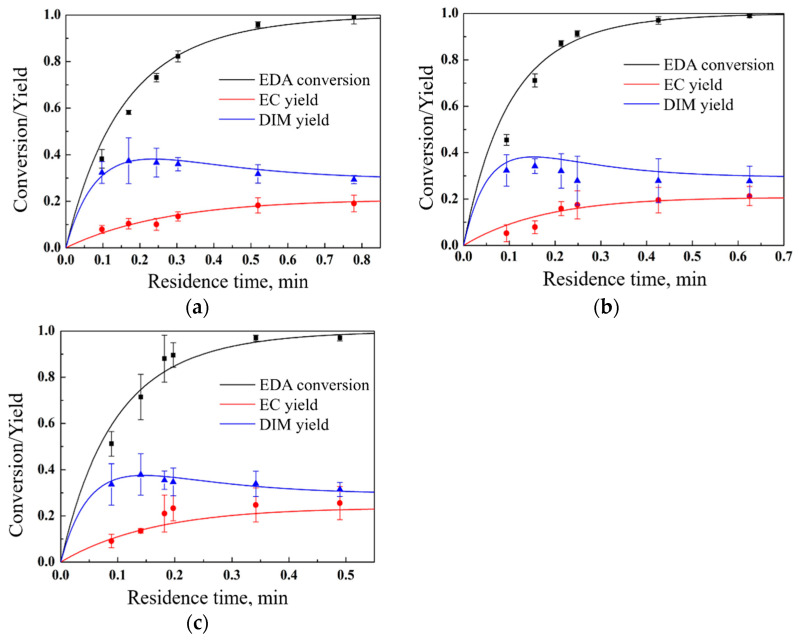 Figure 3
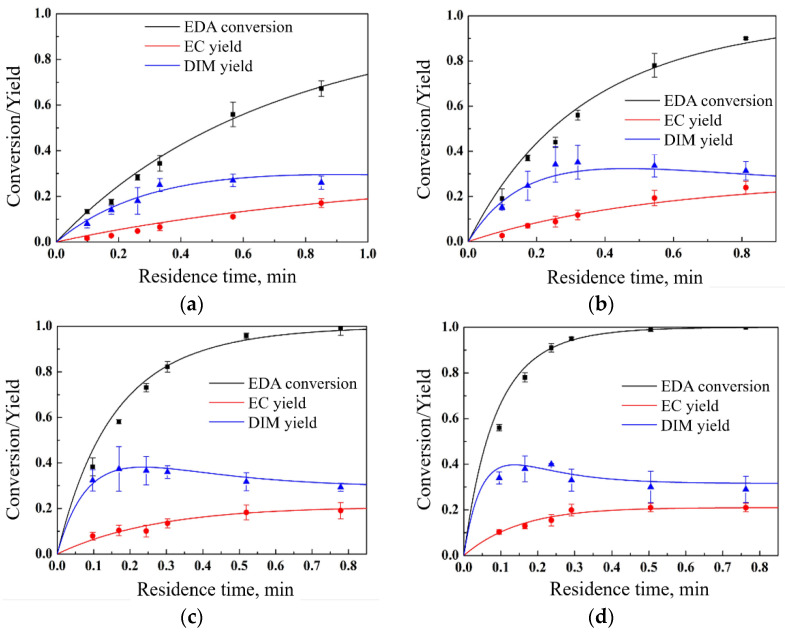 Figure 4
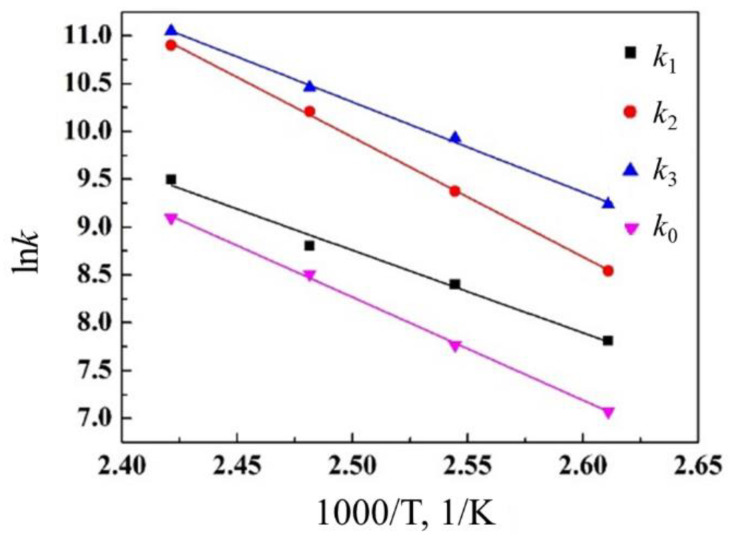 Figure 5
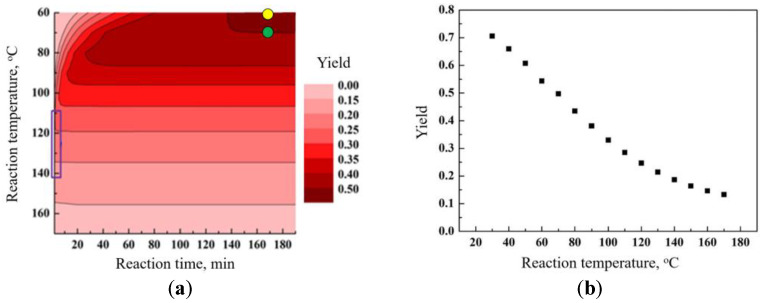 Figure 6
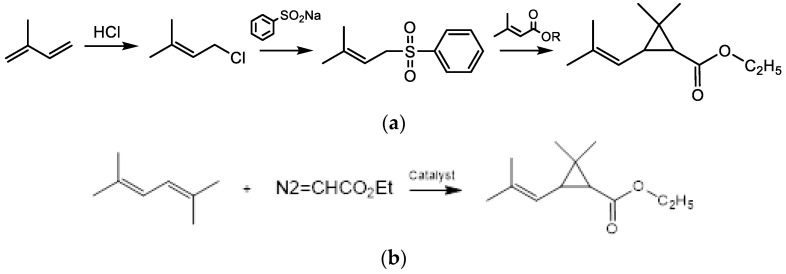 Figure 7
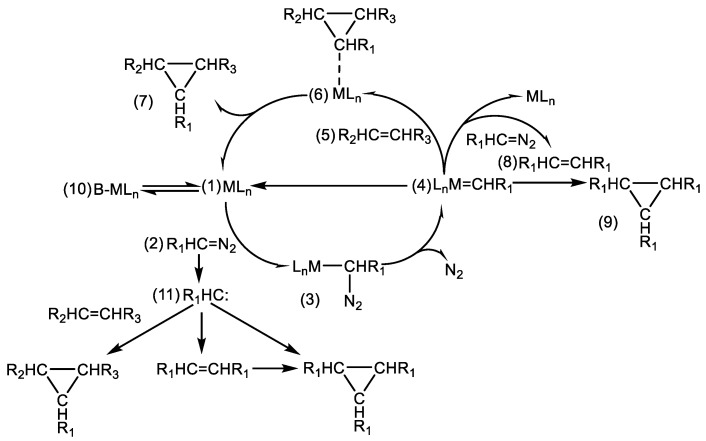 Figure 8
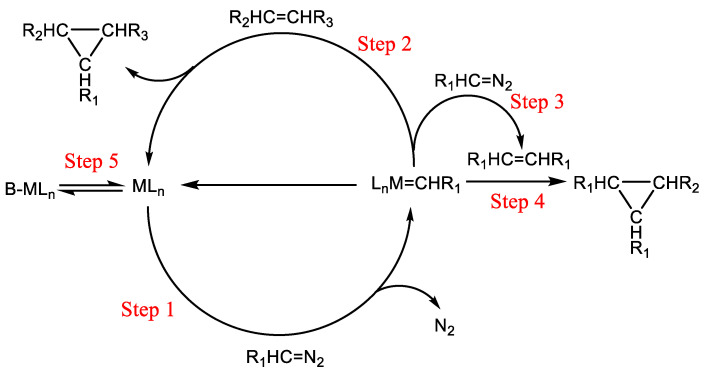 Figure 9
Peer Reviews
No public reviews on file for this paper yet. If you reviewed it on a platform where reviews are public (OpenReview, ICLR, NeurIPS, ICML), you can paste yours below so the community can read it here.
Videos
No videos yet. Explain this paper in a talk, walkthrough, or lecture? Add one.
Taxonomy
TopicsInnovative Microfluidic and Catalytic Techniques Innovation · Green IT and Sustainability