Baseline Characteristics Associated with Improved Outcomes in Patients Undergoing Primary Decompressive Craniectomy for Acute Subdural Hematoma Evacuation—A Retrospective Observational Study
Rimantas Vilcinis, Raimondas Juskys, Lukas Piliponis, Arimantas Tamasauskas

TL;DR
The study finds that younger patients with specific preoperative characteristics may benefit more from a specific surgical procedure after subdural hematoma removal.
Contribution
Identifies specific baseline characteristics predicting improved outcomes after primary decompressive craniectomy for subdural hematoma.
Findings
Younger age is significantly associated with better outcomes after primary decompressive craniectomy.
Higher cisternal effacement score and lower GCS are linked to worse outcomes in these patients.
Patients with specific preoperative metrics may benefit more from primary decompressive craniectomy.
Abstract
Background and Objective: The study’s aim is to identify a subgroup of patients who would benefit from primary decompressive craniectomy (pDC) after acute subdural hematoma (aSDH) evacuation. Materials and Methods: A retrospective analysis of 290 patients undergoing aSDH evacuation between 2016 and 2021 was conducted. Osteoplastic craniotomy (OC) was performed in 213 cases (73.4%), whereas 77 individuals underwent pDC. Preoperative characteristics, such as age, initial GCS score, hematoma thickness, midline shift, and cisternal effacement score (CES), were used to predict outcome at discharge by the Glasgow Outcome Scale (GOS). Results: Older age, lower initial GCS, and higher CES preoperatively were independently associated with lower GOS scores at discharge. Age and degree of cisternal compression remained significant predictors of GOS score in the pDC subgroup. Survivors who…
Genes, proteins, chemicals, diseases, species, mutations and cell lines named across the full text — each resolved to its canonical identifier and authoritative record.
Click any figure to enlarge with its caption.
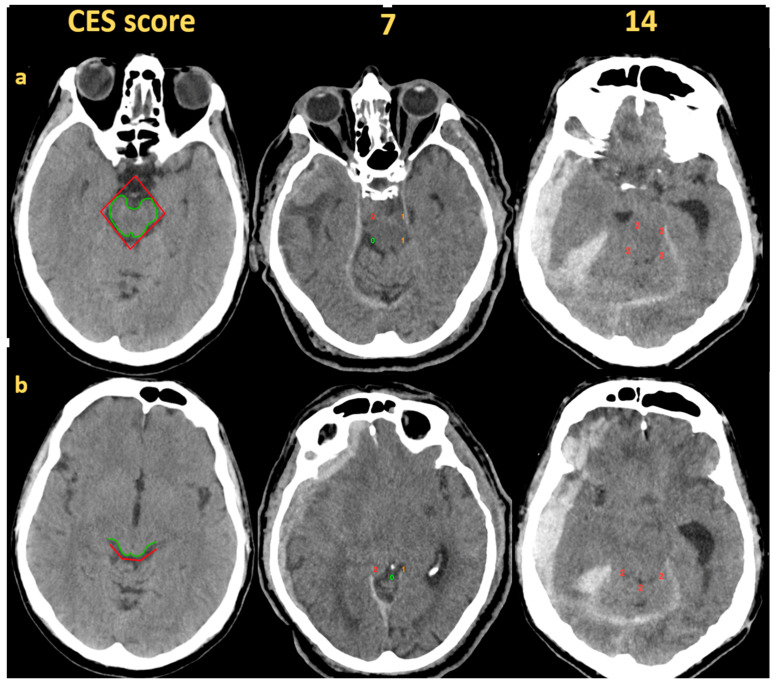 Figure 1
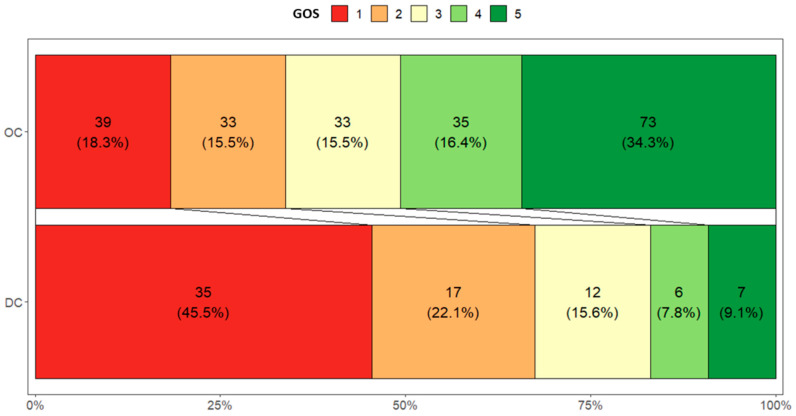 Figure 2
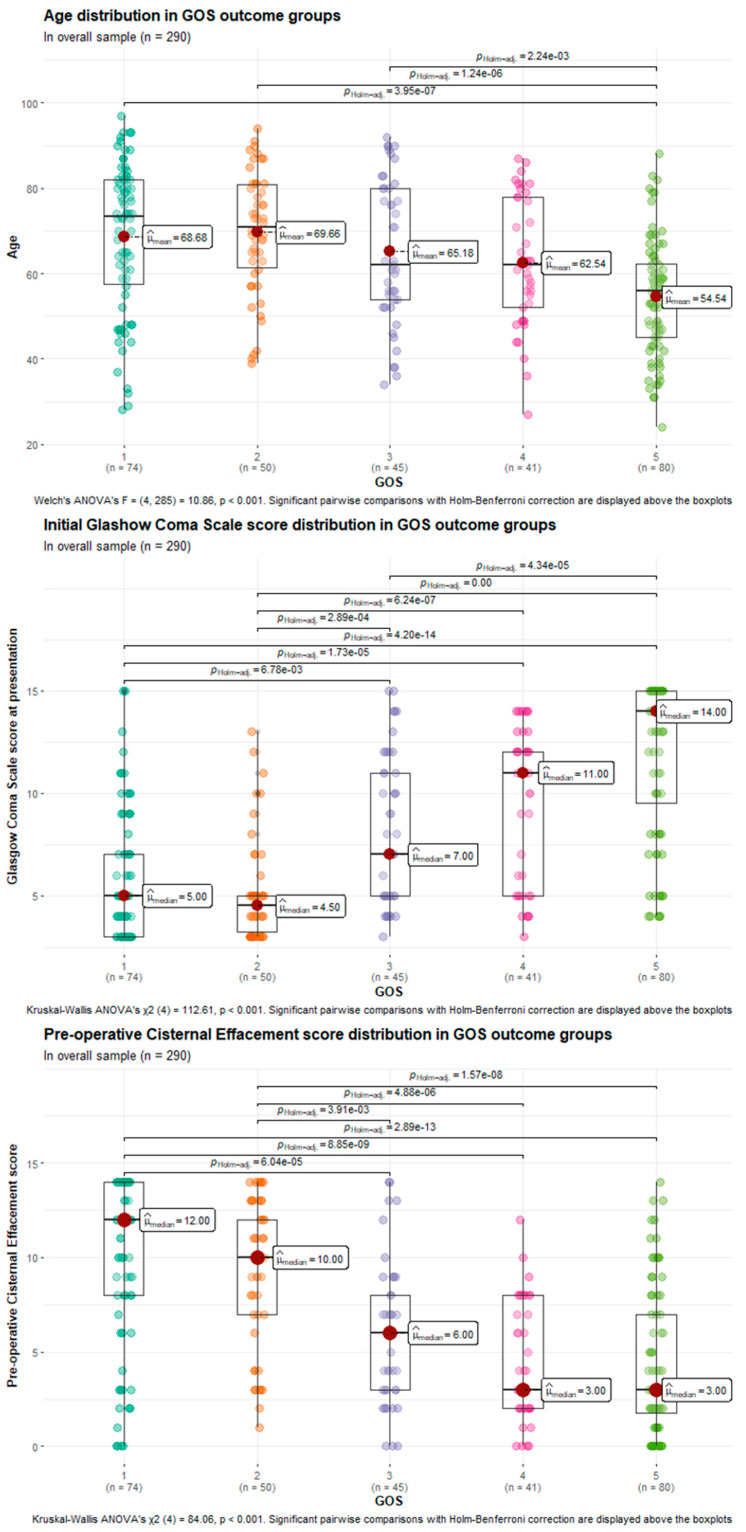 Figure 3
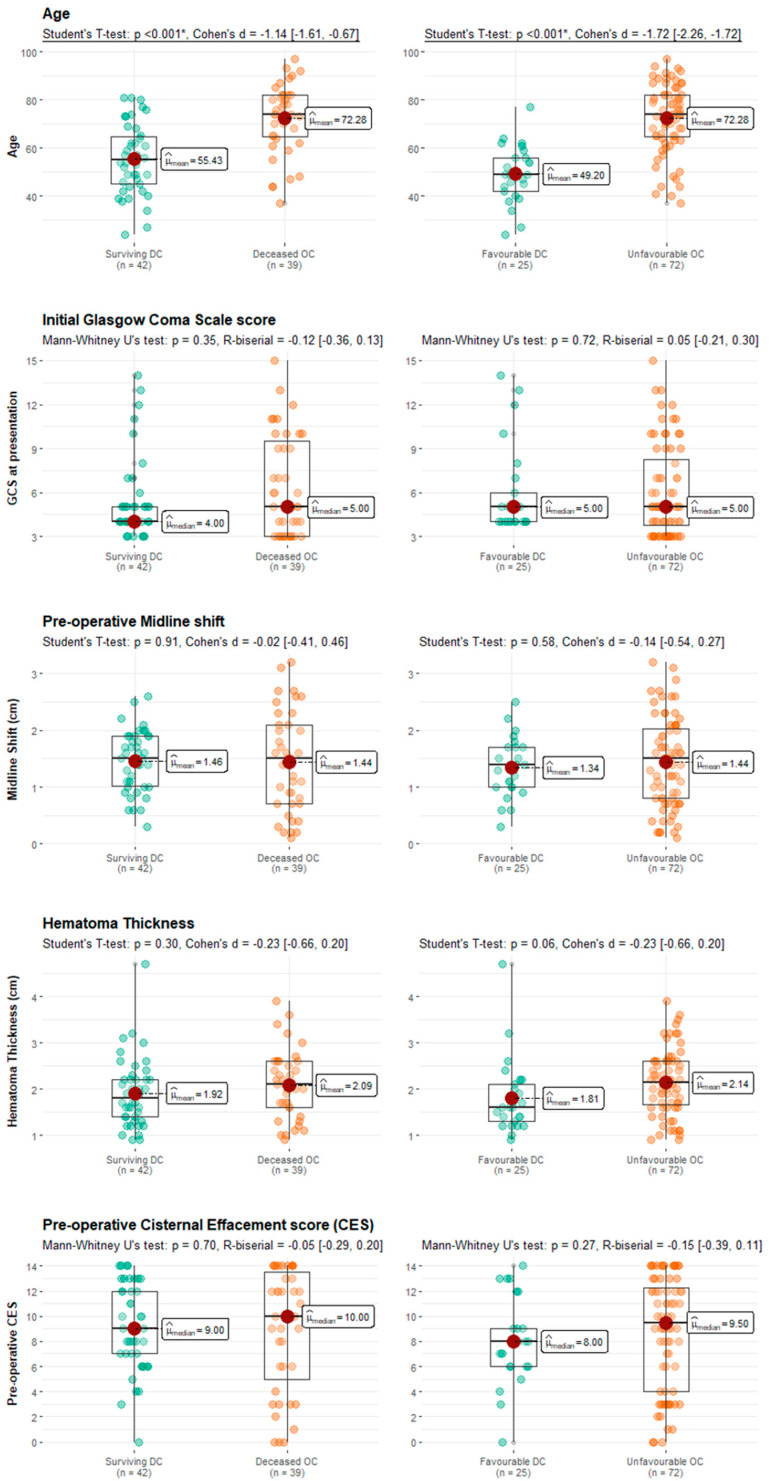 Figure 4
Peer Reviews
No public reviews on file for this paper yet. If you reviewed it on a platform where reviews are public (OpenReview, ICLR, NeurIPS, ICML), you can paste yours below so the community can read it here.
Videos
No videos yet. Explain this paper in a talk, walkthrough, or lecture? Add one.
Taxonomy
TopicsTraumatic Brain Injury and Neurovascular Disturbances · Neurosurgical Procedures and Complications · Cardiac Arrest and Resuscitation