Investigation of the Acute Effects of Two Different Preoxygenation Methods on Neurodegenerative Biomarkers in Laparoscopic Cholecystectomy Surgery
Veli Fahri Pehlivan, Basak Pehlivan, Hakim Celik, Erdogan Duran, Abdullah Taskın, Seyhan Taskın, Faik Tatlı

TL;DR
This study compares two preoxygenation methods during surgery and finds that one causes more stress on brain cells and increases neurodegenerative markers.
Contribution
The study reveals that standard preoxygenation with 100% FiO2 increases neurodegenerative biomarkers compared to a rapid method.
Findings
Standard preoxygenation (100% FiO2) significantly increased pTau, S100B, NSE, and GFAP levels, indicating neuronal and glial stress.
Rapid preoxygenation (eight deep breaths) showed lower levels of acute neurotoxicity and oxidative stress.
Hemodynamic stress was higher in the standard preoxygenation group during and after the procedure.
Abstract
Background and Objectives: Oxygen is essential for all living organisms and plays a critical role in anesthesia and intensive care practices. However, the notion that unlimited oxygen therapy is harmless is a misconception. Our study investigates the acute effects of different preoxygenation methods on hemodynamic parameters and neurodegenerative biomarkers in patients undergoing laparoscopic cholecystectomy surgery. Materials and Methods: This prospective, randomized, controlled study included 52 patients undergoing elective laparoscopic cholecystectomy under general anesthesia. Patients were divided into two groups: Group I received standard preoxygenation (100% FiO2 for 3 min), while Group II underwent rapid preoxygenation (eight deep breaths over 30 s to 1 min). Hemodynamic parameters (SAP, DAP, MAP, and SpO2) and neurodegenerative biomarkers (pTau, S100B, NSE, NfL, GFAP) were…
Genes, proteins, chemicals, diseases, species, mutations and cell lines named across the full text — each resolved to its canonical identifier and authoritative record.
Click any figure to enlarge with its caption.
 Figure 1
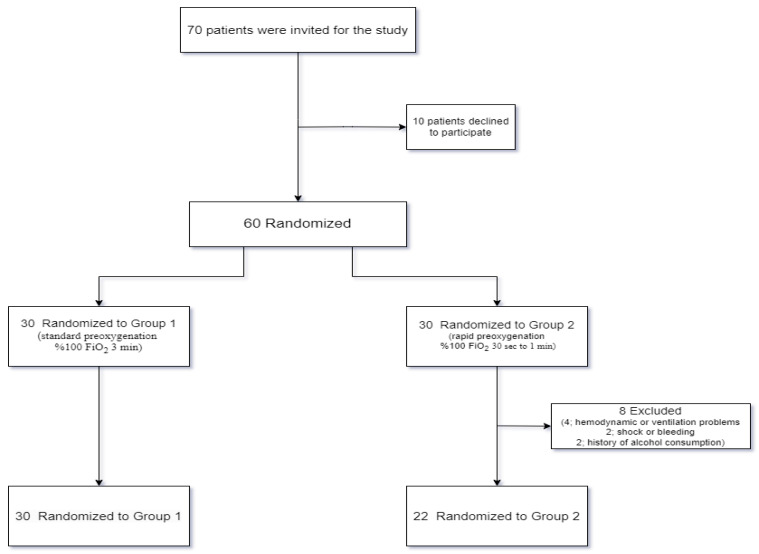 Figure 2
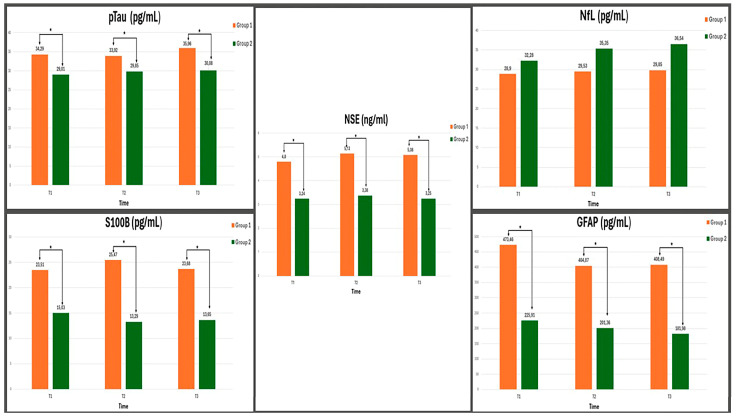 Figure 3
Peer Reviews
No public reviews on file for this paper yet. If you reviewed it on a platform where reviews are public (OpenReview, ICLR, NeurIPS, ICML), you can paste yours below so the community can read it here.
Videos
No videos yet. Explain this paper in a talk, walkthrough, or lecture? Add one.
Taxonomy
TopicsCardiac, Anesthesia and Surgical Outcomes · Anesthesia and Neurotoxicity Research · Anesthesia and Pain Management