Chronic Post-Traumatic Aortic Isthmus Pseudoaneurysm After Conservative Management of Grade II Injury: Why Is Continuous Follow-Up Mandatory?
Simona Sica, Giovanni Tinelli, Ottavia Borghese, Manav Dimri, May Dvir, Fabrizio Minelli, Antonio Rizza, Piergiorgio Bruno, Massimo Massetti, Yamume Tshomba

TL;DR
This paper highlights the need for long-term monitoring of patients with conservatively treated aortic injuries, as pseudoaneurysms can develop years later.
Contribution
The study emphasizes the importance of continuous follow-up for chronic complications in conservatively managed blunt traumatic aortic injuries.
Findings
Chronic pseudoaneurysms can develop up to 50 years after conservatively managed aortic injuries.
32.4% of cases were asymptomatic or incidentally diagnosed through routine imaging.
Successful hybrid procedures were performed in the reported cases with no complications at follow-up.
Abstract
Background: Grade I-II blunt traumatic aortic injuries (BTAIs) are typically managed conservatively, but their long-term progression is poorly understood. Chronic pseudoaneurysms may develop years after the injury, often remaining asymptomatic and being incidentally diagnosed. Methods: Two cases of post-traumatic aortic pseudoaneurysms, detected 20 and 25 years following conservatively managed BTAIs, are reported. Additionally, a comprehensive review of all post-traumatic pseudoaneurysms reported in the MedLine (PubMed.gov, U.S. National Library of Medicine, National Institute of Health) database between January 1984 and December 2024 was performed. Results: Both our patients underwent successful hybrid procedures, with no complications at the 1- and 4-year follow-ups. Our literature review identified 37 patients across 22 studies, with 32.4% presenting asymptomatically or incidentally…
Genes, proteins, chemicals, diseases, species, mutations and cell lines named across the full text — each resolved to its canonical identifier and authoritative record.
Click any figure to enlarge with its caption.
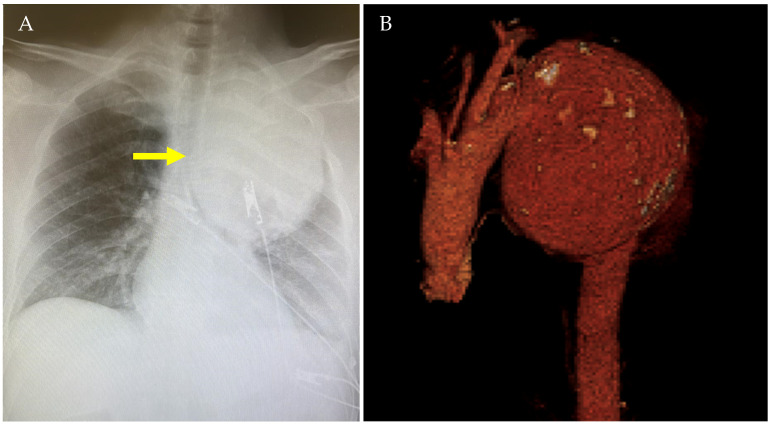 Figure 1
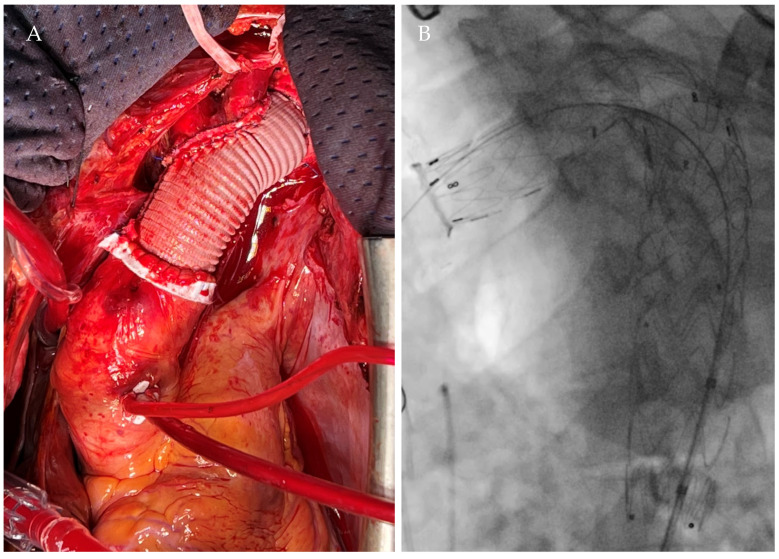 Figure 2
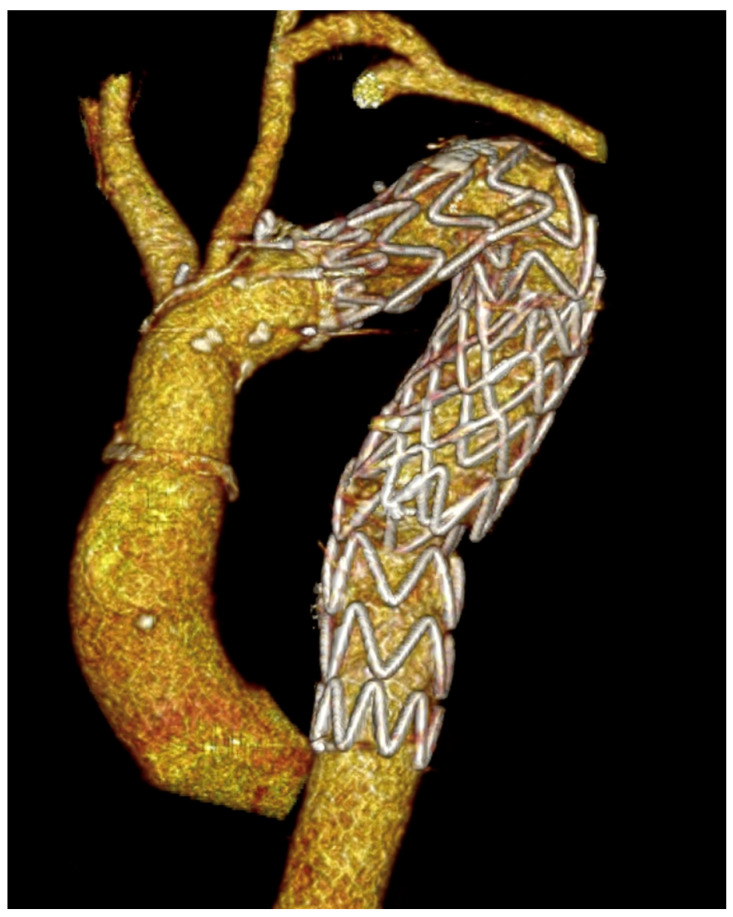 Figure 3
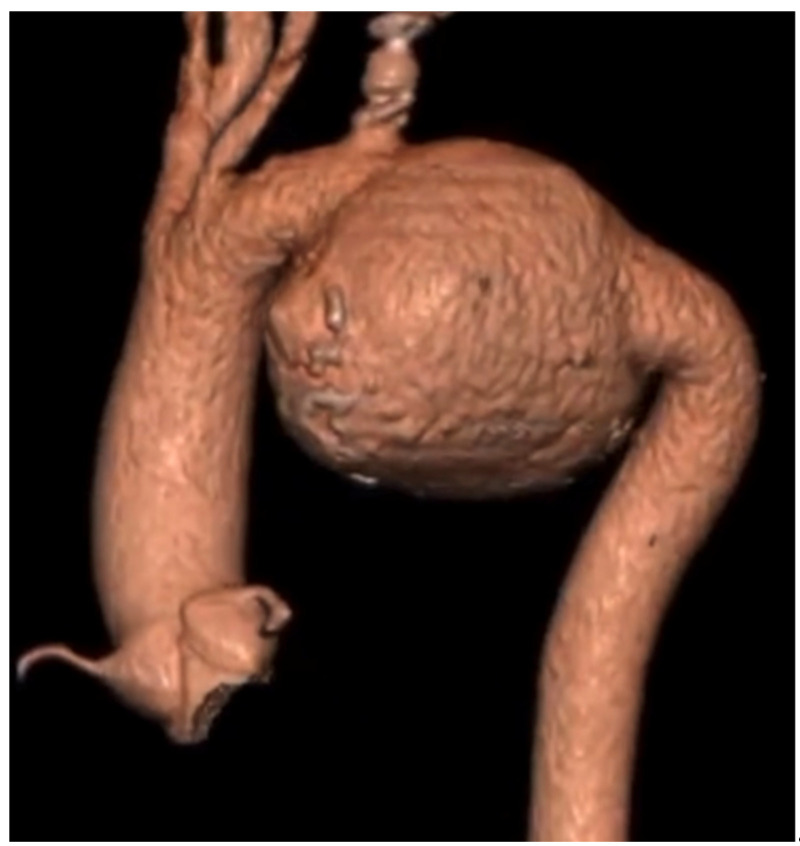 Figure 4
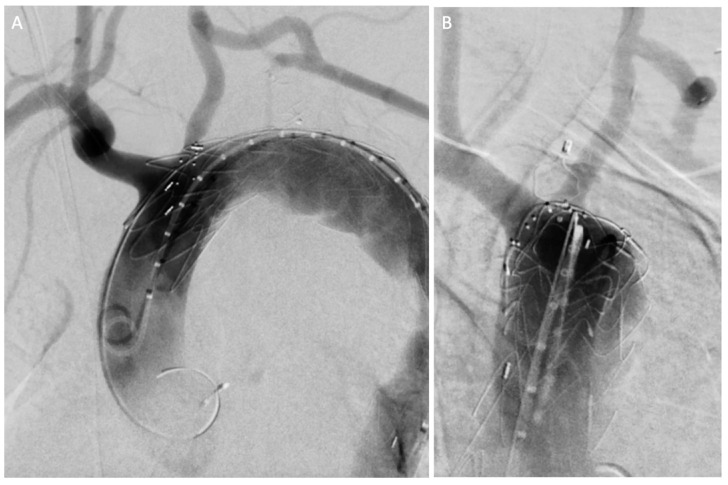 Figure 5
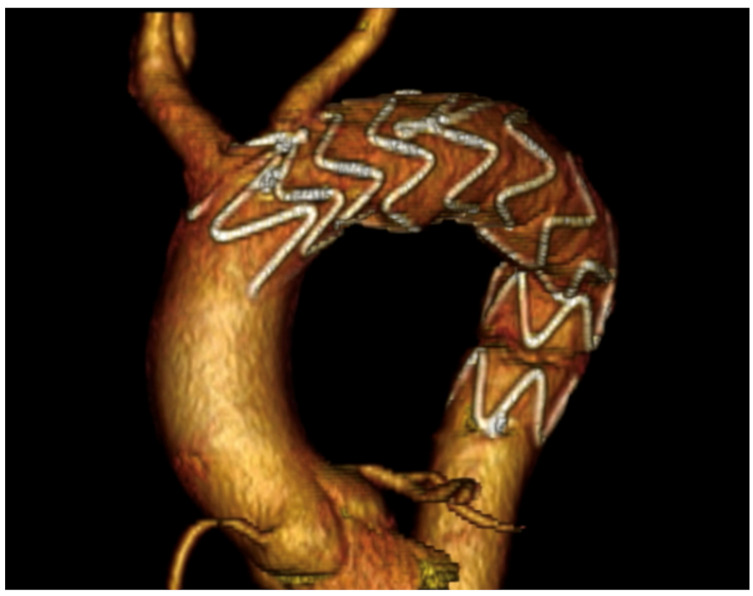 Figure 6
Peer Reviews
No public reviews on file for this paper yet. If you reviewed it on a platform where reviews are public (OpenReview, ICLR, NeurIPS, ICML), you can paste yours below so the community can read it here.
Videos
No videos yet. Explain this paper in a talk, walkthrough, or lecture? Add one.
Taxonomy
TopicsAortic Disease and Treatment Approaches · Trauma Management and Diagnosis · Aortic aneurysm repair treatments