Acquired Deforming Hypertonia in Afro-Caribbeans: A Cross-Sectional Analysis in Long-Term Care Units
Nicolas Kerjean, Rishika Banydeen, Bertrand Glize, Michel Bonnet, Patrick Rene-Corail, Maturín Tabue Teguo, Moustapha Dramé, Patrick Dehail, Jose-Luis Barnay

TL;DR
This study finds a high prevalence of acquired deforming hypertonia in elderly Afro-Caribbean residents of long-term care units in Martinique, highlighting the need for better recognition and care protocols.
Contribution
The paper reports the first study on ADH in the Caribbean population, revealing a significantly higher prevalence compared to Caucasian populations.
Findings
ADH prevalence in the Caribbean population was 77.8%, much higher than the 25.6% reported in French Caucasians.
ADH was often bilateral or multiple and caused significant functional and health issues.
High dependence levels were strongly associated with ADH presence.
Abstract
Background: Osteoarticular deformities or contractures in institutionalized elderly individuals, described as acquired deforming hypertonia (ADH), have a multifactorial origin. The reported prevalence of ADH in French Caucasian patients in long-term care units (LTCUs) is 25.6%. To date, ADH in the Caribbean population has never been studied. We aimed to assess the prevalence and characteristics of ADH in such a population. Materials and Methods: This was a cross-sectional observational study of a French Caribbean population in Martinique in which patients aged 75 years or older were institutionalized in LTCUs during the study period. Data extraction from the medical files of eligible LTCU patients was conducted to assess the prevalence, clinical characteristics, and impact of ADH on patients’ daily care. The assessments were performed collaboratively between the patients’ geriatric team…
Genes, proteins, chemicals, diseases, species, mutations and cell lines named across the full text — each resolved to its canonical identifier and authoritative record.
Click any figure to enlarge with its caption.
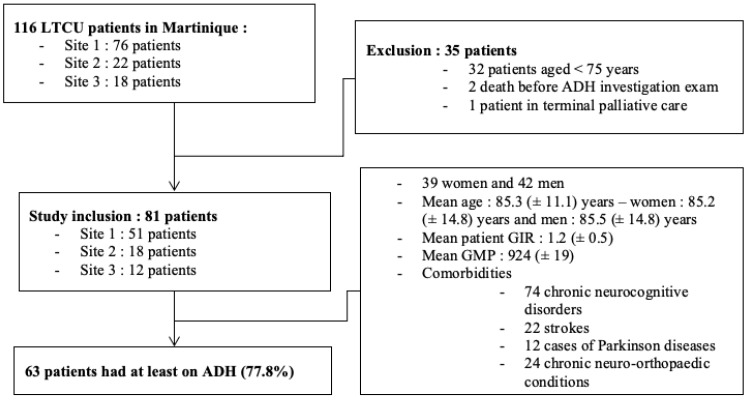 Figure 1
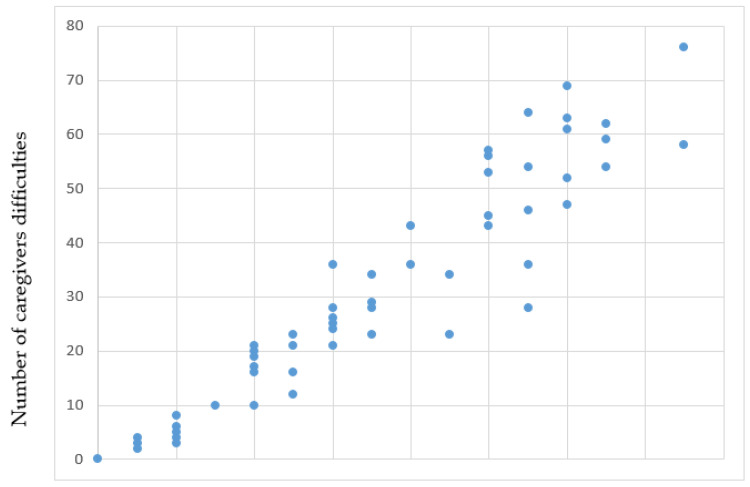 Figure 2
Peer Reviews
No public reviews on file for this paper yet. If you reviewed it on a platform where reviews are public (OpenReview, ICLR, NeurIPS, ICML), you can paste yours below so the community can read it here.
Videos
No videos yet. Explain this paper in a talk, walkthrough, or lecture? Add one.
Taxonomy
TopicsFrailty in Older Adults · Health disparities and outcomes · Global Public Health Policies and Epidemiology