Acute Kidney Injury in Patients After Cardiac Arrest: Effects of Targeted Temperature Management
Silvia De Rosa, Sergio Lassola, Federico Visconti, Massimo De Cal, Lucia Cattin, Veronica Rizzello, Antonella Lampariello, Marina Zannato, Vinicio Danzi, Stefano Marcante

TL;DR
This study examines how different temperature management strategies after cardiac arrest affect the risk of acute kidney injury and finds that rewarming is a critical period for kidney vulnerability.
Contribution
The study introduces the use of urinary biomarkers to assess AKI risk and highlights the importance of tailored temperature protocols in post-cardiac arrest care.
Findings
AKI incidence was 31% at 72 hours, with higher rates in the No TTM group at 24 hours.
Rewarming was identified as a critical phase for kidney vulnerability, with elevated serum creatinine in the TH group.
Urinary biomarkers showed moderate tubular stress in TTM and No TTM groups.
Abstract
Background: Cardiac arrest (CA) is a leading cause of mortality and morbidity, with survivors often developing post-cardiac arrest syndrome (PCAS), characterized by systemic inflammation, ischemia–reperfusion injury (IRI), and multiorgan dysfunction. Acute kidney injury (AKI), a frequent complication, is associated with increased mortality and prolonged intensive care unit (ICU) stays. This study evaluates AKI incidence and progression in cardiac arrest patients managed with different temperature protocols and explores urinary biomarkers’ predictive value for AKI risk. Methods: A prospective, single-center observational study was conducted, including patients with Return of Spontaneous Circulation (ROSC) post-cardiac arrest. Patients were stratified into three groups: therapeutic hypothermia (TH) at 33 °C, Targeted Temperature Management (TTM) at 35 °C, and no temperature management (No…
Genes, proteins, chemicals, diseases, species, mutations and cell lines named across the full text — each resolved to its canonical identifier and authoritative record.
Click any figure to enlarge with its caption.
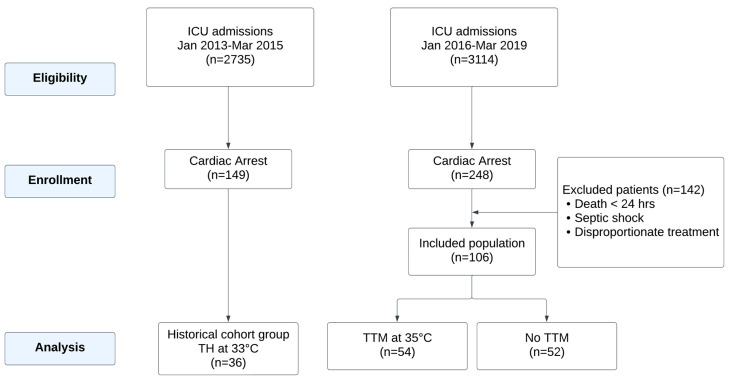 Figure 1
 Figure 2
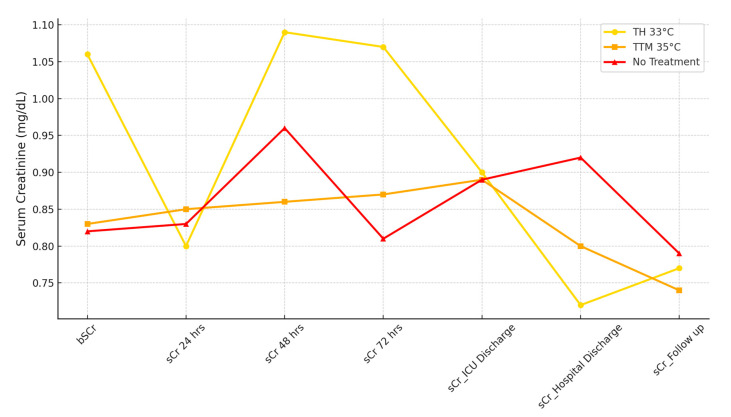 Figure 3
Peer Reviews
No public reviews on file for this paper yet. If you reviewed it on a platform where reviews are public (OpenReview, ICLR, NeurIPS, ICML), you can paste yours below so the community can read it here.
Videos
No videos yet. Explain this paper in a talk, walkthrough, or lecture? Add one.
Taxonomy
TopicsCardiac Arrest and Resuscitation · Acute Kidney Injury Research · Traumatic Brain Injury and Neurovascular Disturbances