Transabdominal Robotic-Assisted Partial Nephrectomy and CT-Guided Percutaneous Cryoablation for the Treatment of De Novo Kidney Tumors After Liver Transplantation
Emanuele Balzano, Lorenzo Bernardi, Gianvito Candita, Arianna Trizzino, Lorenzo Petagna, Elena Bozzi, Paola Scalise, Alessandra Cristaudi, Giovanni Tincani, Daniele Pezzati, Davide Ghinolfi, Laura Crocetti

TL;DR
This study compares two treatments for kidney tumors after liver transplants, finding both safe and effective, with cryoablation offering faster recovery and lower costs.
Contribution
The study provides a comparative analysis of robotic-assisted partial nephrectomy and cryoablation for kidney tumors after liver transplantation.
Findings
Both RPN and cryoablation achieved 100% efficacy in treating de novo kidney tumors.
Cryoablation resulted in shorter hospital stays and similar postoperative complications compared to RPN.
No tumor recurrence or mortality was observed during a median follow-up of 40.5 months.
Abstract
The management of de novo kidney tumors (DKTs) after liver transplantation (LT) is challenging due to previous transplant surgery and calcineurin inhibitors (CNI)-related nephrotoxicity. Minimally invasive renal-sparing strategies like robot-assisted partial nephrectomy (RPN) are favored, but a transperitoneal approach may be limited by the previous transplant surgery and the location of the DKT; in such cases, CT-guided cryoablation may be an alternative option. In this retrospective cohort study, we aimed to compare RPN and cryoablation for the treatment of DKT in LT recipients. The primary endpoints were the efficacy (R0 resection in RPN, absence of the tumor at first follow-up for cryoablation) and the safety of the procedures (postoperative morbidity and increase in creatine level). The periprocedural costs and the oncologic efficacy (recurrence and overall survival) were the…
Genes, proteins, chemicals, diseases, species, mutations and cell lines named across the full text — each resolved to its canonical identifier and authoritative record.
Click any figure to enlarge with its caption.
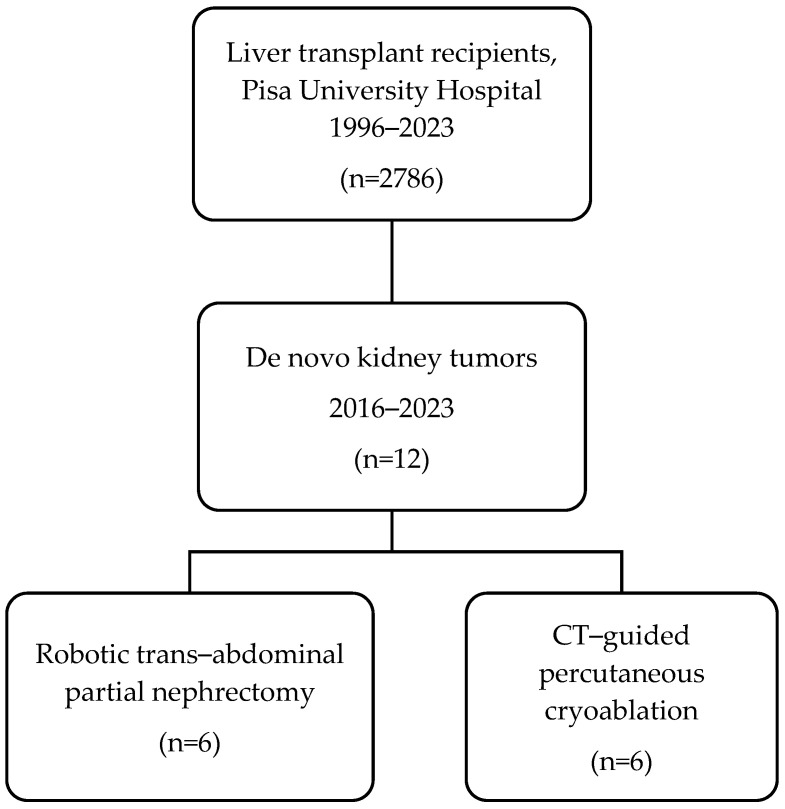 Figure 1
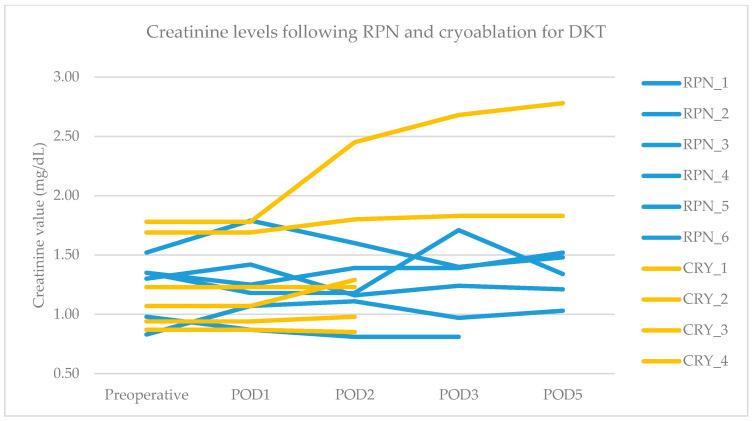 Figure 2
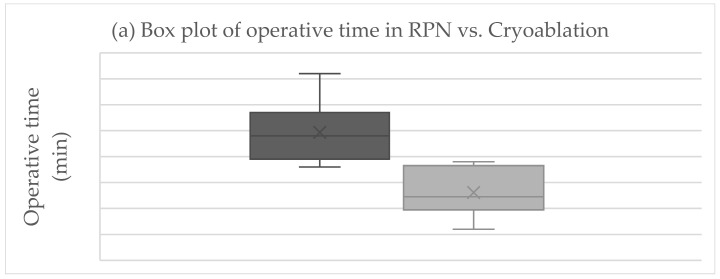 Figure 3
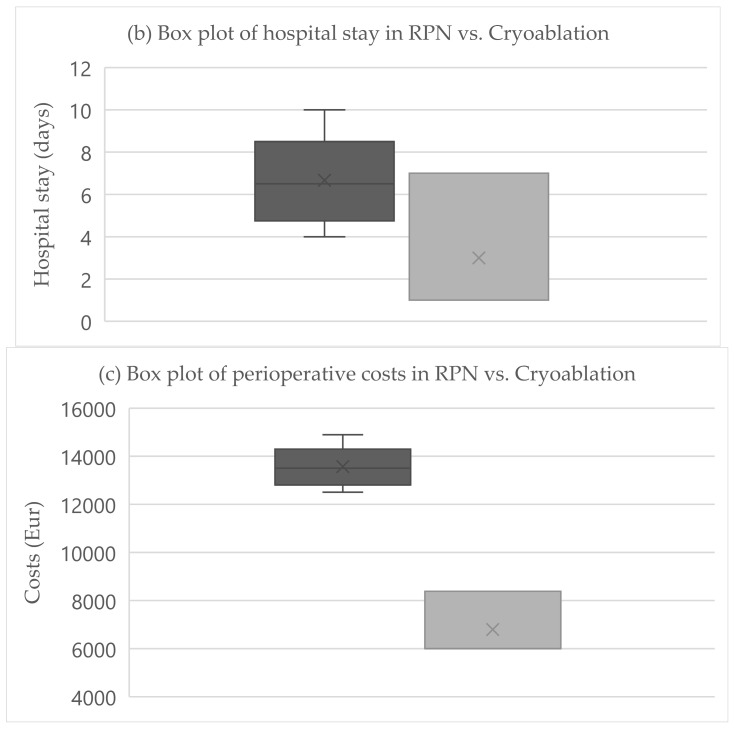 Figure 4
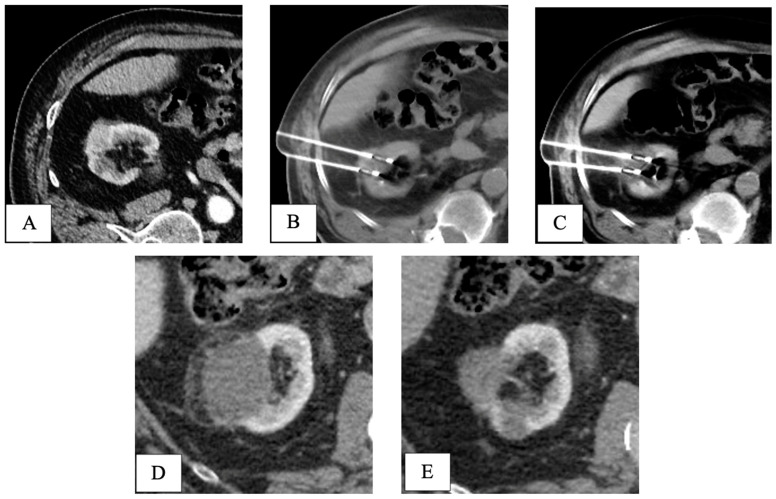 Figure 5
Peer Reviews
No public reviews on file for this paper yet. If you reviewed it on a platform where reviews are public (OpenReview, ICLR, NeurIPS, ICML), you can paste yours below so the community can read it here.
Videos
No videos yet. Explain this paper in a talk, walkthrough, or lecture? Add one.
Taxonomy
TopicsRenal cell carcinoma treatment · Tuberous Sclerosis Complex Research · Renal and Vascular Pathologies