New Attractant Lures for Sampling Conistra vaccinii L. Populations: Bisexual Lures and a Sex Attractant (Lepidoptera: Noctuidae)
Szabolcs Szanyi, Zoltán Varga, Antal Nagy, Gábor Szőcs, Júlia Katalin Jósvai, Miklós Tóth

TL;DR
Researchers identified a new sex attractant and two other lures for catching Conistra moths, which can help study their behavior and populations in forests.
Contribution
The discovery of (Z)-7-tetradecenyl acetate as a sex attractant and the effectiveness of two new lures for Conistra species.
Findings
(Z)-7-tetradecenyl acetate (Z7-14Ac) is a sex attractant for Conistra vaccinii, attracting only males.
Phenylacetaldehyde and iso-amyl alcohol lures attract both sexes and reflect species' food preferences.
Bisexual lures are useful for studying reproduction and population dynamics due to their ability to capture both male and female moths.
Abstract
Conistra species belonging to the owl moths (Noctuidae) are important members of the herbivorous insect assemblages of temperate forests. Here, we described (Z)-7-tetradecenyl acetate (Z7-14Ac) as a sex attractant of C. vaccinii. Additionally, the attractivity of phenylacetaldehyde-based synthetic and isoamyl alcohol-based semi-synthetic lures to different Conistra species was also proved, showing the different food source preferences of the species attracted. Using the new sex attractant, we can catch only males, while the other two lures attract both sexes. Depending on the goal of further studies, one or other of these new lures can serve as an appropriate tool for study on these widely distributed members of arboreal fauna. The chemical ecology and host plant preferences of the different Conistra species (Lepidoptera: Noctuidae, Xylenini) are mostly unknown, even though they are…
Genes, proteins, chemicals, diseases, species, mutations and cell lines named across the full text — each resolved to its canonical identifier and authoritative record.
Click any figure to enlarge with its caption.
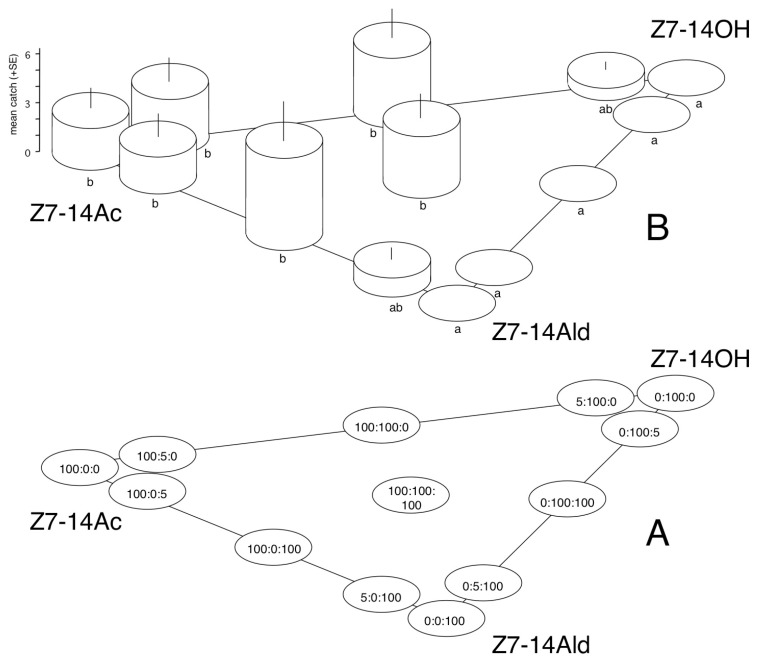 Figure 1
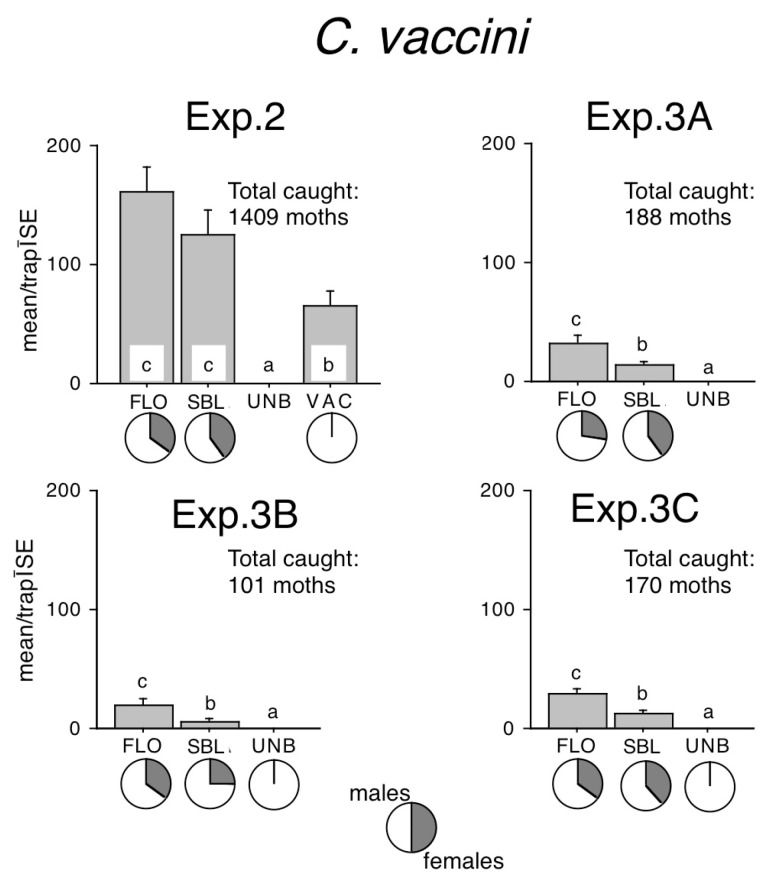 Figure 2
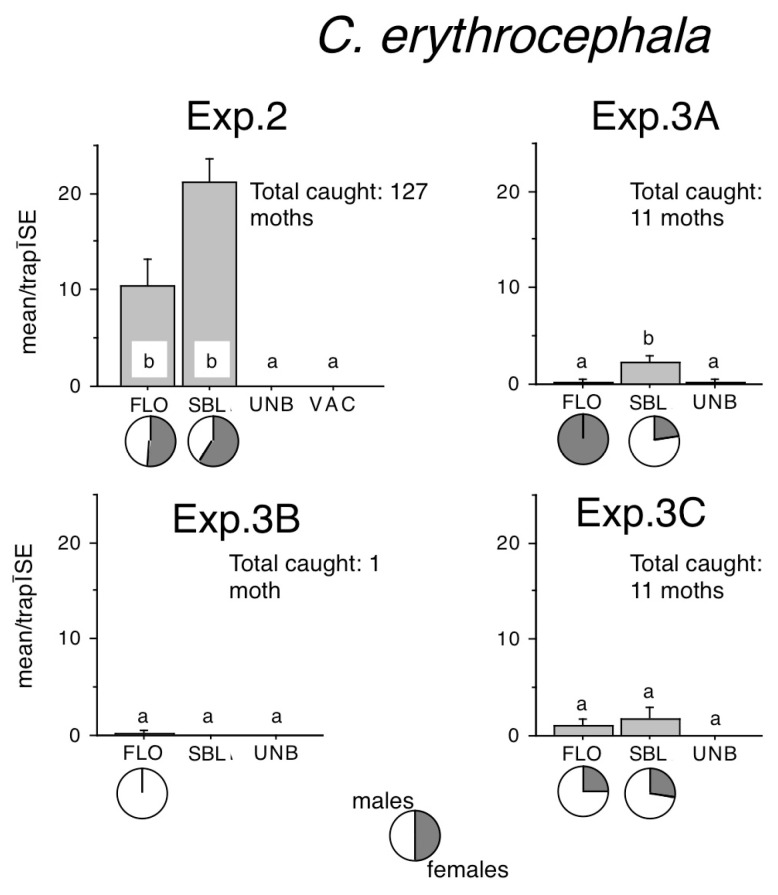 Figure 3
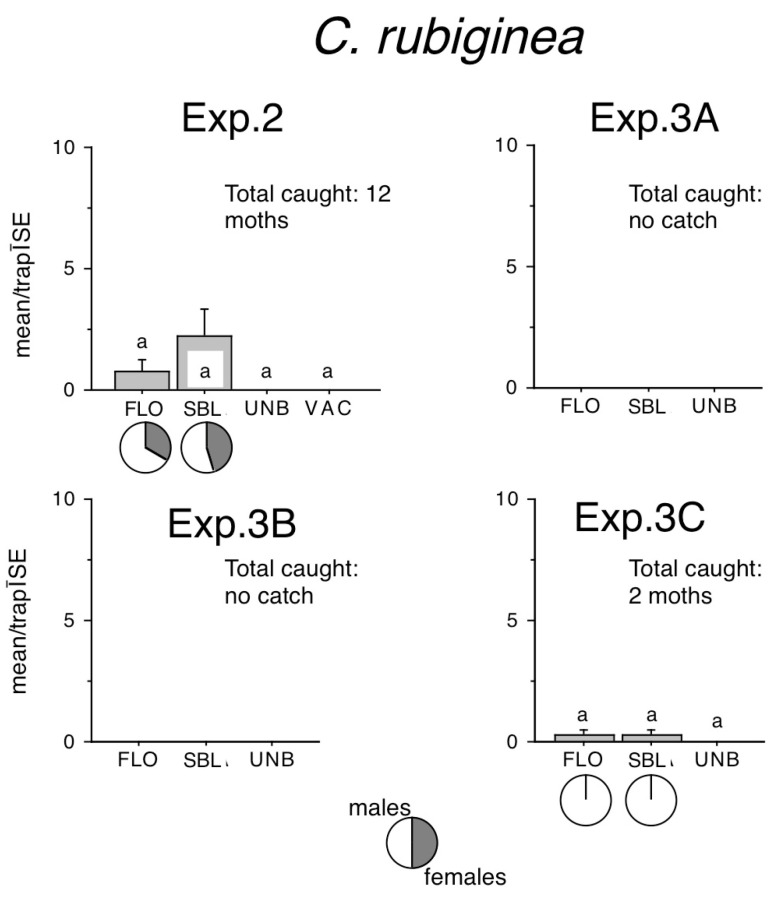 Figure 4
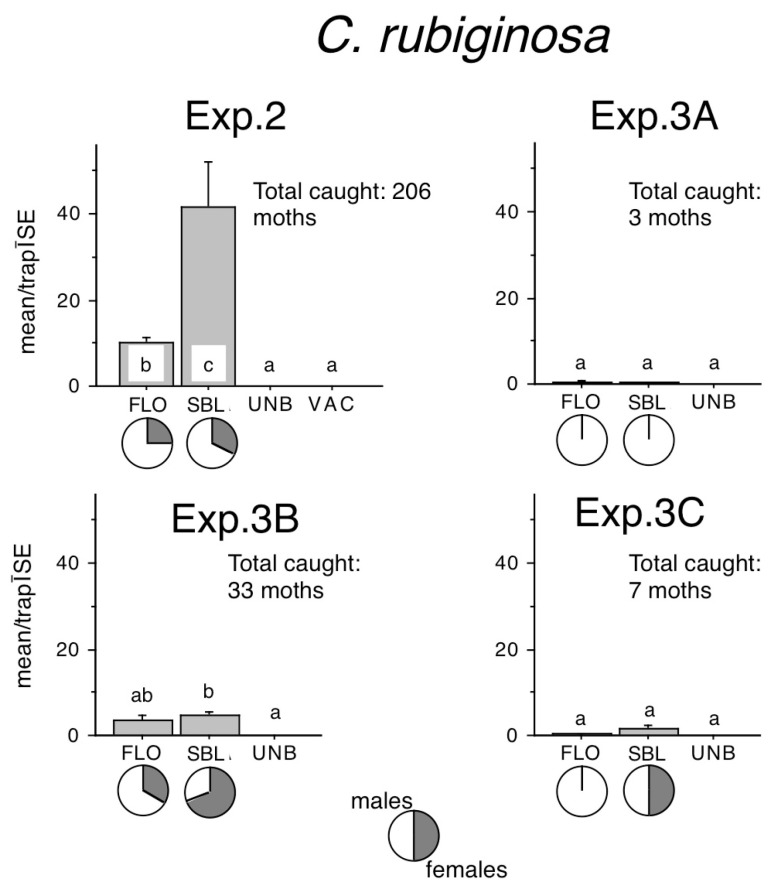 Figure 5
Peer Reviews
No public reviews on file for this paper yet. If you reviewed it on a platform where reviews are public (OpenReview, ICLR, NeurIPS, ICML), you can paste yours below so the community can read it here.
Videos
No videos yet. Explain this paper in a talk, walkthrough, or lecture? Add one.
Taxonomy
TopicsInsect-Plant Interactions and Control · Plant and animal studies · Insect Pheromone Research and Control