Clinically Accessible Liver Fibrosis Association with CT Scan Coronary Artery Disease Beyond Other Validated Risk Predictors: The ICAP Experience
Belén García Izquierdo, Diego Martínez-Urbistondo, Sonsoles Guadalix, Marta Pastrana, Ana Bajo Buenestado, Inmaculada Colina, Manuel García de Yébenes, Gorka Bastarrika, José A. Páramo, Juan Carlos Pastrana

TL;DR
This study finds that liver fibrosis, along with statin use or obesity, can help identify asymptomatic patients with higher-than-expected coronary artery disease risk based on CT scans.
Contribution
The study introduces liver fibrosis as a novel predictor of unexpected coronary artery disease severity beyond traditional risk factors.
Findings
Liver fibrosis risk (FIB-4 ≥ 1.3) interacts with statin use and obesity to predict cardiovascular risk excess in asymptomatic patients.
Models including FIB-4, age, sex, and interactions showed strong discrimination for cardiovascular risk excess in low-to-moderate and high-risk groups.
CVR excess was observed in 18% of low-to-moderate-risk patients and 15% of high-risk patients.
Abstract
Background/objectives: Cardiovascular risk (CVR) stratification in clinical settings remains limited. This study aims to evaluate clinical parameters that could improve the identification of higher-than-expected coronary artery disease (CAD) in CT scan coronarography. Methods: In a cross-sectional study of asymptomatic patients from the Integrated Cardiovascular Assessment Program (ICAP), volunteers aged 40–80 without diagnosed cardiovascular disease were assessed. CVR factors like obesity, lipid and glucose profiles, liver fibrosis risk (FIB-4 ≥ 1.3), C-reactive protein, and family history of CVD were evaluated. Patients were stratified by CVR following ESC guidelines. “CVR excess” was defined as CAD-RADS ≥ 2 in low-to-moderate-risk (LMR), CAD-RADS ≥ 3 in high-risk (HR), and CAD-RADS ≥ 4 in very-high-risk (VHR) groups. Results: Among 219 patients (mean age 57.9 ± 1.15 years, 14%…
Genes, proteins, chemicals, diseases, species, mutations and cell lines named across the full text — each resolved to its canonical identifier and authoritative record.
Click any figure to enlarge with its caption.
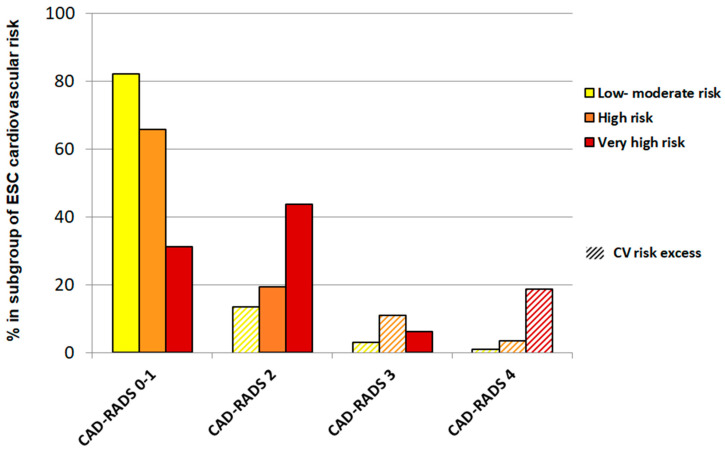 Figure 1
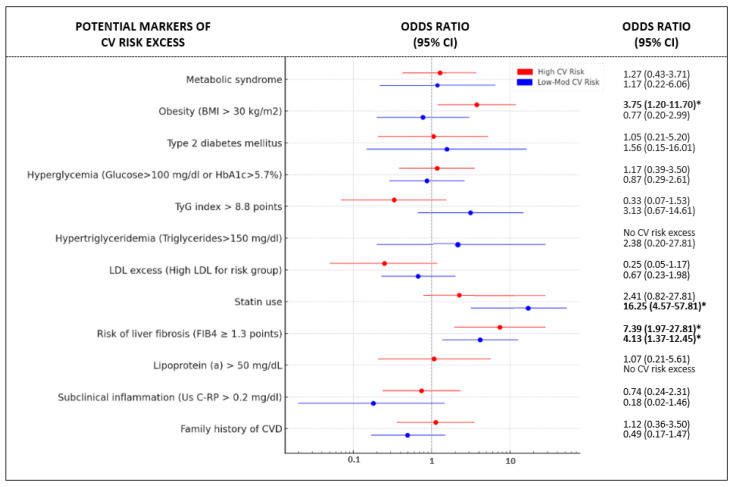 Figure 2
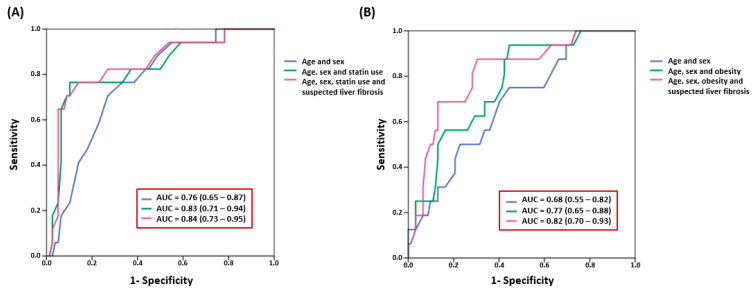 Figure 3
Peer Reviews
No public reviews on file for this paper yet. If you reviewed it on a platform where reviews are public (OpenReview, ICLR, NeurIPS, ICML), you can paste yours below so the community can read it here.
Videos
No videos yet. Explain this paper in a talk, walkthrough, or lecture? Add one.
Taxonomy
TopicsLiver Disease Diagnosis and Treatment · Liver Disease and Transplantation · Liver Diseases and Immunity