A life course study of genetic and environmental influences on sustainable working life
Annina Ropponen, Jacob Bergström, Jurgita Narusyte, Pia Svedberg

TL;DR
This study explores how genetics and environment influence a person's ability to maintain continuous employment from young adulthood to old age.
Contribution
The study reveals how genetic and environmental influences on sustainable working life change across different life stages.
Findings
Genetic influences on sustainable working life vary significantly across age groups, peaking at 69% for ages 48–57 years.
Unique environmental factors play a major role in middle age groups (28–57 years), contributing 57–72% of the variance.
Common environmental influences are most significant in early adulthood (18–27 years), accounting for 63% of the variance.
Abstract
Genetics plays a role in short- and long-term sustainable working life (i.e., not having interruptions due to sickness absences (SA), disability pensions (DP), or unemployment), but the life course effects are not known. Thus, we aimed to investigate the age-specific genetic and environmental influences on sustainable working life from young adulthood until old-age pension. We used classical twin modeling based on the genetic relatedness of mono- and dizygotic twins in a longitudinal design. The final sample (n = 49 372) of Swedish same-sex twins with known zygosity born between 1929 and 1990 (52.8% women) with detailed national register data of employment, SA, DP, unemployment, old-age pension, emigration, and death. Genetic influences for sustainable working life were 54% at ages 18–27 years, 59% at 28–37 years, 37% at 38–47 years, 69% at 48–57 years, and 34% at 58–65 years. We…
Genes, proteins, chemicals, diseases, species, mutations and cell lines named across the full text — each resolved to its canonical identifier and authoritative record.
Click any figure to enlarge with its caption.
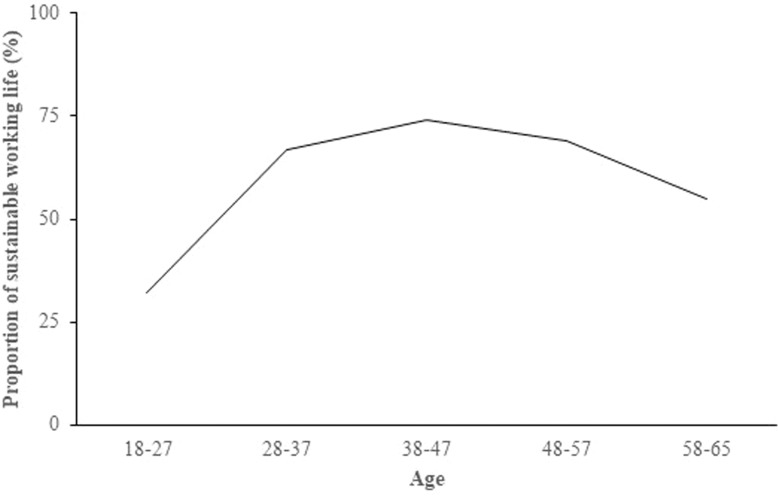 Figure 1
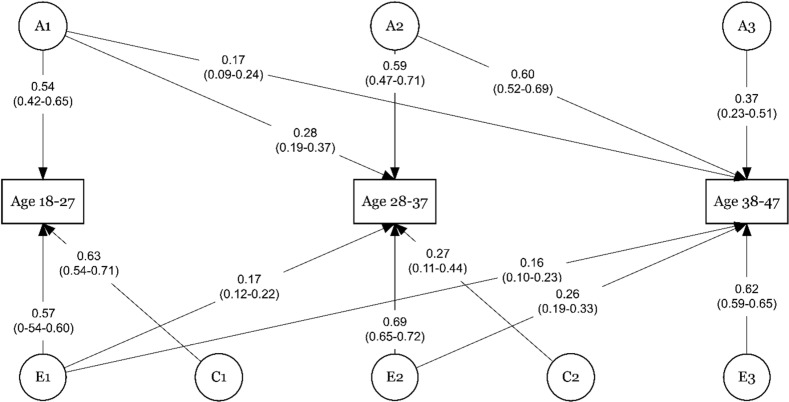 Figure 2
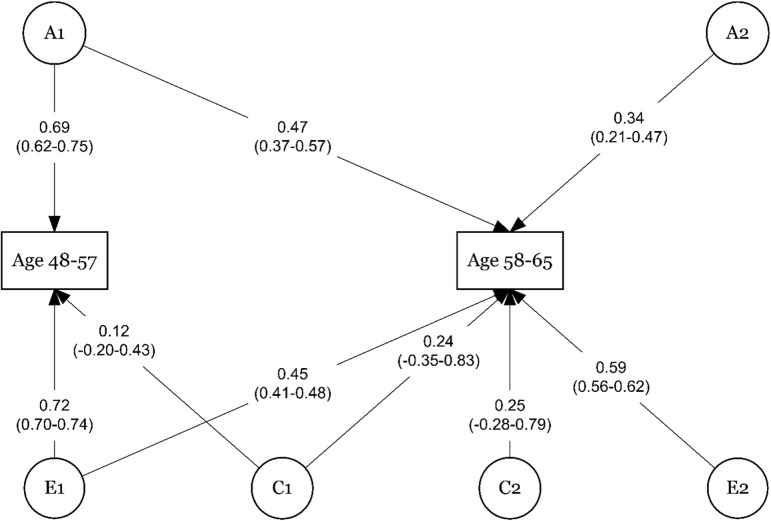 Figure 3
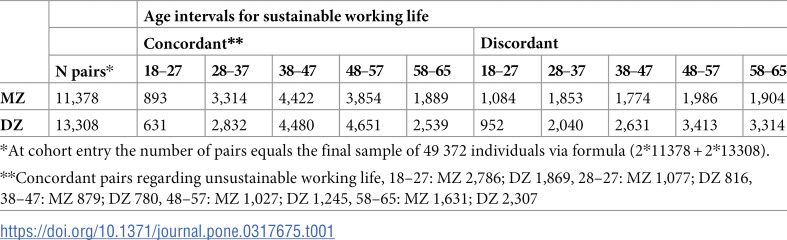 Figure 4
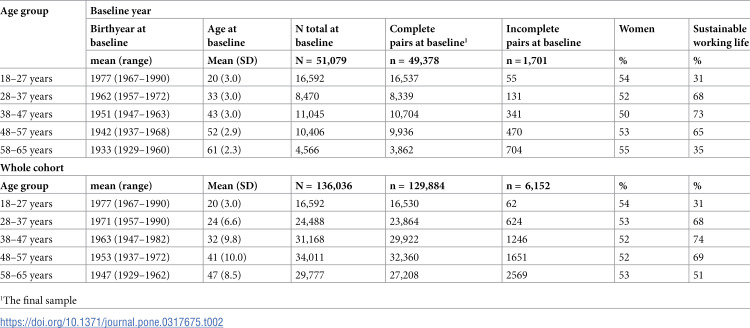 Figure 5
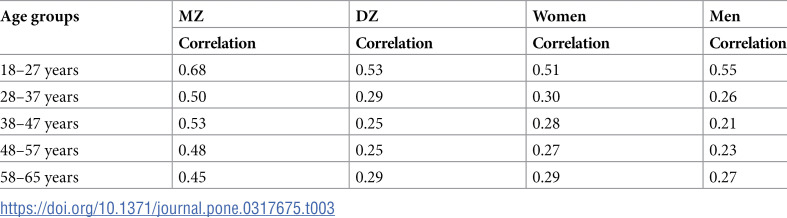 Figure 6
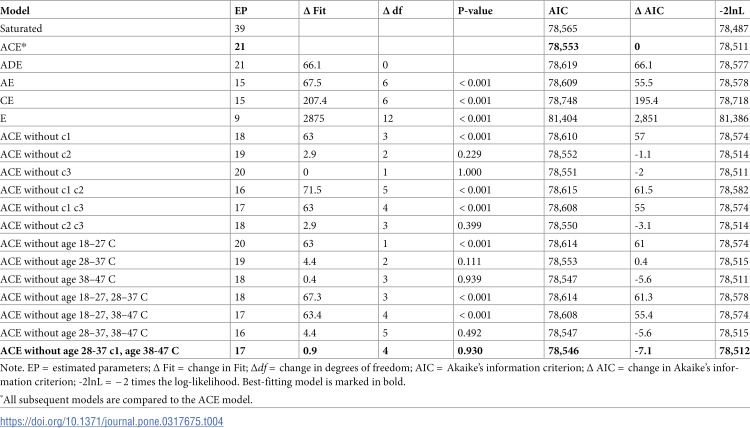 Figure 7
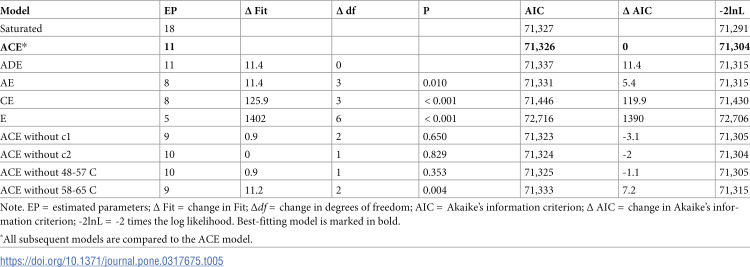 Figure 8
Peer Reviews
No public reviews on file for this paper yet. If you reviewed it on a platform where reviews are public (OpenReview, ICLR, NeurIPS, ICML), you can paste yours below so the community can read it here.
Videos
No videos yet. Explain this paper in a talk, walkthrough, or lecture? Add one.
Taxonomy
TopicsHealth disparities and outcomes · Cognitive Abilities and Testing · Health, Environment, Cognitive Aging