The 24-hour movement behaviour compositions of children with and without impaired motor coordination: The Moves-UP project
Nils Swindell, Chelsea Starbuck, Siqi Jin, Harriet Barker, Gemma Thomas, Jimena Rueda-Hernandez, Catherine Crosby, Claire Barnes, Huw Summers, Gareth Stratton

TL;DR
This study compares the daily movement patterns of children with and without motor coordination issues, finding that those with coordination problems spend less time being active and more time being sedentary.
Contribution
The study provides new insights into the 24-hour movement behavior composition of children with suspected Developmental Coordination Disorder.
Findings
Children with sDCD spent less time in light physical activity and MVPA and more time in sedentary behavior compared to typically developing peers.
Replacing lower-intensity activities with MVPA was associated with potential improvements in motor competence.
The movement behavior profiles of children with sDCD may negatively impact their future health and wellbeing.
Abstract
The 24-hour movement behaviours, including sleep, sedentary behaviour (SB), and moderate-to-vigorous physical activity (MVPA) are crucial for a child’s healthy growth and development. Yet, the full 24-hour movement behaviour composition has not been thoroughly explored in children with suspected Developmental Coordination Disorder (sDCD). The aim of this study was to compare the 24-hour movement behaviour compositions of children with sDCD to their typically developing (TD) peers and to assess the associations between movement behaviours and motor competence. Sixty-nine children (mean age 8.6 ± 1.6 years, 55% boys) wore a wrist-mounted accelerometers for seven consecutive days, completed a dynamic motor competence assessment and were screened for sDCD using the Developmental Coordination Disorder Questionnaire. Results of the compositional Isotemporal-substitution analysis indicated…
Genes, proteins, chemicals, diseases, species, mutations and cell lines named across the full text — each resolved to its canonical identifier and authoritative record.
Click any figure to enlarge with its caption.
 Figure 1
 Figure 2
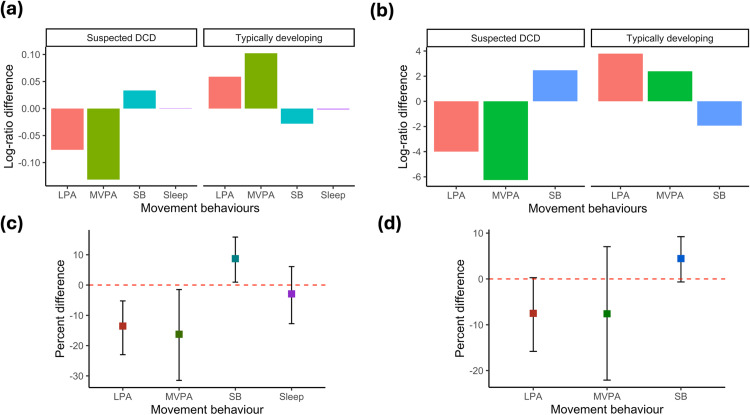 Figure 3
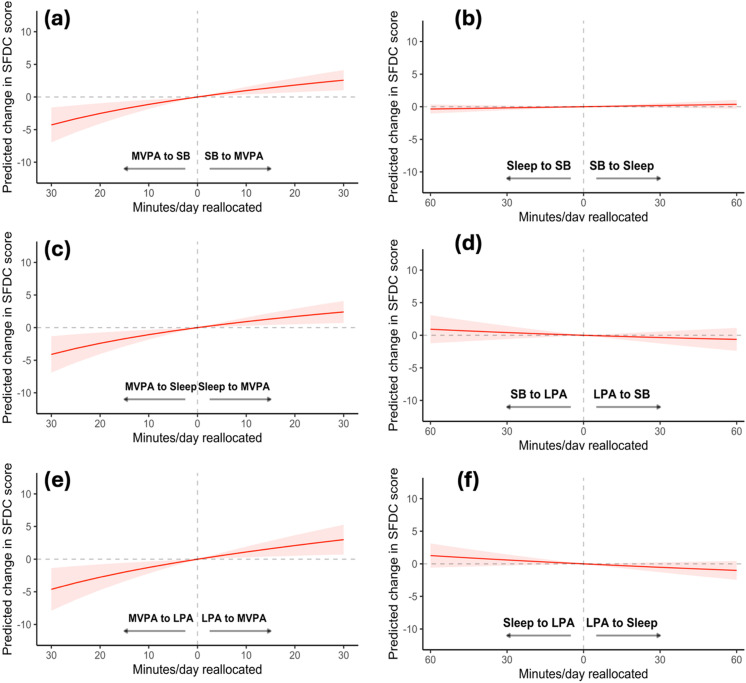 Figure 4
 Figure 5
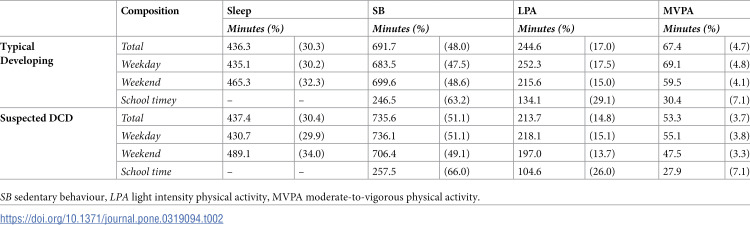 Figure 6
 Figure 7
Peer Reviews
No public reviews on file for this paper yet. If you reviewed it on a platform where reviews are public (OpenReview, ICLR, NeurIPS, ICML), you can paste yours below so the community can read it here.
Videos
No videos yet. Explain this paper in a talk, walkthrough, or lecture? Add one.
Taxonomy
TopicsChildren's Physical and Motor Development · Infant Development and Preterm Care · Obesity, Physical Activity, Diet