Social and nutritional factors controlling the growth of honey bee (Apis mellifera) queens
Omer Kama, Hagai Yehoshua Shpigler, Olav Rueppell, Olav Rueppell, Olav Rueppell

TL;DR
Researchers developed a lab method to rear honey bee queens, finding that 200 worker bees and high pollen nutrition are key for successful queen development.
Contribution
A novel lab-based queen rearing protocol with controlled conditions and insights into larval age and pollen effects.
Findings
Groups of 200 worker bees successfully rear queens with comparable success and weight to traditional colony methods.
Younger larvae develop into heavier and larger queens compared to older larvae.
High pollen concentration is crucial for optimal queen development.
Abstract
The honey bee queen is essential for colony function, laying hundreds of eggs daily and determining the colony’s genetic composition. Beekeepers cultivate and trade queens to enhance colony health and productivity. Despite its significance, artificial queen rearing in foster queenless colonies has remained largely unchanged for over a century, offering limited control over the environmental conditions influencing larval development. In this study, we developed a laboratory-based method for queen bee rearing, establishing a protocol for rearing queens in cages by nurse bees in the lab under controlled environmental conditions. We first investigated the minimal number of worker bees required to rear a single queen and found that groups of 200 workers raise queens with comparable success and weight to those reared in foster colony. As a proof of concept, we examined the impact of larval…
Genes, proteins, chemicals, diseases, species, mutations and cell lines named across the full text — each resolved to its canonical identifier and authoritative record.
Click any figure to enlarge with its caption.
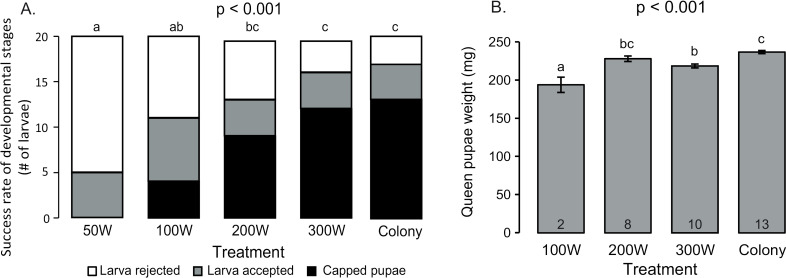 Figure 1
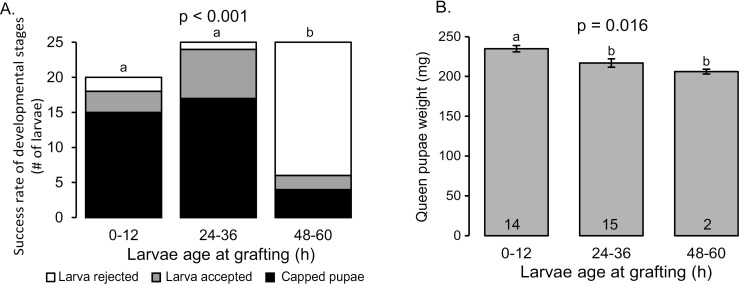 Figure 2
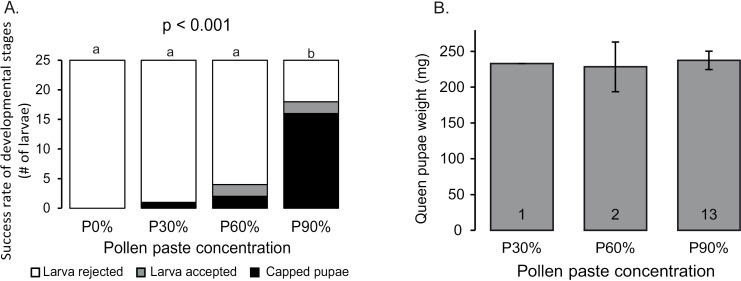 Figure 3
Peer Reviews
No public reviews on file for this paper yet. If you reviewed it on a platform where reviews are public (OpenReview, ICLR, NeurIPS, ICML), you can paste yours below so the community can read it here.
Videos
No videos yet. Explain this paper in a talk, walkthrough, or lecture? Add one.
Taxonomy
TopicsPlant and animal studies · Insect and Arachnid Ecology and Behavior · Insect and Pesticide Research