First Report of Polydrusus tibialis Gyllenhal (Coleoptera: Curculionidae) Infesting Peaches in Northern Greece
Stefanos S. Andreadis, Eleni I. Koutsogeorgiou, Emmanouel I. Navrozidis, Achilleas Kaltsidis, Dimitrios N. Avtzis

TL;DR
This paper reports the first occurrence of a weevil species, Polydrusus tibialis, infesting peach orchards in Northern Greece, highlighting its potential economic impact and the need for pest management.
Contribution
The first documented report of Polydrusus tibialis infesting peaches in Northern Greece, including its morphology, biology, and potential economic impact.
Findings
Polydrusus tibialis was identified in peach orchards in Pella, Northern Greece, for the first time.
The weevil causes leaf and fruit damage as an adult and root damage as a larva, potentially leading to economic losses.
The pest completes one generation per year, with adults emerging in early April.
Abstract
This study provides the first report of Polydrusus tibialis (Coleoptera: Curculionidae) infesting peach orchards in Northern Greece. It identifies the pest’s morphology and biology, with adults causing leaf and fruit damage and larvae feeding on roots, possibly leading to significant economic losses. This discovery highlights the need for monitoring and integrated pest management to protect peach cultivation in this region. Peach [Prunus persica (L.) Batsch] is a major fruit crop particularly in Northern Greece, which is infested by several pests that threaten both yield and quality. In 2024, Polydrusus tibialis (Coleoptera: Curculionidae), a weevil species known to attack various fruit trees, was identified infesting peach orchards in the region of Pella, Northern Greece, for the first time. In this study, we present the initial report of P. tibialis as a pest in peach production,…
Genes, proteins, chemicals, diseases, species, mutations and cell lines named across the full text — each resolved to its canonical identifier and authoritative record.
Click any figure to enlarge with its caption.
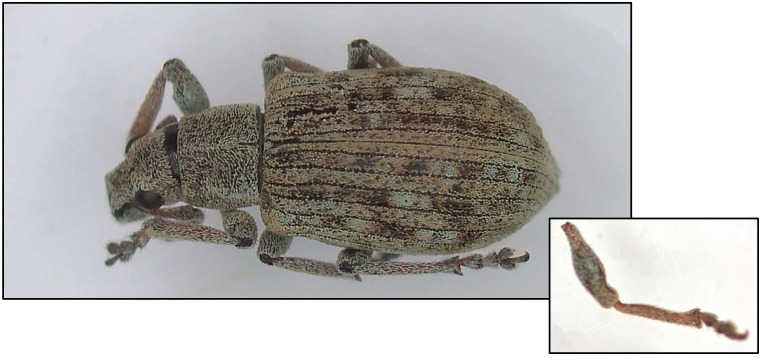 Figure 1
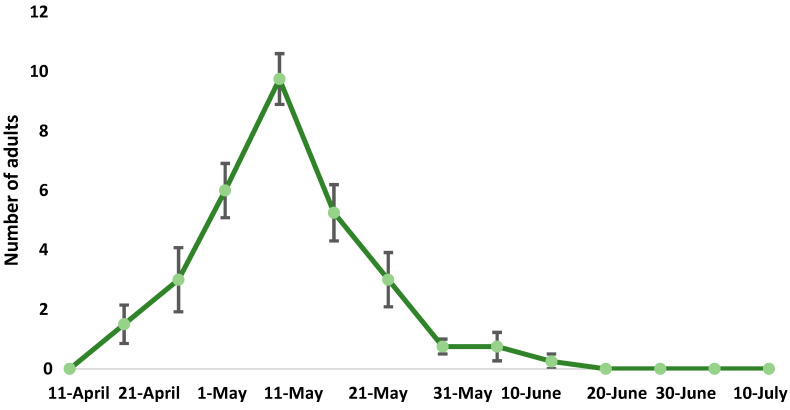 Figure 2
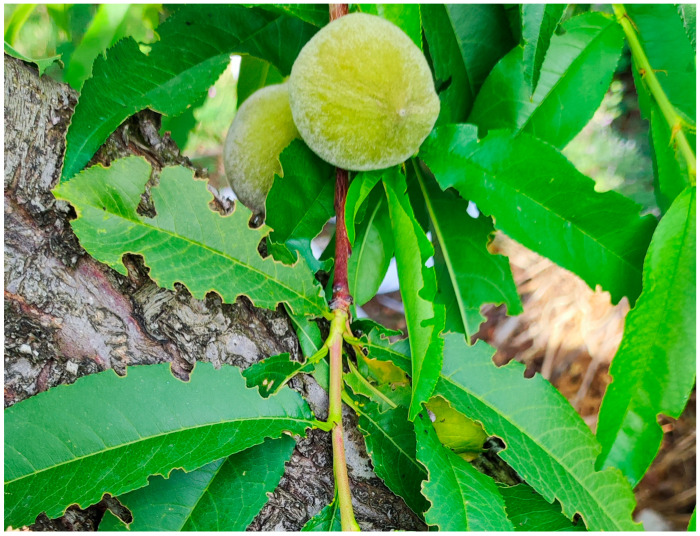 Figure 3
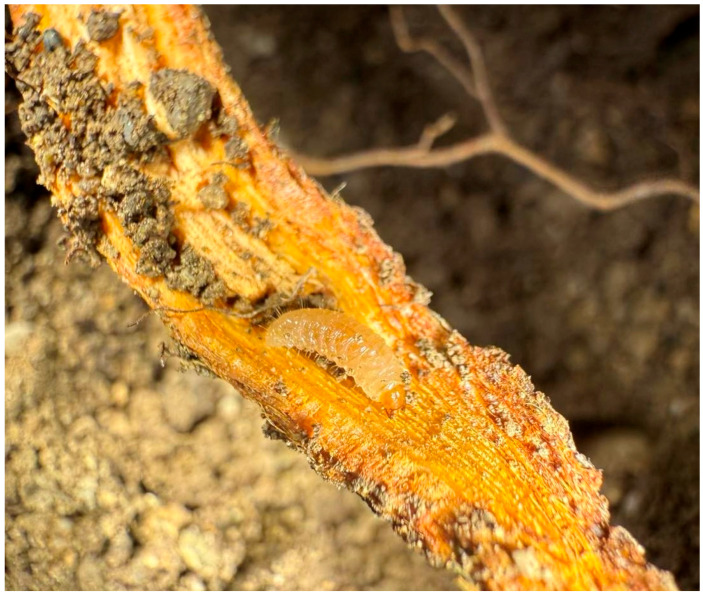 Figure 4
Peer Reviews
No public reviews on file for this paper yet. If you reviewed it on a platform where reviews are public (OpenReview, ICLR, NeurIPS, ICML), you can paste yours below so the community can read it here.
Videos
No videos yet. Explain this paper in a talk, walkthrough, or lecture? Add one.
Taxonomy
TopicsForest Insect Ecology and Management · Coleoptera Taxonomy and Distribution · Insect Pest Control Strategies
1. Introduction
Peach [Prunus persica (L.) Batsch] is a vital fruit crop in Greece, particularly in the northern regions where the climate and soil conditions are conducive for high-quality production [1]. In the southern region, peach cultivation is limited, mainly due to the lack of chilling conditions [2,3]. Greece is among the leading producers of peaches in Europe, with extensive cultivation primarily in the regions of Central Macedonia, Western Macedonia and Thessaly [4]. However, peach cultivation is constantly threatened by various insect pests, which can cause significant economic losses. Common insect pests of peach in Greece include the Mediterranean fruit fly (Ceratitis capitata Wiedemann), the peach twig borer (Anarsia lineatella Zeller), the oriental fruit moth [(Grapholitha molesta) (Busck)], the summer fruit tortrix moth [Adoxophyes orana (Fischer von Rösslerstamm)] and the green peach aphid (Myzus persicae Sulzer) [4,5,6,7,8].
During the previous growing season, a new potential pest, Polydrusus tibialis (Gyllenhal), has been observed in peach orchards in Northern Greece. Polydrusus tibialis is a weevil species (Curculionidae) known for infesting various fruit trees, but its presence in peach orchards has not been previously documented in this region. It was found infesting peaches in Croatia [9], and its presence has also been recorded in other host plants, such as Cretan maple (Acer sempervirens), pears (Pyrus communis), hawthorn (Crataegus sp.) and oak (Quercus sp.) in the regions of Attica, Central Greece, Central Macedonia, Crete, East Macedonia and Thrace, Epirus, Ionian Islands, Peloponnese, West Greece, and West Macedonia [10], as well as cherries and plums in the Prefecture of Pella (personal observations).
This report aims to present the first evidence of P. tibialis infesting peach crops in Northern Greece and to provide a comprehensive overview of its morphology, taxonomy, and biology, since the introduction of P. tibialis as a potential pest of peach would add to the existing burden of pest management in these orchards.
2. Materials and Methods
2.1. Locations
This study was conducted from early April up to late July 2024 in two peach orchards (Aravissos and Edessa) of the regional unit of Pella (Table 1), a region in Northern Greece with a high fruit-orchard production. Both orchards were managed with similar IPM practices, complying with EU standards of pesticide residues below the respective MRLs [11].
2.2. Monitoring Traps
To estimate the relative density of P. tibialis, unbaited black-standing monitoring traps (≈120 cm tall and ≈50 cm wide at the base) made of heavy-duty corrugated plastic [Tedders (Pyramid) Trap, 6/CS, Great Lakes IPM^TM^, Vestaburg, MI, USA] were placed in both locations. More specifically, two monitoring traps, at least 10 m apart, were deployed in each location at the perimeter of the orchards, as per our previous year observations of a leaf infestation in the aforementioned areas. The traps were inspected weekly from early April to late July.
2.3. DNA Barcoding
Adults captured in pyramid traps were immediately placed in 2 mL tubes with alcohol (>70%) and then shipped to the Laboratory of Forest Entomology (Forest Research Institute—Thessaloniki, Greece). Due to the close morphological resemblance with other Polydrusus species, DNA extraction was performed using the front leg of a specimen with PureLine^®^ Genomic DNA kit (Invitrogen, Waltham, MA, USA). Polymerase Chain Reaction (PCR) amplification was run in 25 μL with DreamTaq DNA Polymerase (Thermo Fisher Scientific, Waltham, MA, USA) and using LCO-HCO primers [12] that amplify a 658 bp long locus of the mitochondrial cytochrome oxidase subunit I (COI) gene. The PCR procedure included an initial denaturation at 94 °C (3 min), followed by 45 cycles of 30 s at 94 °C (denaturation), 30 s at 47 °C (annealing), and 1.5 min at 72 °C (extension), whereas the final extension period at 72 °C was run for 5 min [13]. The PCR products were cleaned up enzymatically using the ExoSAP-IT TM PCR Product Cleanup Reagent (Thermo Fisher Scientific, Waltham, MA, USA) and then shipped to Cemia Company (Larissa, Greece) where they were sequenced in an ABI3730XL automated sequencer using both the forward and reverse primers of the PCR in order to avoid erroneous base calling. The sequences were initially visualized with the Chromas Lite version 2.6.6 software and then aligned with ClustalX version 2 [14]. Finally, species identity was defined based on the results of a nucleotide BLAST query in the NCBI GenBank using the obtained sequences.
3. Results and Discussion
The identity of the weevil was initially concluded by the distinct morphological trait (spurs on the tibia of the legs) and subsequently verified by the 100% sequence similarity with the only available DNA barcode of the species (KC784117) [15], confirming that P. tibialis is infesting peach orchards in the regional unit of Pella (Northern Greece). The genus Polydrusus is part of the subfamily Entiminae that falls within the Curculionidae family [16]. Polydrusus tibialis was first described by Gyllenhal in 1834 and has since been recorded in various parts of Europe, feeding on a variety of different hosts that include deciduous trees and shrubs [17].
3.1. Morphology
Polydrusus tibialis is 3.2–4.9 mm in length, with a slender body and a slightly curved rostrum (Figure 1). The body, head, and legs of an adult P. tibialis are densely and thoroughly covered in scales. The elytra are striated with parallel lines (10 in total) that run the length of the body and may even have small punctures. The head is elongated, with large, oval compound eyes whereas the antennae are geniculate and clubbed. Finally, the legs are brown with color gradations of gray and bear distinct tibial spurs that characterize this species.
3.2. Biology
Polydrusus tibialis has been reported to have one generation/year and overwinters as an adult or as a mature larva in the soil [17]. Our results confirm that it completes one generation/year in Northern Greece (Figure 2). According to our observations, adults emerge from overwintering sites in early April and until June, they climb the trunk of their host plants (in this case, peach), initially feeding on the basal foliage, causing characteristic serrated notches around the edge of the leaf blade (Figure 3). The damage by adult feeding has also been observed on newly formed fruit, immediately after petals fall. As affected fruits grow, they become deformed and unmarketable. After mating, adult females lay their eggs on the soil surface and hatched larvae feed on the rootlets and cambium/xylem tissues of roots (Figure 4).
The presence of P. tibialis in peach orchards in Northern Greece was first observed in the spring of 2024, in particular in the region of Central Macedonia. Also, serious infestation in commercial peach orchards was observed in the region of Thessaly (personal communication). This is in accordance with a previous study in Dalmatia (Croatia) that reported several curculionids, including two Polydrusus species, as members of the peach fauna [9]. Adult weevils were found feeding on peach leaves and shoots, causing noticeable damage to the foliage and the deformation of newly matured fruit. Subsequent inspections revealed that larvae were infesting the roots of young peach trees, leading to wilting and reduced growth.
Even though P. tibialis had been reported before in Greece [18], this is the first documented case of P. tibialis infesting peach trees in this region. Given the economic importance of peach cultivation in Northern Greece, the emergence of P. tibialis as a potential pest necessitates immediate attention from both researchers and growers. Further studies are required to assess the full impact of this pest on peach production and to develop effective management strategies.
4. Conclusions
The discovery of P. tibialis infesting peach orchards in Northern Greece marks a new challenge for local agriculture. This report highlights the need for the monitoring and development of integrated pest management strategies to mitigate the potential impact of this weevil on peach cultivation. Future research should focus on understanding the ecology of P. tibialis in peach orchards and exploring control measures that can effectively protect this economically important crop.
The reference list from the paper itself. Each links out to its DOI / PubMed record.
- 1Kostelenos M. Papachatzis A. Ntanos D. Peach cultivation in Greece: Current state and future prospects J. Hort. Res.2015236774
- 2Bowen H.H. Breeding peaches for warm climates Hortscience 1971615315710.21273/HORTSCI.6.2.153 · doi ↗
- 3Tsipouridis C. Thomidis T. Therios I. Stylianides D. Evaluation of peach and nectarine cultivars in northern Greece J. Am. Pomol. Soc.2005595761
- 4Papachatzis A. Tsantili E. Karantininis K. Peach production and marketing in Greece: Challenges and opportunities Agric. Econ. Rev.2020214558
- 5Kyparissoudas D.S. Simultaneous control of Cydia molesta and Anarsia lineatella in peach orchards of Northern Greece by combining mating disruption and insecticide treatments Entomol. Hell.19897131610.12681/eh.13963 · doi ↗
- 6Tsipouridis C. Xatzicharisis I. Thomidis T. Integrated control of the most damaging pests of peach trees in Greece Arch. Phytopathol. Plant Prot.20043727528110.1080/03235400410001662139 · doi ↗
- 7Chatzivassiliou E.K. Eleftherohorinos I.G. Tsakiris I.N. Virus transmission by aphids and the management of aphid vectors in peach orchards Hell. Plant Prot. J.201471322
- 8Andreadis S.S. Navrozidis E.I. Advanced and Applied Entomology 1st ed.Embryo Publications Athens, Greece 2024528 p(In Greek)