Differentially Expressed Genes in Cardiomyocytes of the First Camelized Mouse Model, Nrapc.255ins78 Mouse
Sung-Yeon Lee, Byeonghwi Lim, Bo-Young Lee, Goo Jang, Jung-Seok Choi, Xiang-Shun Cui, Kwan-Suk Kim

TL;DR
Scientists studied a genetically modified mouse model to understand how camels adapt to extreme cold, finding genes linked to heart function and stress resistance.
Contribution
The study identifies novel differentially expressed genes in a camelized mouse model under non-stress conditions, linking them to calcium dynamics and cold adaptation.
Findings
25 genes were differentially expressed in Nrapc.255ins78 mouse hearts, with 12 related to cell cycle and division being consistently downregulated.
The Cib3 gene was significantly upregulated, suggesting altered calcium dynamics in cardiomyocytes.
Findings imply that inflammatory cytokine responses during cold exposure may be adaptive mechanisms for maintaining homeostasis.
Abstract
Background/Objectives: The first camelized mouse model (Nrapc.255ins78) was developed to investigate the mechanisms underlying camels’ adaptation to extreme environments. Previous studies demonstrated that these mice exhibit a cold-resistant phenotype, characterized by increased expression of inflammatory cytokine-related genes in the heart under cold stress. Nebulin-related anchoring protein (NRAP) plays a critical role in organizing myofibrils during cardiomyocyte development. This study builds on prior research by analyzing the heart transcriptomes of Nrapc.255ins78 mice under non-stress conditions to explore the origins of inflammatory cytokine responses during cold exposure. Methods: RNA sequencing was performed on the hearts of 12-week-old male and female Nrapc.255ins78 and wild-type control mice. Results: Differential expression analysis identified 25 genes, including 12…
Genes, proteins, chemicals, diseases, species, mutations and cell lines named across the full text — each resolved to its canonical identifier and authoritative record.
Click any figure to enlarge with its caption.
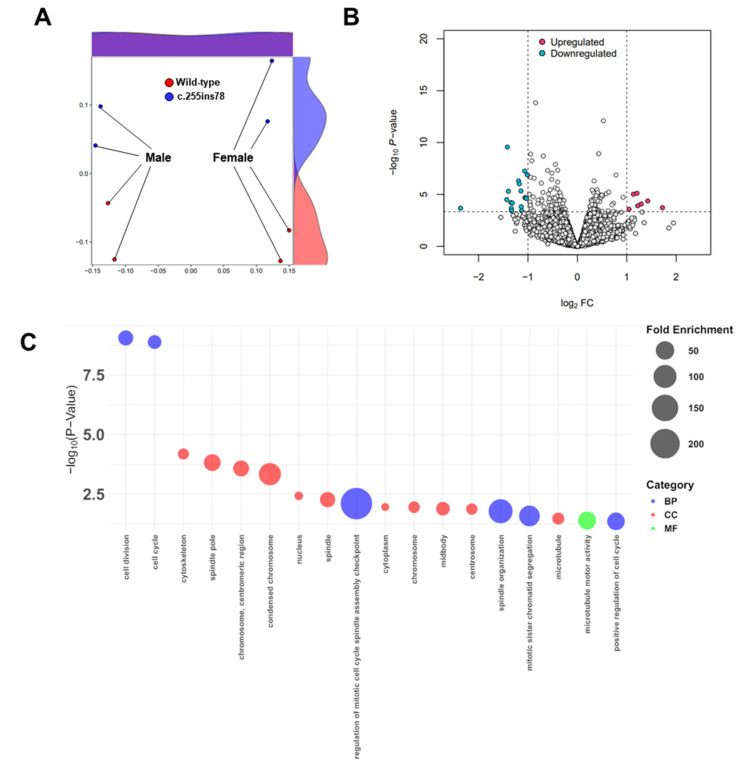 Figure 1
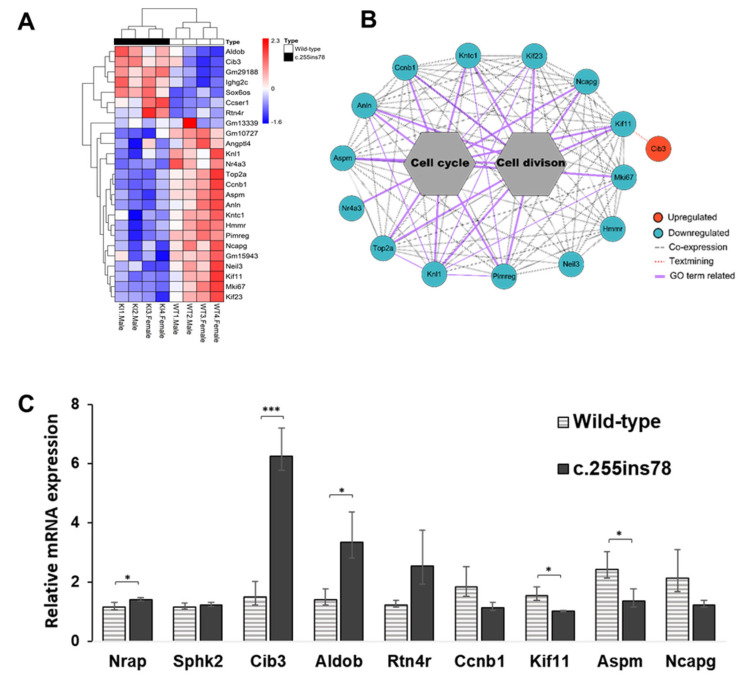 Figure 2
Peer Reviews
No public reviews on file for this paper yet. If you reviewed it on a platform where reviews are public (OpenReview, ICLR, NeurIPS, ICML), you can paste yours below so the community can read it here.
Videos
No videos yet. Explain this paper in a talk, walkthrough, or lecture? Add one.
Taxonomy
TopicsAnimal Diversity and Health Studies · Dietary Effects on Health · Meat and Animal Product Quality