Relative Quantitation of EFNA1 Expression in Mouse Heart Tissue Histologic Sections Using MALDI-MSI
Maria Torres, Laura Gruer, Smrithi Valsaraj, Shaun Reece, Jeremy Prokop, Tonya Zeczycki, Cameron Taylor, Taylor Byers, William Cruz, Kim Kew, Lisandra de Castro Braz, Jitka Virag

TL;DR
This paper describes a new method to measure EFNA1 levels in mouse heart tissue using MALDI-MSI, which could help understand heart disease and treatments.
Contribution
The paper introduces an optimized MALDI-MSI method for relative quantitation of EFNA1 in cardiac tissue.
Findings
EFNA1 levels in healthy myocardium are approximately 50 ng per 9.43 mm³ tissue section.
MALDI-MSI can provide anatomical distribution and relative quantitation of EFNA1 in cardiac tissue.
The method is compared with routine western blotting for validation.
Abstract
EFNA1 (ephrinA1), a highly expressed tyrosine kinase receptor-ligand in healthy cardiomyocytes, is reduced following myocardial infarction (MI). A single intramyocardial injection of chimeric EFNA1-Fc at the time of ischemia mitigates the injury in both reperfused and non-reperfused mouse myocardium by reducing apoptosis, necrosis, and inflammation. Recently, we have successfully imaged and qualitatively identified endogenous EFNA1 pre- and post-MI using matrix-assisted laser desorption ionization mass spectrometry imaging (MALDI-MSI) coupled with a time-of-flight mass spectrometer (MALDI/TOF MS). Building on our previous work, we are currently focused on understanding and characterizing EFNA1’s role in cardiac tissue by developing an integrated quantitative method to determine endogenous levels of EFNA1 using MALDI-MSI technologies. Herein, we have optimized a method for the relative…
Genes, proteins, chemicals, diseases, species, mutations and cell lines named across the full text — each resolved to its canonical identifier and authoritative record.
Click any figure to enlarge with its caption.
 Figure 1
 Figure 2
 Figure 3
 Figure 4
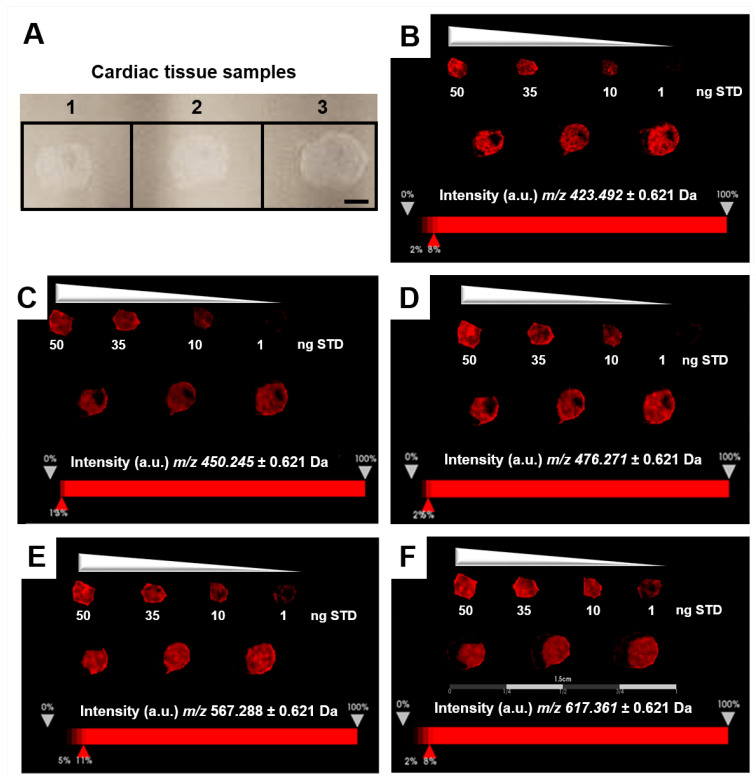 Figure 5
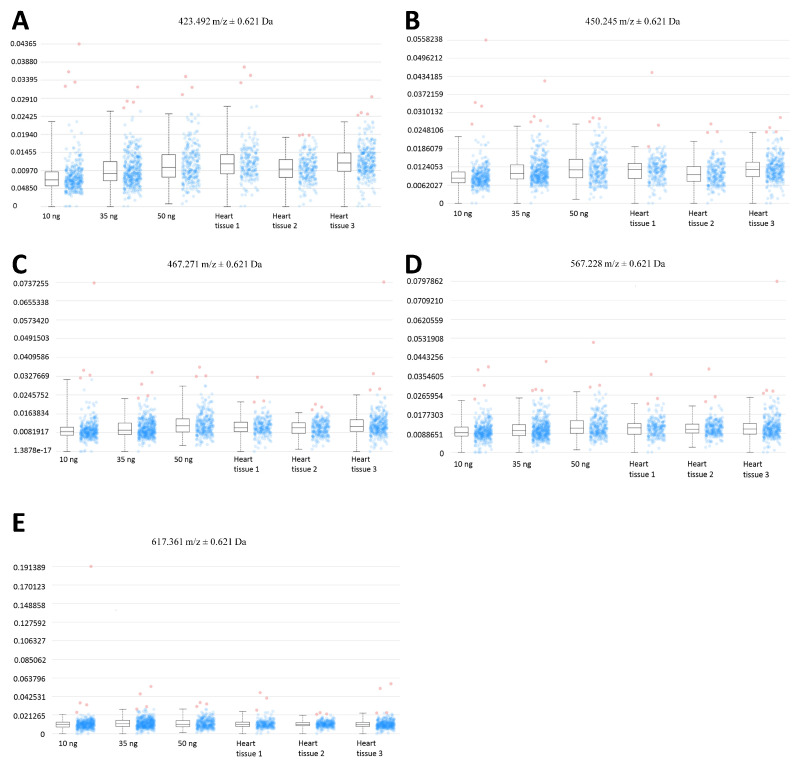 Figure 6
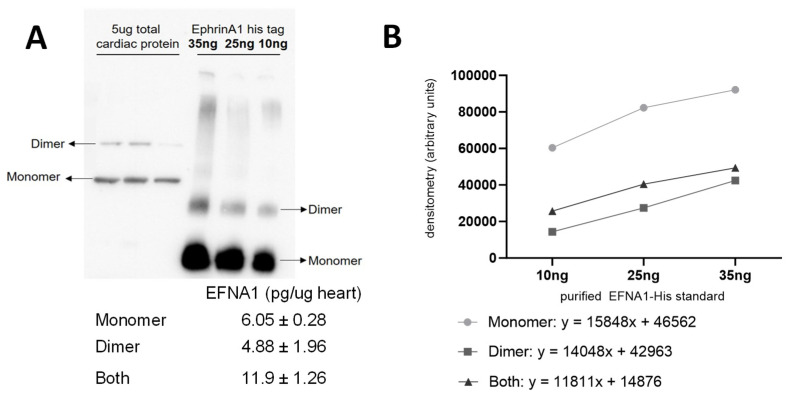 Figure 7
Peer Reviews
No public reviews on file for this paper yet. If you reviewed it on a platform where reviews are public (OpenReview, ICLR, NeurIPS, ICML), you can paste yours below so the community can read it here.
Videos
No videos yet. Explain this paper in a talk, walkthrough, or lecture? Add one.
Taxonomy
TopicsCell Adhesion Molecules Research · Axon Guidance and Neuronal Signaling · Receptor Mechanisms and Signaling