Interspecies Blastocyst Complementation and the Genesis of Chimeric Solid Human Organs
Elena Bigliardi, Anala V. Shetty, Walter C. Low, Clifford J. Steer

TL;DR
Scientists are exploring using interspecies blastocyst complementation to grow human organs in animals to address the donor organ shortage.
Contribution
This paper reviews 19 studies on blastocyst complementation, highlighting progress and challenges in generating chimeric human organs.
Findings
Blastocyst complementation has shown promise in generating organs like the liver, lung, and kidney in chimeric models.
Only one study used human donor cells in a pig host, while others used rat–mouse chimeras.
Key challenges include developmental mismatches and ethical concerns about human–animal chimeras.
Abstract
Solid organ transplantation remains a life-saving treatment for patients worldwide. Unfortunately, the supply of donor organs cannot meet the current need, making the search for alternative sources even more essential. Xenotransplantation using sophisticated genetic engineering techniques to delete and overexpress specific genes in the donor animal has been investigated as a possible option. However, the use of exogenous tissue presents another host of obstacles, particularly regarding organ rejection. Given these limitations, interspecies blastocyst complementation in combination with precise gene knockouts presents a unique, promising pathway for the transplant organ shortage. In recent years, great advancements have been made in the field, with encouraging results in producing a donor-derived organ in a chimeric host. That said, one of the major barriers to successful interspecies…
Genes, proteins, chemicals, diseases, species, mutations and cell lines named across the full text — each resolved to its canonical identifier and authoritative record.
Click any figure to enlarge with its caption.
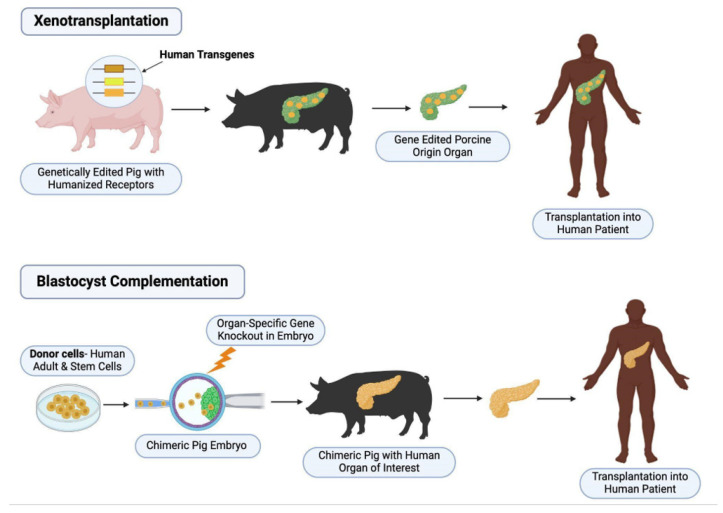 Figure 1
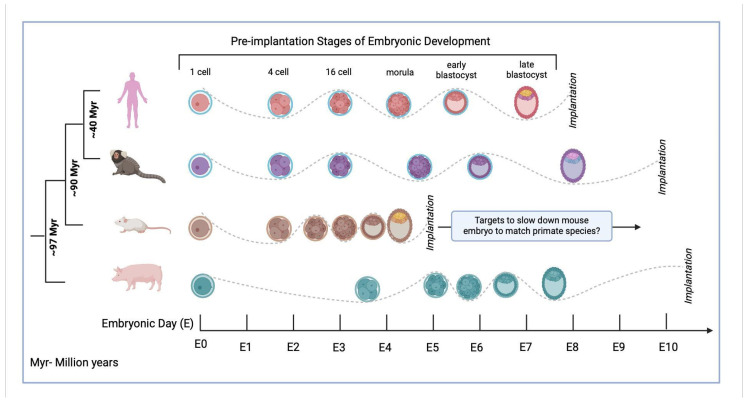 Figure 2
Peer Reviews
No public reviews on file for this paper yet. If you reviewed it on a platform where reviews are public (OpenReview, ICLR, NeurIPS, ICML), you can paste yours below so the community can read it here.
Videos
No videos yet. Explain this paper in a talk, walkthrough, or lecture? Add one.
Taxonomy
TopicsPluripotent Stem Cells Research · Renal and related cancers · Reproductive Biology and Fertility