Mechanistic Insights into CYP199A4-Catalyzed α-Hydroxyketone Formation and Hydrogen Bond-Assisted C–C Bond Cleavage Catalyzed by the CYP199A4 F182L Mutant
Chang Yuan, Jiaqi Xu, Shun Wang, Ye-Guang Fang, Hongwei Tan

TL;DR
This study explains how a mutated enzyme helps break chemical bonds through hydrogen bonding and radical reactions.
Contribution
The study reveals the mechanism of C–C bond cleavage by a CYP199A4 mutant via hydrogen bonding and radical attack.
Findings
F182L-CYP199A4 forms a hydrogen bond between α-hydroxyketone and POA, stabilizing the substrate for bond cleavage.
C–C bond cleavage occurs via a radical attack mechanism in the F182L mutant.
Hydroxylation of 4-pIBA has a rate-limiting energy barrier of 17.1 kcal/mol.
Abstract
CYP199A4 is a cytochrome P450 and can catalyze the hydroxylation of 4-propionylbenzoic acid (4-pIBA) to generate α-hydroxyketone with high stereoselectivity. The F182L mutant of CYP199A4 (F182L-CYP199A4) has been shown to support the cleavage of the C–C bond between the carbonyl and hydroxyl groups of α-hydroxyketone, whereas wild-type CYP199A4 cannot. To uncover how the Phe182 regulates substrate reactivity, we conducted classical molecular dynamics (MD) and quantum mechanics/molecular mechanics (QM/MM) MD simulations on these systems. The results predicted that the formation of α-hydroxyketone preferentially led to the (S)-enantiomer. Moreover, the findings revealed that the F182L-CYP199A4 facilitated the formation of a hydrogen bond between the α-hydroxyketone and the reactive peroxoanion (POA) species. This interaction stabilized the α-hydroxyketone near POA and promoted the…
Genes, proteins, chemicals, diseases, species, mutations and cell lines named across the full text — each resolved to its canonical identifier and authoritative record.
Click any figure to enlarge with its caption.
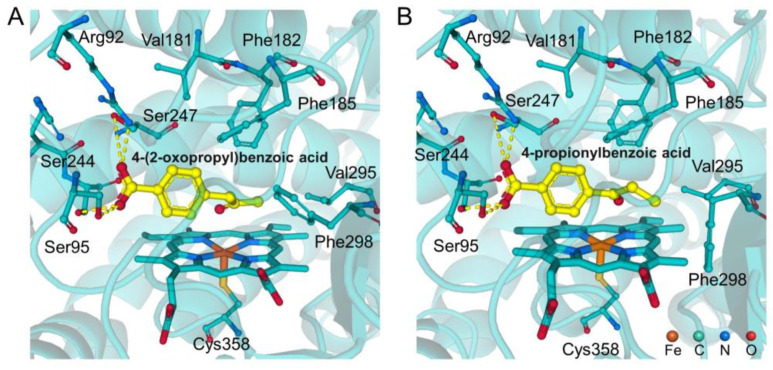 Figure 1
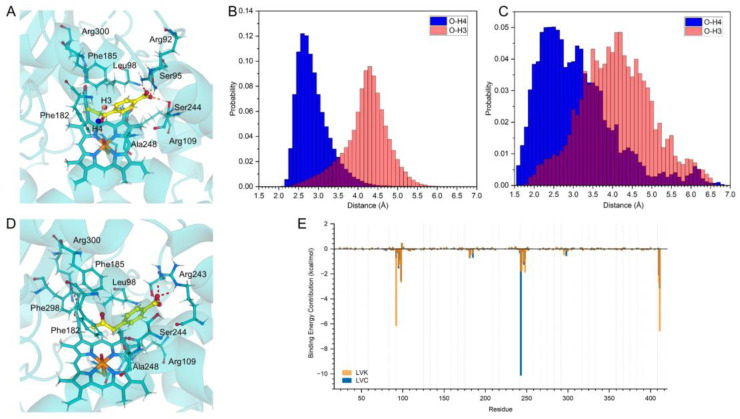 Figure 2
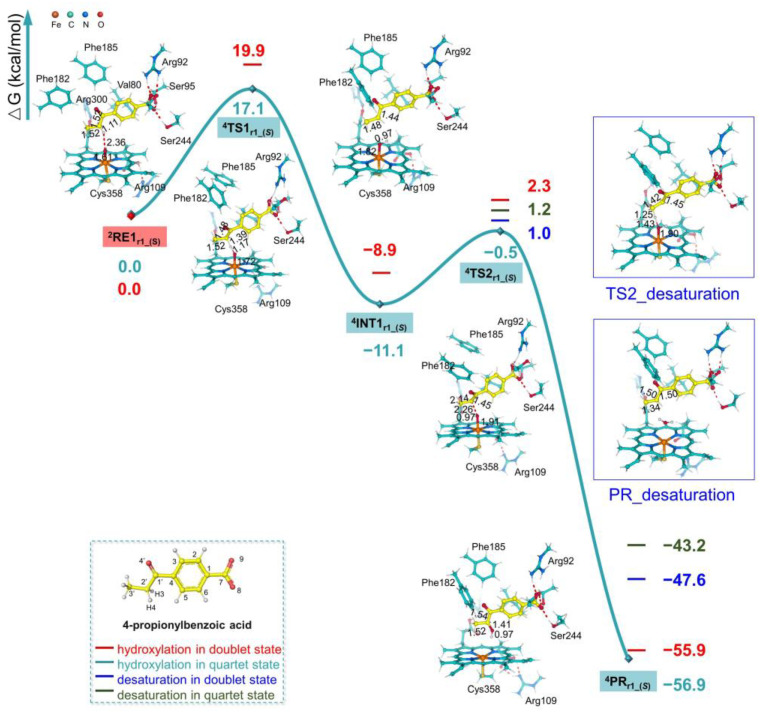 Figure 3
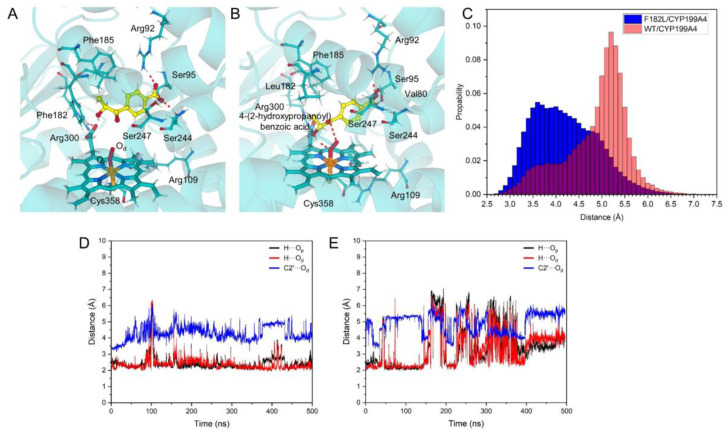 Figure 4
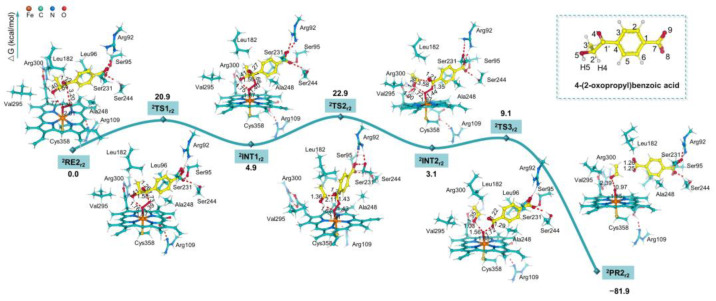 Figure 5
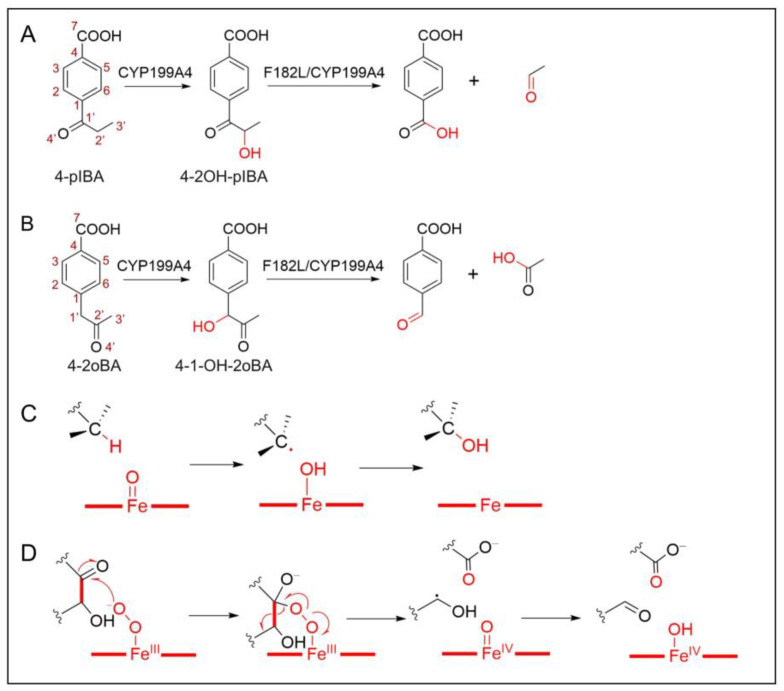 Figure 6
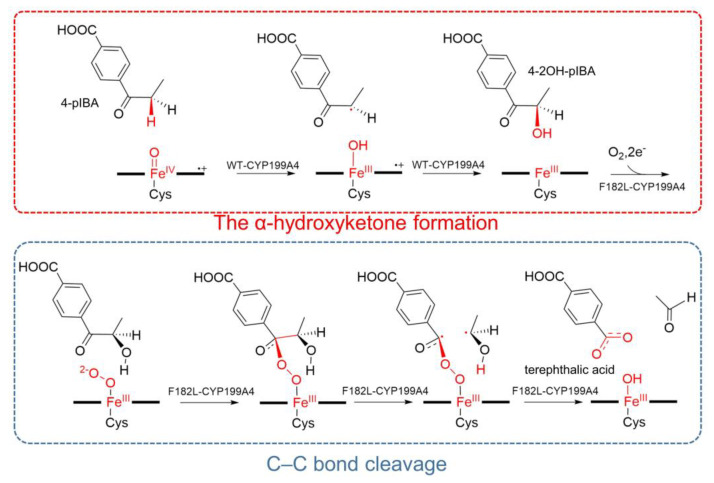 Figure 7
Peer Reviews
No public reviews on file for this paper yet. If you reviewed it on a platform where reviews are public (OpenReview, ICLR, NeurIPS, ICML), you can paste yours below so the community can read it here.
Videos
No videos yet. Explain this paper in a talk, walkthrough, or lecture? Add one.
Taxonomy
TopicsPharmacogenetics and Drug Metabolism · Metal-Catalyzed Oxygenation Mechanisms · Biochemical Acid Research Studies