Discovery of Novel Pyridin-2-yl Urea Inhibitors Targeting ASK1 Kinase and Its Binding Mode by Absolute Protein–Ligand Binding Free Energy Calculations
Lingzhi Wang, Yalei Gao, Yuying Chen, Zhenzhou Tang, Xiao Lin, Meng Bai, Pei Cao, Kai Liu

TL;DR
This paper discovers new pyridin-2-yl urea compounds that inhibit ASK1 kinase, a promising drug target, and validates their effectiveness using bioassays and computational methods.
Contribution
The study introduces novel pyridin-2-yl urea inhibitors and uses absolute binding free energy calculations to determine their binding modes with ASK1 kinase.
Findings
Compound 2 showed an IC50 of 1.55 ± 0.27 nM, comparable to the clinical inhibitor Selonsertib.
Molecular docking and BFE calculations identified optimal binding modes of the inhibitors to ASK1.
The computational strategy aligns well with experimental bioassay results.
Abstract
Apoptosis signal-regulating kinase 1 (ASK1), a key component of the mitogen-activated protein kinase (MAPK) cascades, has been identified as a promising therapeutic target owing to its critical role in signal transduction pathways. In this study, we proposed novel pyridin-2-yl urea inhibitors exhibiting favorable physicochemical properties. The potency of these compounds was validated through in vitro protein bioassays. The inhibition (IC50) of compound 2 was 1.55 ± 0.27 nM, which was comparable to the known clinical inhibitor, Selonsertib. To further optimize the hit compounds, two possible binding modes were initially predicted by molecular docking. Absolute binding free energy (BFE) calculations based on molecular dynamics simulations further discriminated the binding modes, presenting good tendency with bioassay results. This strategy, underpinned by BFE calculations, has the great…
Genes, proteins, chemicals, diseases, species, mutations and cell lines named across the full text — each resolved to its canonical identifier and authoritative record.
Click any figure to enlarge with its caption.
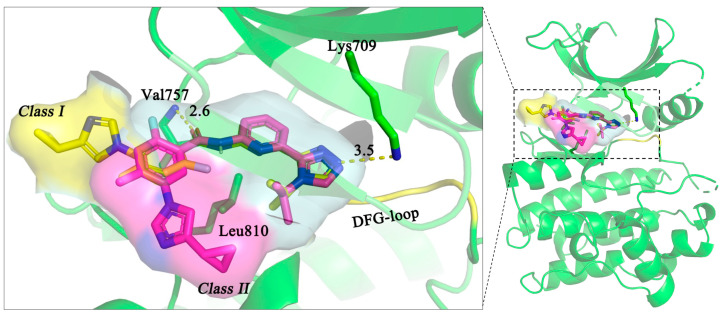 Figure 1
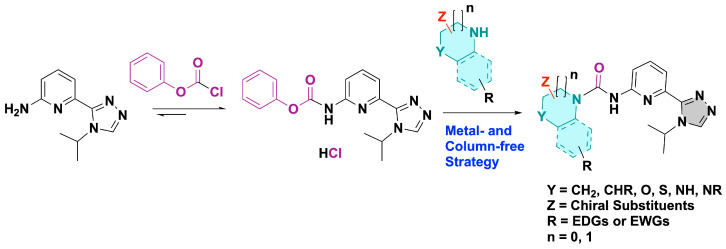 Figure 2
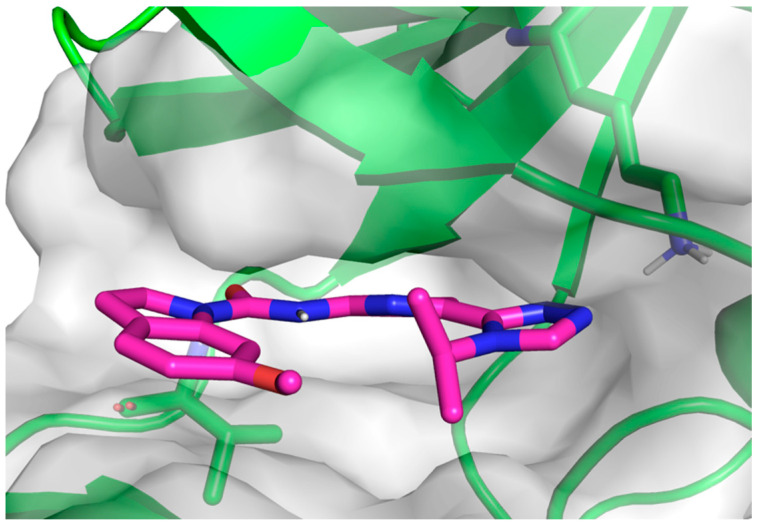 Figure 3
 Figure 4
 Figure 5
 Figure 6
 Figure 7
 Figure 8
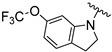 Figure 9
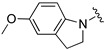 Figure 10
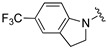 Figure 11
 Figure 12
 Figure 13
Peer Reviews
No public reviews on file for this paper yet. If you reviewed it on a platform where reviews are public (OpenReview, ICLR, NeurIPS, ICML), you can paste yours below so the community can read it here.
Videos
No videos yet. Explain this paper in a talk, walkthrough, or lecture? Add one.
Taxonomy
TopicsComputational Drug Discovery Methods · Synthesis and biological activity · Enzyme function and inhibition