Urinary Fetuin-A with Specific Post-Translational Modification in Type 1 Diabetes Patients with Normoalbuminuria and Preserved Kidney Function
Sandra Božičević, Tomislav Bulum, Lea Smirčić Duvnjak, Marijana Vučić Lovrenčić

TL;DR
This study explores a modified form of fetuin-A in urine as a potential early marker of kidney dysfunction in male type 1 diabetes patients.
Contribution
The study introduces a sex-specific association between a modified fetuin-A peptide and early kidney dysfunction in type 1 diabetes.
Findings
uPTM3-FetA levels were not significantly different between normal and declining kidney function groups overall.
Male T1D patients with lower eGFR had significantly higher uPTM3-FetA excretion compared to those with higher eGFR.
BMI, hs-CRP, resistin, and HDL-cholesterol were independent predictors of uPTM3-FetA excretion.
Abstract
Background/Objectives: Post-translationally modified peptide fragments of fetuin-A (FetA) were identified as a potential biomarker of diabetic kidney disease (DKD). An independent association between urinary FetA-derived peptide levels (uPTM3-FetA) and DKD progression in patients with type 2 diabetes (T2D) was evidenced. This study aimed to explore uPTM3-FetA excretion and its associations with insulin resistance, inflammatory and metabolic biomarkers in patients with type 1 diabetes (T1D), and the normal albuminuria and estimated glomerular filtration rate (eGFR) > 60 mL/min/1.73 m2. Methods: uPTM3-FetA levels in aliquots of 24 h urine specimens, routine laboratory renal, metabolic and inflammatory tests, adipokines (leptin, adiponectin, resistin), and insulin resistance, assessed as the estimated glucose disposal rate (eGDR), were measured in a cohort of 169 adult T1D patients. To…
Genes, proteins, chemicals, diseases, species, mutations and cell lines named across the full text — each resolved to its canonical identifier and authoritative record.
Click any figure to enlarge with its caption.
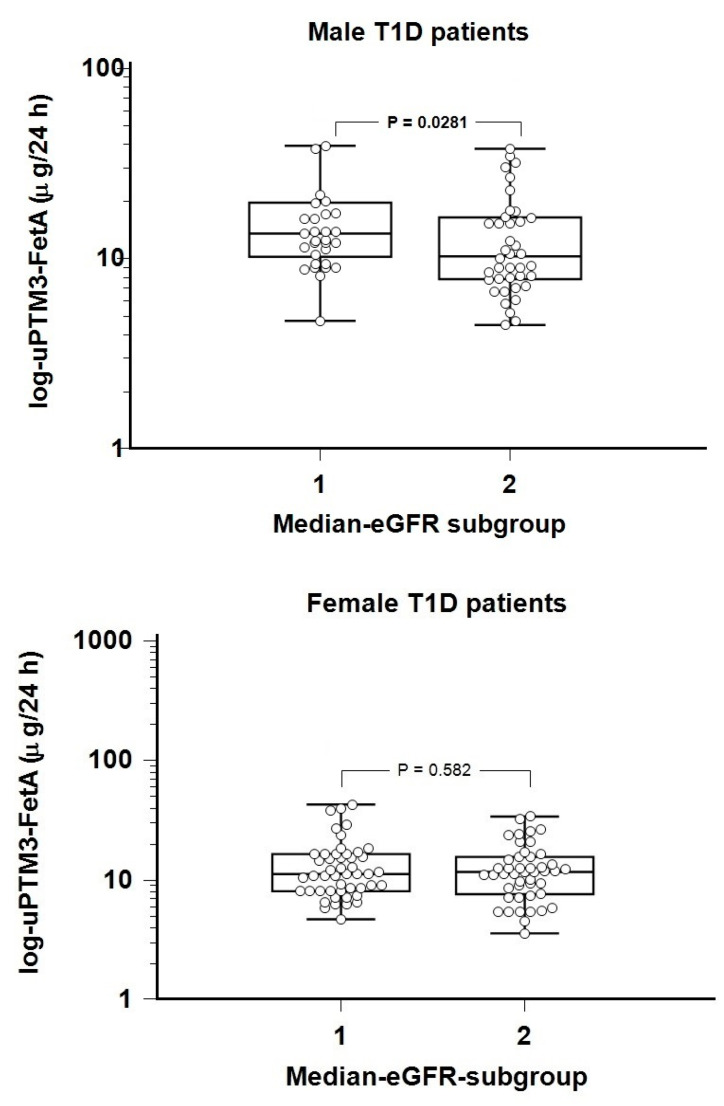 Figure 1
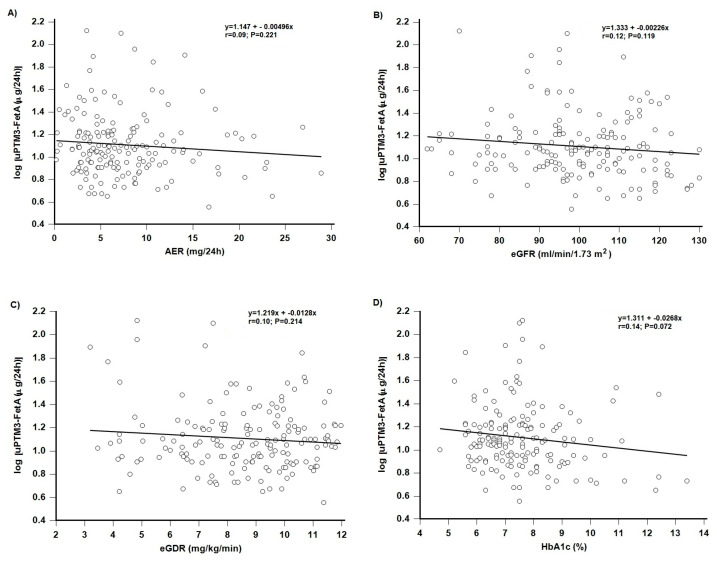 Figure 2
Peer Reviews
No public reviews on file for this paper yet. If you reviewed it on a platform where reviews are public (OpenReview, ICLR, NeurIPS, ICML), you can paste yours below so the community can read it here.
Videos
No videos yet. Explain this paper in a talk, walkthrough, or lecture? Add one.
Taxonomy
TopicsDiabetes Treatment and Management · Parathyroid Disorders and Treatments · Iron Metabolism and Disorders