Simplifying the Diagnosis of Pediatric Nystagmus with Fundus Photography
Noa Cohen-Sinai, Inbal Man Peles, Basel Obied, Noa Netzer, Noa Hadar, Alon Zahavi, Nitza Goldenberg-Cohen

TL;DR
This study shows that fundus photography can help diagnose nystagmus in children by capturing eye movement patterns and retinal details.
Contribution
The study demonstrates the utility of fundus photography in simplifying nystagmus diagnosis, especially in pediatric patients.
Findings
Fundus photos correlated with clinical diagnoses and aided in assessing nystagmus direction and amplitude.
The method effectively captured retinal details despite continuous eye movements in young children.
Integrating fundus cameras into routine practice may improve nystagmus diagnosis and patient outcomes.
Abstract
Background/Objectives: To simplify diagnosing congenital and acquired nystagmus using fundus photographs. Methods: A retrospective study included patients with congenital or childhood-acquired nystagmus examined at a hospital-based ophthalmology clinic (September 2020–September 2023) with fundus photos taken. Exclusions were for incomplete data or low-quality images. Demographics, aetiology, orthoptic measurements, and ophthalmologic and neurological exams were reviewed. Two independent physicians graded fundus photos based on amplitude (distance between “ghost” images), the number of images visible, and the direction of nystagmus. Severity was rated on a 0–3 scale using qualitative and quantitative methods. Photographic findings were compared to clinical data, and statistical analysis used Mann-Whitney tests. Results: A total of 53 eyes from 29 patients (16 females, 13 males; mean age…
Genes, proteins, chemicals, diseases, species, mutations and cell lines named across the full text — each resolved to its canonical identifier and authoritative record.
Click any figure to enlarge with its caption.
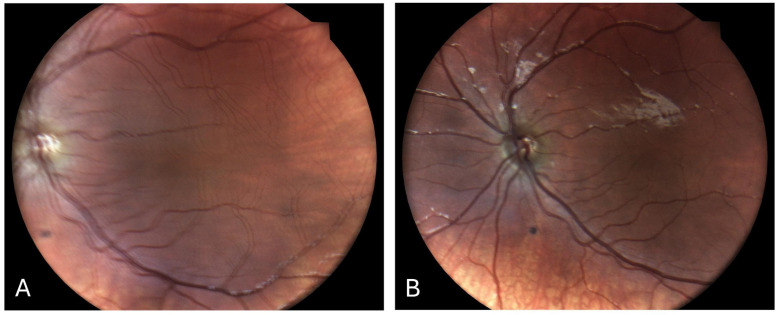 Figure 1
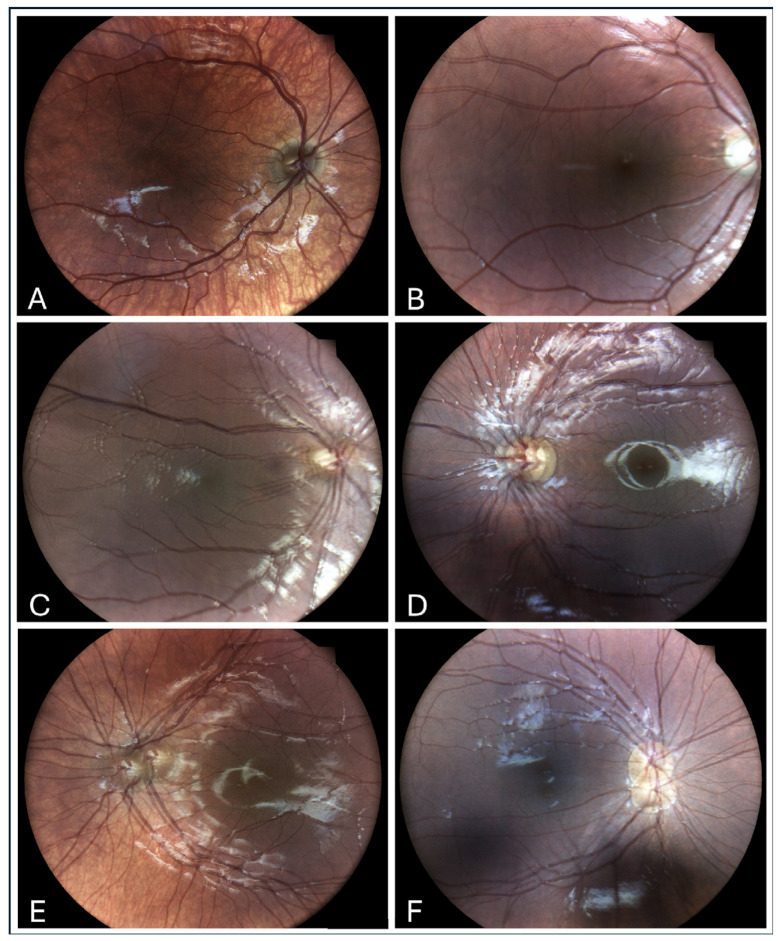 Figure 2
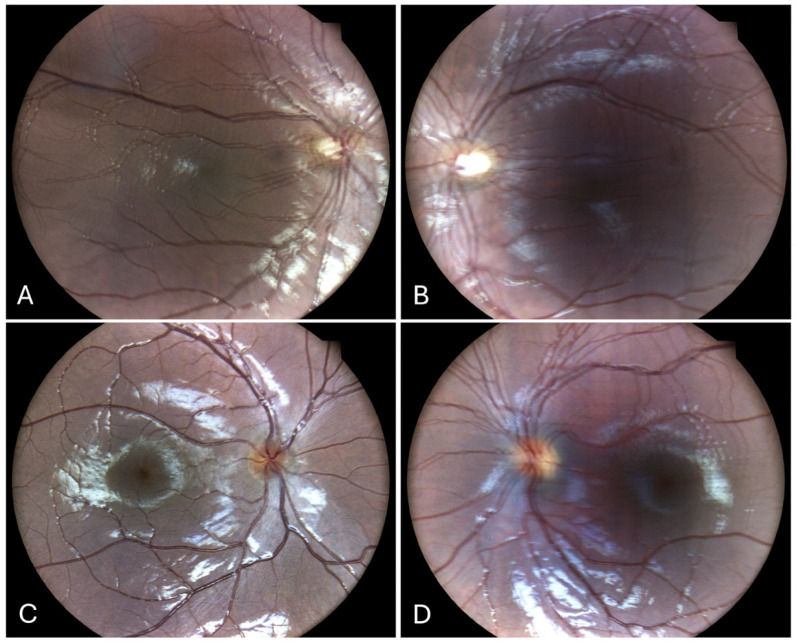 Figure 3
Peer Reviews
No public reviews on file for this paper yet. If you reviewed it on a platform where reviews are public (OpenReview, ICLR, NeurIPS, ICML), you can paste yours below so the community can read it here.
Videos
No videos yet. Explain this paper in a talk, walkthrough, or lecture? Add one.
Taxonomy
TopicsOphthalmology and Visual Health Research · Vestibular and auditory disorders · History of Medicine Studies