The Role of the MTUS1 Gene in the Development of Left Ventricular Noncompaction Cardiomyopathy—A Case Report
Tevž Gorjanc, Jaka Šikonja, Ana Drole Torkar, Mojca Žerjav Tanšek, Jernej Kovač, Sara Bertok, Maruša Debeljak, Zvezdana Dolenc-Stražar, Marija Meznarič, Jernej Mlakar, Mirko Topalović, Gorazd Mlakar, Tadej Battelino, Urh Grošelj

TL;DR
A case report explores how mutations in the MTUS1 gene may be linked to left ventricular noncompaction cardiomyopathy in an infant, but does not cause the condition alone.
Contribution
This is the first human case report linking MTUS1 gene variants to LVNC and highlighting the need for additional factors for disease manifestation.
Findings
The patient had two MTUS1 gene variants that altered the protein structure but did not cause LVNC in his asymptomatic brother.
MTUS1 gene variants alone are insufficient to cause LVNC or developmental disorders.
Environmental or other genetic factors likely contribute to LVNC manifestation.
Abstract
Background/Objectives: The microtubule-associated scaffold protein 1 (MTUS1) gene affects the microtubule stability and cell polarity in the heart and could thus lead to the development of left ventricular noncompaction (LVNC). Pathological gene variants in MTUS1 are associated with pathological phenotypes in both cell cultures and animal models. However, the literature lacks human studies on the specific effects of the MTUS1 gene in heart disease, particularly in congenital LVNC. Methods: We present a case of a male infant, diagnosed with LVNC, who passed away at the age of 8 months due to end-stage heart failure. In the investigation process of the etiology of LVNC, whole-genome sequencing using next-generation sequencing was performed in the patient and his first-degree family members. Results: Genetic analysis identified two heterozygous variants in the MTUS1 gene…
Genes, proteins, chemicals, diseases, species, mutations and cell lines named across the full text — each resolved to its canonical identifier and authoritative record.
Click any figure to enlarge with its caption.
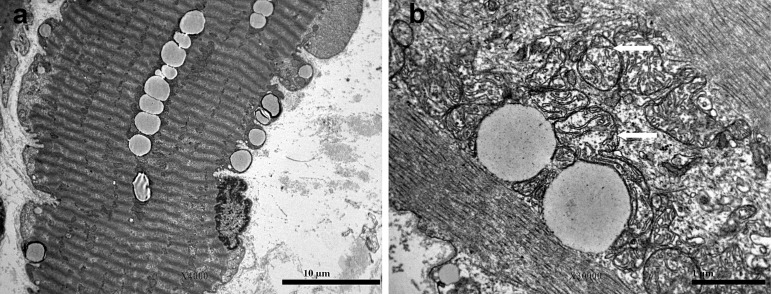 Figure 1
Peer Reviews
No public reviews on file for this paper yet. If you reviewed it on a platform where reviews are public (OpenReview, ICLR, NeurIPS, ICML), you can paste yours below so the community can read it here.
Videos
No videos yet. Explain this paper in a talk, walkthrough, or lecture? Add one.
Taxonomy
TopicsCardiomyopathy and Myosin Studies · Congenital heart defects research · Neurogenetic and Muscular Disorders Research