Switching to the CKD-EPI but Not Modified FAS eGFR Formula Underdetects CKD Among Adolescents and Young Adults in México
Alethia Paulina Monserrat Guzmán Núñez, Guido Filler, Olivier C. Barbier, Elodia Rojas Lima, Pablo Mendez-Hernández, Manolo Ortega-Romero, Maria Esther Díaz González de Ferris, Mara Medeiros

TL;DR
Switching to the CKD-EPI formula for estimating kidney function in young adults in Mexico leads to fewer cases of chronic kidney disease being detected compared to other formulas.
Contribution
The study highlights the underdetection of CKD in adolescents and young adults in Mexico when using the CKD-EPI formula instead of other eGFR estimation methods.
Findings
CKD-EPI eGFR values were significantly higher than CKiD-U25 values, leading to fewer CKD cases being identified.
Modified Schwartz and Pottel FAS formulas showed better correlation with each other than with CKD-EPI.
CKD-EPI identified only 4.8% of participants as having CKD 2+, compared to 37.7% with CKiD-U25.
Abstract
Background: Guidelines recommend switching the glomerular filtration rate (eGFR) estimation from the CKiD-U25 to the CKD-EPI formula at age 18. We investigated how this would affect chronic kidney disease (CKD) classification. Methods: Serum creatinine was enzymatically measured in 1061 samples from 914 community-based 10–23-year-olds from Tlaxcala, Mexico, a region where urinary biomarkers demonstrated early kidney damage associated with exposure to inorganic toxins in a pediatric population. We calculated their eGFR using CKiD-U25, modified Schwartz, the first and modified Pottel full-age spectrum (FAS), and CKD-EPI formulae. Correlation analysis characterized the CKD stage stratified by age and sex. Results: At baseline, the median age was 13 (IQR: 12, 15) years, and 55% were female. Median CKiD-U25 eGFR was 96.9 (IQR: 83.3, 113.3) mL/min/1.73 m2, significantly lower than the CKD-EPI…
Genes, proteins, chemicals, diseases, species, mutations and cell lines named across the full text — each resolved to its canonical identifier and authoritative record.
Click any figure to enlarge with its caption.
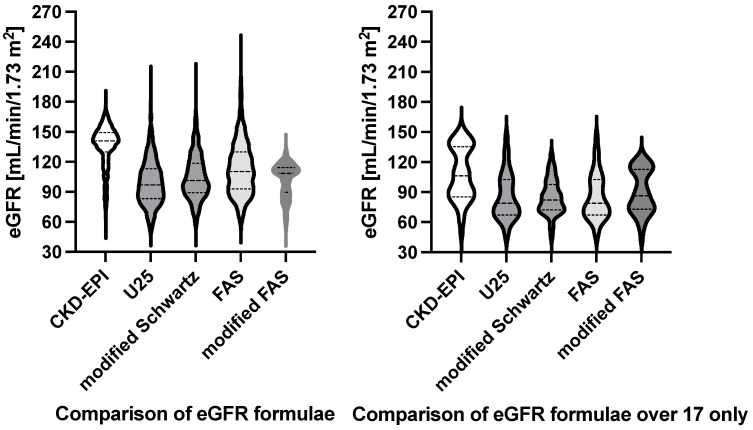 Figure 1
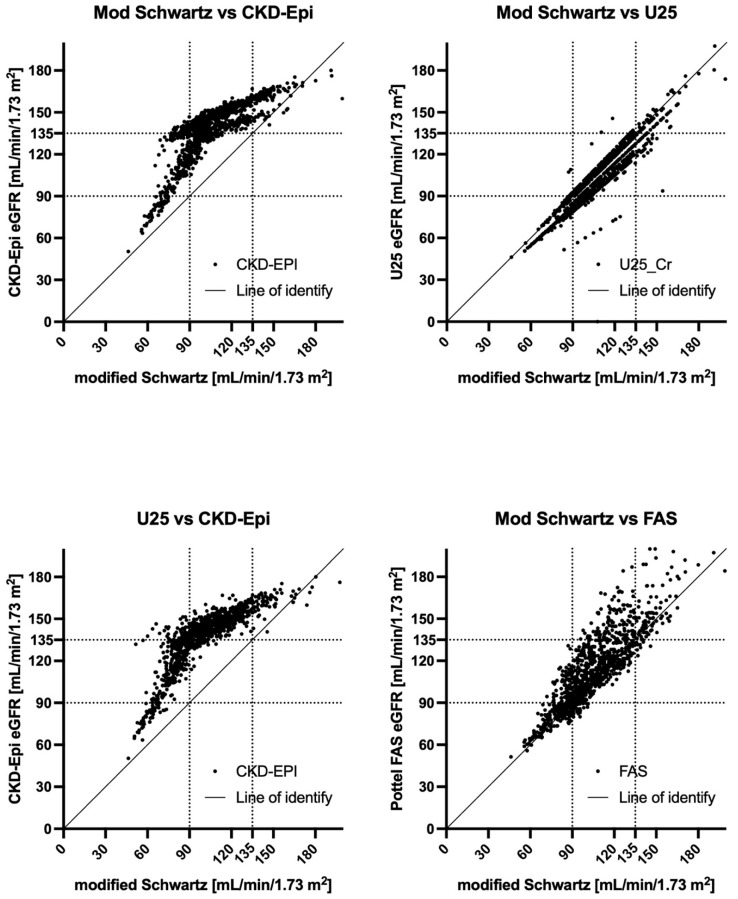 Figure 2
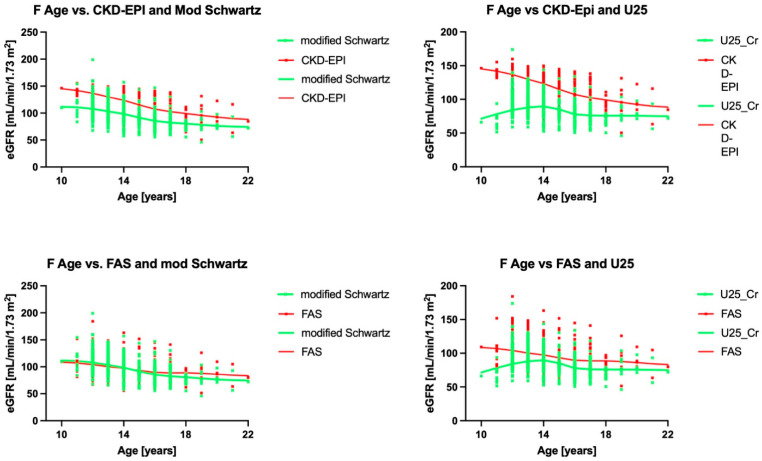 Figure 3
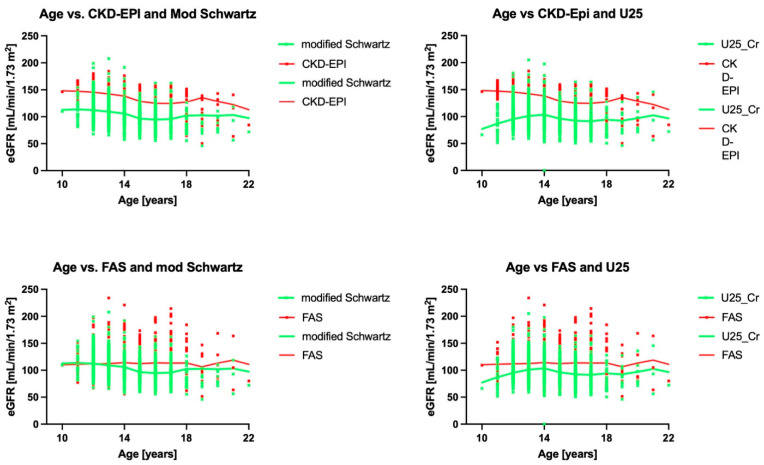 Figure 4
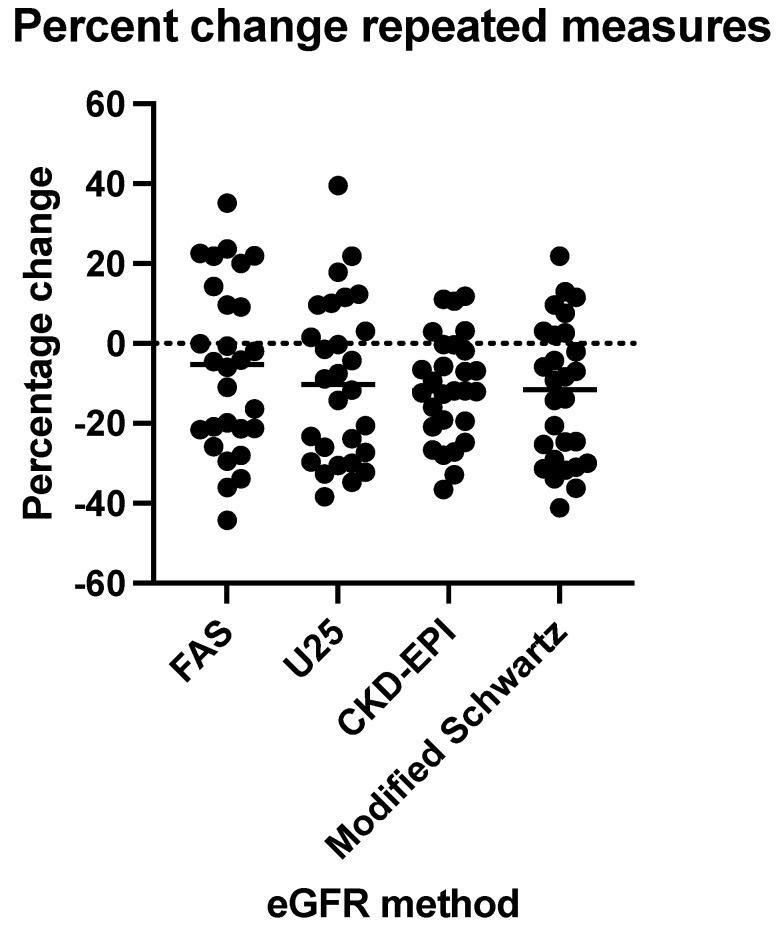 Figure 5
Peer Reviews
No public reviews on file for this paper yet. If you reviewed it on a platform where reviews are public (OpenReview, ICLR, NeurIPS, ICML), you can paste yours below so the community can read it here.
Videos
No videos yet. Explain this paper in a talk, walkthrough, or lecture? Add one.
Taxonomy
TopicsChronic Kidney Disease and Diabetes · Birth, Development, and Health · Dialysis and Renal Disease Management