Is There Bias in the Assessment of Contraindications for Resection? Disparities in the Surgical Management of Early-Stage Esophageal Cancer
Christina S. Boutros, Lauren M. Drapalik, Christine E. Alvarado, Aria Bassiri, Jillian Sinopoli, Leonidas Tapias Vargas, Philip A. Linden, Christopher W. Towe

TL;DR
The study finds that decisions to avoid surgery for early-stage esophageal cancer vary widely between hospitals and are influenced by patient demographics and institutional factors.
Contribution
This study reveals significant disparities in surgical contraindication assessments for esophageal cancer patients across U.S. institutions.
Findings
Contraindication status is associated with age, race, socioeconomic status, and insurance type.
Observed-expected ratios for contraindication status varied over 1000-fold between institutions for cT1N0M0 patients.
Underserved minorities are at higher risk of being labeled contraindicated for surgery.
Abstract
Background: Resection is considered the standard of care for patients with localized esophageal cancer who are “physiologically fit”. Patients who do not meet this standard are considered contraindicated to receive surgery. We hypothesized that among patients with non-metastatic esophageal cancer, the consideration of contraindication status would vary based on clinical and demographic factors and would vary between institutions. Methods: We identified patients with non-metastatic gastric and esophageal cancer in the National Cancer Database (NCDB) from 2004 to 2018. Patients were categorized into three groups based on surgical treatment: surgical resection (including endoscopic mucosal resection), resection contraindicated, and refusal of resection based on the coding of the “reason for no surgery” data element. Demographic, clinical, and institutional characteristics were compared…
Genes, proteins, chemicals, diseases, species, mutations and cell lines named across the full text — each resolved to its canonical identifier and authoritative record.
Click any figure to enlarge with its caption.
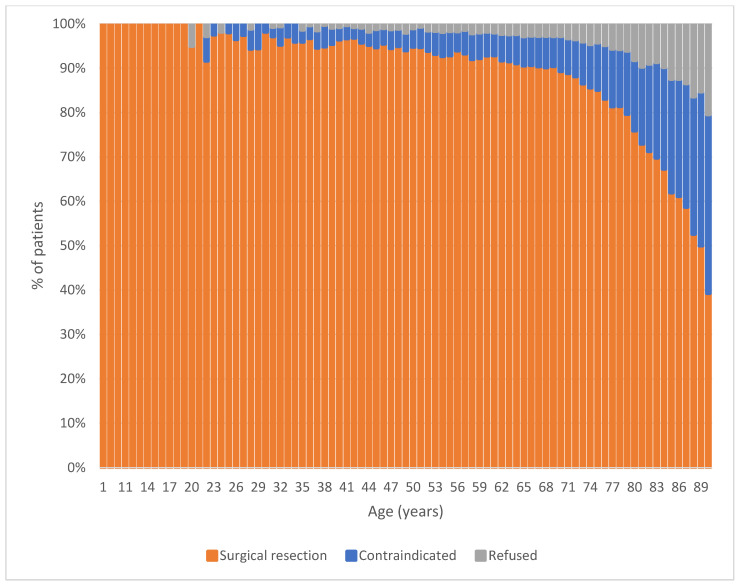 Figure 1
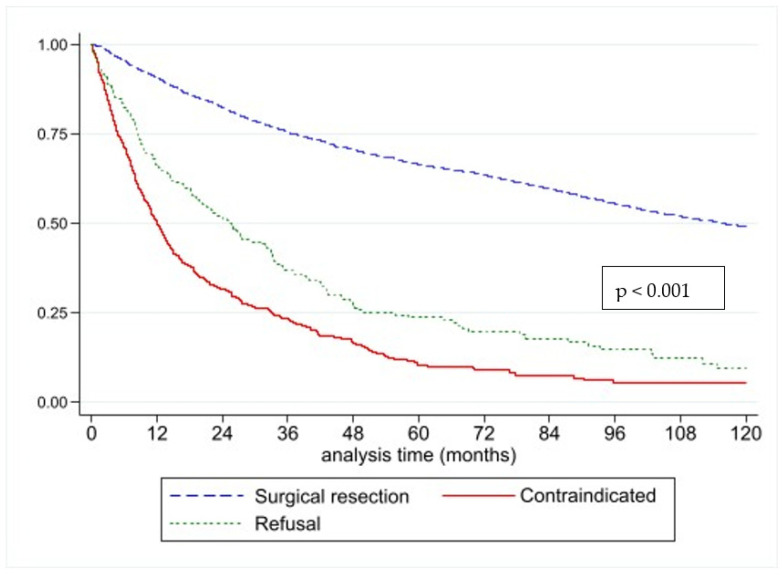 Figure 2
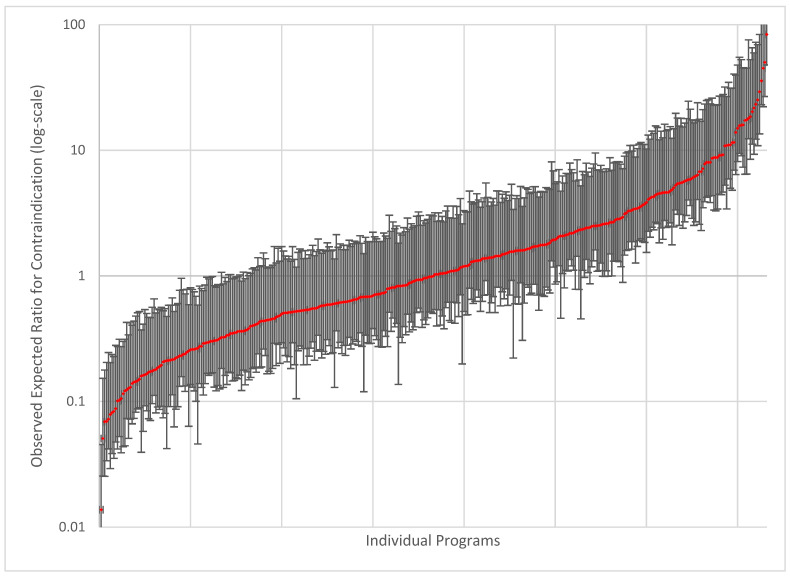 Figure 3
Peer Reviews
No public reviews on file for this paper yet. If you reviewed it on a platform where reviews are public (OpenReview, ICLR, NeurIPS, ICML), you can paste yours below so the community can read it here.
Videos
No videos yet. Explain this paper in a talk, walkthrough, or lecture? Add one.
Taxonomy
TopicsEsophageal Cancer Research and Treatment · Gastric Cancer Management and Outcomes · Esophageal and GI Pathology