Molecular Biomarkers and More Efficient Therapies for Sepsis
Wen-Lin Su, Sheng-Kang Chiu, Chih-Hao Shen, Yi-Ting Chen

Abstract
Genes, proteins, chemicals, diseases, species, mutations and cell lines named across the full text — each resolved to its canonical identifier and authoritative record.
Click any figure to enlarge with its caption.
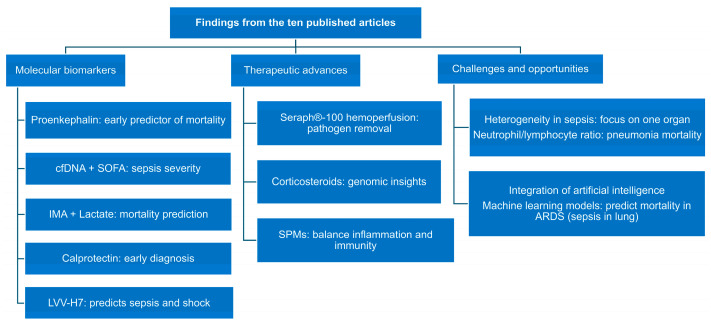 Figure 1
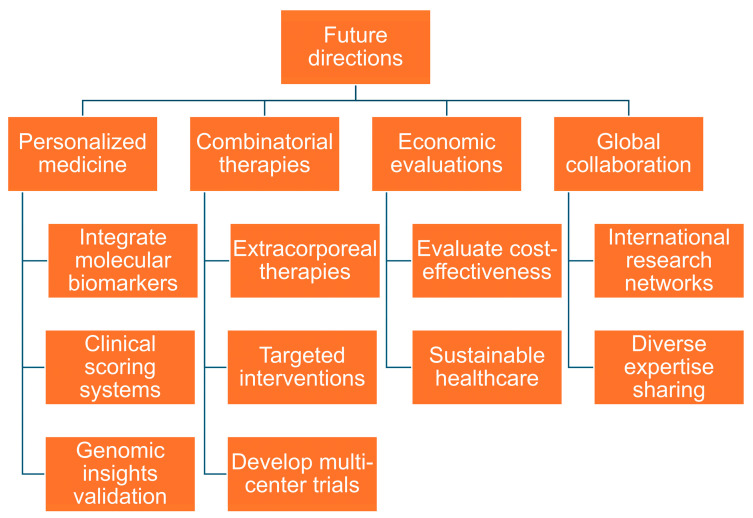 Figure 2
- —the Buddhist Tzu Chi Medical Foundation
- —Taipei Tzu Chi Hospital
Peer Reviews
No public reviews on file for this paper yet. If you reviewed it on a platform where reviews are public (OpenReview, ICLR, NeurIPS, ICML), you can paste yours below so the community can read it here.
Videos
No videos yet. Explain this paper in a talk, walkthrough, or lecture? Add one.
Taxonomy
TopicsSepsis Diagnosis and Treatment · Immune Response and Inflammation · S100 Proteins and Annexins
1. Introduction
Sepsis remains a leading cause of morbidity and mortality worldwide, representing a substantial burden on healthcare systems [1,2,3]. Furthermore, sepsis is an ill-defined syndrome with an immunopathophysiology characterized by simultaneous hyperinflammation and immune suppression, which makes it challenging to address varying immune statuses at different stages of sepsis [4]. Nanotechnology represents a promising trend in the future diagnosis and management of sepsis [5]. Recent advancements in molecular biomarkers and innovative therapeutic strategies offer promising avenues for addressing the multifaceted challenges of sepsis. This editorial synthesizes the key findings from recent studies (Figure 1), providing a roadmap for future research and clinical applications.
2. Advances in Molecular Biomarkers
2.1. Proenkephalin as an Early Predictor of Mortality
Emerging biomarkers such as proenkephalin (PENK) have shown potential in predicting in-hospital mortality among septic shock patients, demonstrating strong correlations with metabolic and inflammatory biomarkers [6]. PENK’s utility underscores the importance of integrating point-of-care diagnostics in early sepsis management.
2.2. Cell-Free DNA (cfDNA) Combined with SOFA in Severity Assessment
cfDNA, including nuclear and mitochondrial components, has been identified as a marker for sepsis severity [7]. Its combination with clinical scores such as SOFA enhances diagnostic precision and prognostication. This underscores the potential of multiplex biomarker panels in stratifying sepsis risk.
2.3. Ischemia-Modified Albumin (IMA) and Lactate in Mortality Prediction
The combination of IMA and lactate levels provides a robust tool for predicting mortality in septic shock patients [8]. This synergistic approach exemplifies how biomarkers can complement each other for enhanced predictive accuracy.
2.4. Calprotectin in Early Diagnosis of Infections
Calprotectin’s ability to predict bacterial infections offers a cost-effective solution for early sepsis detection, reducing ICU stays and mortality [9]. This health economic analysis highlights calprotectin’s economic and clinical benefits as part of early intervention strategies.
2.5. LVV-Hemorphin-7 (LVV-H7) in Predicting Sepsis
LVV-H7, a metabolite of cell-free hemoglobin catalyzed by cathepsins D and G during infection, shows potential for predicting sepsis and shock in critically ill patients with acute changes in SOFA scores [10]. These results highlight the utility of cell-free hemoglobin metabolites in sepsis prognostication.
3. Innovative Therapeutic Approaches
3.1. Seraph®-100 Hemoperfusion
Novel therapies such as the Seraph^®^-100 hemoperfusion device have demonstrated efficacy in removing bacterial pathogens in a simulated hemoperfusion study, representing a breakthrough in extracorporeal therapies for sepsis-related bacteremia [11].
3.2. Corticosteroids and Genomic Insights
Corticosteroids, long debated for their role in sepsis management, may benefit from genomic and transcriptomic stratification to identify responsive subgroups [12]. These therapies modulate the immune response, stabilize the cardiovascular system, and potentially facilitate organ restoration. This personalized approach could optimize outcomes while minimizing risks.
3.3. Specialized Pro-Resolving Mediators (SPMs)
In sepsis, severe inflammation occurs early, followed by paradoxical immunosuppression in later stages. SPMs offer a dual advantage by resolving inflammation without inducing immunosuppression [13]. Their role in managing the immunosuppressive phase of sepsis provides a balanced therapeutic strategy.
4. Challenges and Opportunities
4.1. Heterogeneity in Sepsis
Sepsis is not a singular disease but a syndrome with diverse etiologies and manifestations. Biomarker-driven phenotyping can aid in tailoring therapies to individual patient profiles, addressing this heterogeneity. Pneumonia, a major cause of sepsis, may benefit from predictors such as the neutrophil/lymphocyte ratio and pneumonia severity index for mortality risk assessment [14].
4.2. Integration of Artificial Intelligence
Machine learning and imaging algorithms are emerging as powerful tools for sepsis diagnosis and monitoring. These technologies can complement molecular biomarkers to refine risk stratification and therapeutic decisions. For example, integrating P/F ratios and chest X-ray data in machine learning models may help predict mortality in SARS-CoV-2-associated ARDS [15].
5. Future Directions
As illustrated in Figure 2, the future directions focus on personalized medicine and combinatorial therapies for heterogeneous sepsis, including variations in early versus late sepsis and different infection sources. Economic evaluation and global collaboration should also be prioritized, driven by artificial intelligence to tackle this complex disease.
5.1. Personalized Medicine
The integration of clinical scoring systems [16] combined with molecular biomarkers [17] such as proteomics [18] and genomic insights [19] paves the way for personalized sepsis management. The different pathogens and their drug resistance and virulence may have different outcomes, such as mortality [20]. In addition, the varying definitions of infection in critically ill populations [21] and the definition of sepsis may also offer important predictions of mortality outcomes [22]. Future research should focus on validating biomarker panels in diverse populations.
5.2. Combinatorial Therapies
The sepsis treatment guidelines, as established by the Surviving Sepsis Campaign in 2021 [23], still lack strong evidence for molecular therapies. Combining extracorporeal therapies [24,25,26,27], targeted pharmacological interventions [28,29], and supportive care [30,31] can maximize treatment efficacy. As many multi-center trials have begun of targeted pharmacological therapy in sepsis [32,33], additional multi-center trials are needed to establish best practices for such combinatorial approaches.
5.3. Economic Evaluations
Given the financial burden of sepsis, cost-effectiveness analyses should be integral to the development and deployment of new biomarkers and therapies [34]. This ensures the sustainability of healthcare interventions.
5.4. Global Collaboration
Sepsis is a global health challenge. International collaborations can accelerate the discovery and implementation of effective solutions, leveraging diverse expertise and resources [35].
6. Conclusions
The convergence of molecular biomarkers, innovative therapies, and advanced technologies heralds a new era in sepsis management. By addressing the complexities of this syndrome through personalized and evidence-based approaches, we can improve outcomes for millions of patients worldwide.
The reference list from the paper itself. Each links out to its DOI / PubMed record.
- 1van den Berg M. van Beuningen F.E. ter Maaten J.C. Bouma H.R. Hospital-related costs of sepsis around the world: A systematic review exploring the economic burden of sepsis J. Crit. Care 20227115409610.1016/j.jcrc.2022.15409635839604 · doi ↗ · pubmed ↗
- 2Paoli C.J. Reynolds M.A. Sinha M. Gitlin M. Crouser E. Epidemiology and Costs of Sepsis in the United States-An Analysis Based on Timing of Diagnosis and Severity Level Crit. Care Med.2018461889189710.1097/CCM.000000000000334230048332 PMC 6250243 · doi ↗ · pubmed ↗
- 3Rudd K.E. Kissoon N. Limmathurotsakul D. Bory S. Mutahunga B. Seymour C.W. Angus D.C. West T.E. The global burden of sepsis: Barriers and potential solutions Crit. Care 20182223210.1186/s 13054-018-2157-z 30243300 PMC 6151187 · doi ↗ · pubmed ↗
- 4Wiersinga W.J. van der Poll T. Immunopathophysiology of human sepsis E Bio Medicine 20228610436310.1016/j.ebiom.2022.10436336470832 PMC 9783164 · doi ↗ · pubmed ↗
- 5Pant A. Mackraj I. Govender T. Advances in sepsis diagnosis and management: A paradigm shift towards nanotechnology J. Biomed. Sci.202128610.1186/s 12929-020-00702-633413364 PMC 7790597 · doi ↗ · pubmed ↗
- 6Verras C. Bezati S. Bistola V. Ventoulis I. Matsiras D. Tsiodras S. Parissis J. Polyzogopoulou E. Point-of-Care Serum Proenkephalin as an Early Predictor of Mortality in Patients Presenting to the Emergency Department with Septic Shock Biomedicines 202412100410.3390/biomedicines 1205100438790966 PMC 11117930 · doi ↗ · pubmed ↗
- 7de Miranda F.S. Claudio L. de Almeida D.S.M. Nunes J.B. Barauna V.G. Luiz W.B. Vassallo P.F. Campos L.C.G. Cell-Free Nuclear and Mitochondrial DNA as Potential Biomarkers for Assessing Sepsis Severity Biomedicines 20241293310.3390/biomedicines 1205093338790895 PMC 11117867 · doi ↗ · pubmed ↗
- 8Jin B.Y. Lee S. Kim W. Park J.H. Cho H. Moon S. Ahn S. Ischemia-Modified Albumin, Lactate, and Combination for Predicting Mortality in Patients with Septic Shock in the Emergency Department Biomedicines 202412142110.3390/biomedicines 1207142139061994 PMC 11274077 · doi ↗ · pubmed ↗