Enhancing Professionalism Online (Netiquette) in Medical Schools: A Systematic Scoping Review
Donovan Kai Wei Ng, Jonathan Zhen Liang, Ruth Si Man Wong, Vijayprasanth Raveendran, Gillian Li Gek Phua, Warren Fong, Crystal Lim, Jamie Xuelian Zhou, Lalit Kumar Radha Krishna

TL;DR
This study reviews existing guidelines for online professionalism in medical schools and identifies gaps and factors affecting netiquette to propose new recommendations.
Contribution
The paper introduces a systematic scoping review framework for netiquette in medical education and highlights sociocultural influences.
Findings
Current netiquette guidelines show variability and significant gaps.
Sociocultural factors strongly influence breaches in online professionalism.
Curricular and training adaptations are recommended to improve netiquette.
Abstract
The relaxing of COVID-19 pandemic restrictions has not seen the return to previous in-person teaching formats. As blended training continues to be used, there is emphasis on the need to better appreciate the expectations, etiquette, and professional code of conduct (“netiquette”) surrounding online learning, especially in light of evidence that poor online professionalism compromises learning and clinical practice. This review seeks to map regnant netiquette guidelines in medical schools that will inform and provide preliminary recommendations for a clinically relevant framework. This study is a systematic scoping review (SSR). Krishna's Systematic Evidence-Based Approach (SEBA)'s Constructivist ontological and Relativist epistemological lens was used to guide this SSR. The SEBA process involves 6 stages, including the Systematic Approach, Split Approach, Jigsaw Perspective,…
Genes, proteins, chemicals, diseases, species, mutations and cell lines named across the full text — each resolved to its canonical identifier and authoritative record.
Click any figure to enlarge with its caption.
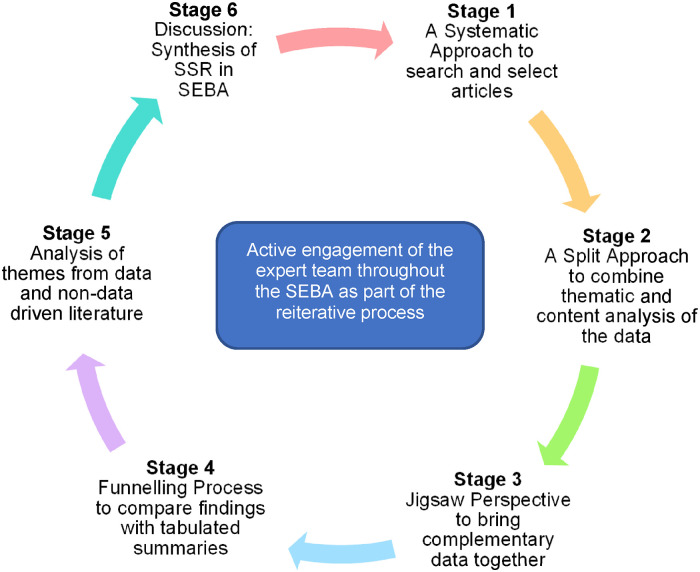 Figure 1
 Figure 2
 Figure 3
 Figure 4
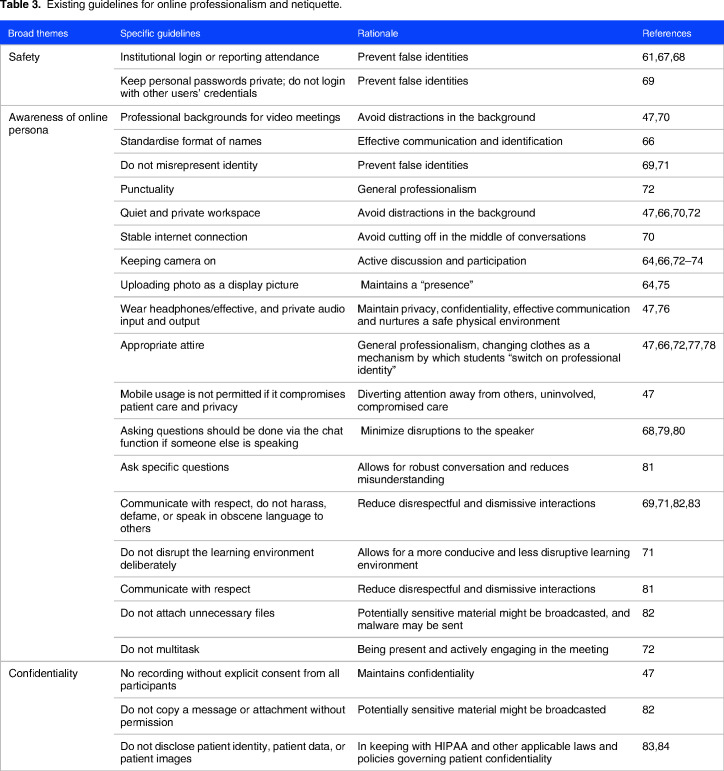 Figure 5
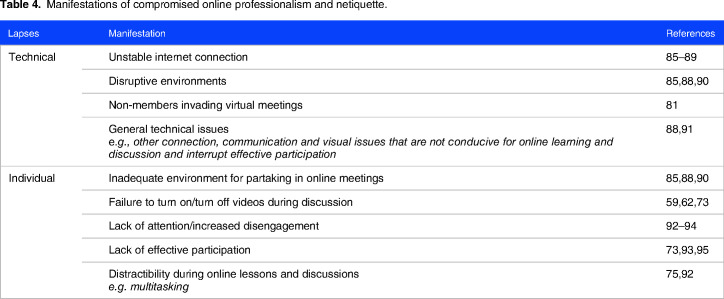 Figure 6
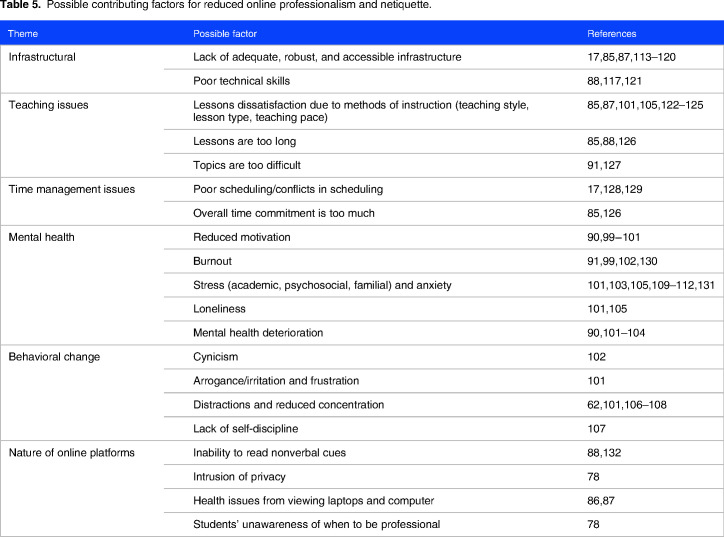 Figure 7
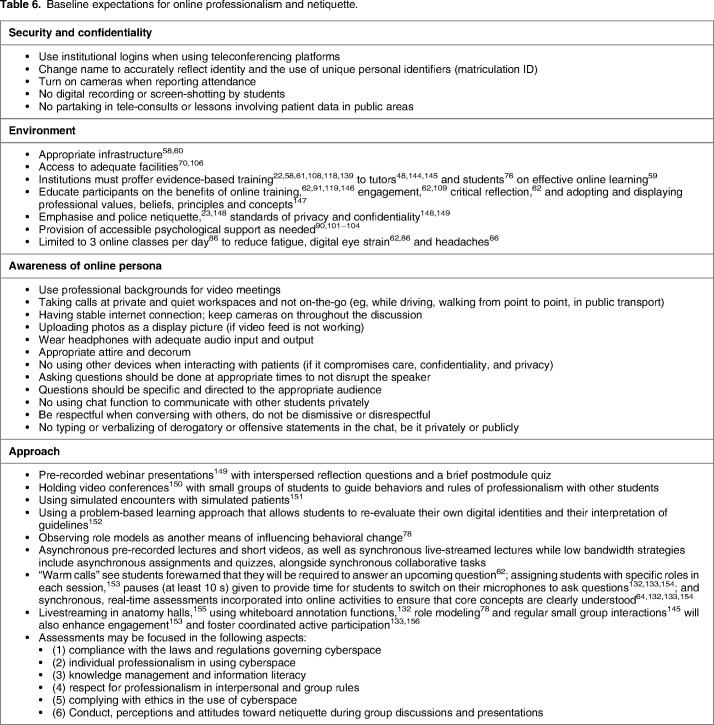 Figure 8
Peer Reviews
No public reviews on file for this paper yet. If you reviewed it on a platform where reviews are public (OpenReview, ICLR, NeurIPS, ICML), you can paste yours below so the community can read it here.
Videos
No videos yet. Explain this paper in a talk, walkthrough, or lecture? Add one.
Taxonomy
TopicsInnovations in Medical Education · Empathy and Medical Education · COVID-19 and Mental Health