Exploring the Role of Foveal and Extrafoveal Processing in Emotion Recognition: A Gaze-Contingent Study
Alejandro J. Estudillo

TL;DR
This study explores how foveal and extrafoveal vision contribute to recognizing emotions in faces using a gaze-contingent method.
Contribution
The study introduces a gaze-contingent paradigm to actively manipulate eye-gaze strategies in emotion recognition.
Findings
Both foveal and extrafoveal information contribute to emotion identification.
At standard conversation distance, extrafoveal processing alone is sufficient for efficient emotion recognition.
Abstract
Although the eye-tracking technique has been widely used to passively study emotion recognition, no studies have utilised this technique to actively manipulate eye-gaze strategies during the recognition facial emotions. The present study aims to fill this gap by employing a gaze-contingent paradigm. Observers were asked to determine the emotion displayed by centrally presented upright or inverted faces. Under the window condition, only a single fixated facial feature was available at a time, only allowing for foveal processing. Under the mask condition, the fixated facial feature was masked while the rest of the face remained visible, thereby disrupting foveal processing but allowing for extrafoveal processing. These conditions were compared with a full-view condition. The results revealed that while both foveal and extrafoveal information typically contribute to emotion identification,…
Genes, proteins, chemicals, diseases, species, mutations and cell lines named across the full text — each resolved to its canonical identifier and authoritative record.
Click any figure to enlarge with its caption.
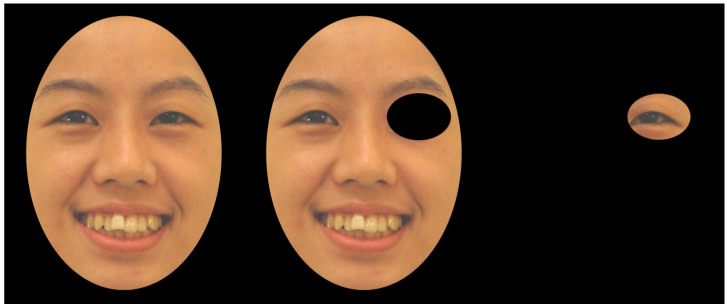 Figure 1
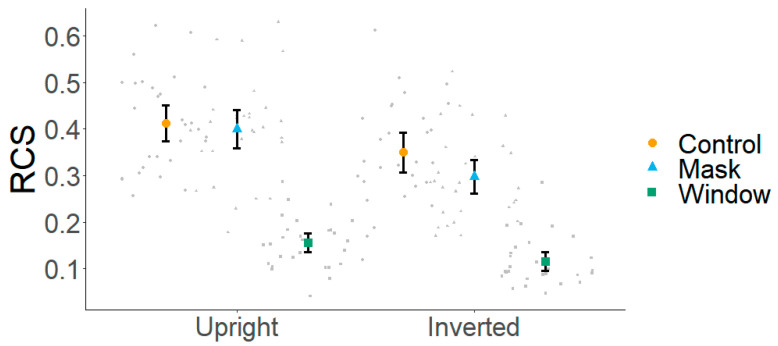 Figure 2
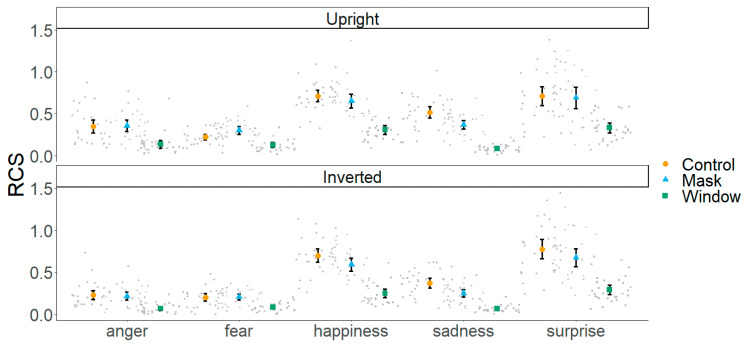 Figure 3
Peer Reviews
No public reviews on file for this paper yet. If you reviewed it on a platform where reviews are public (OpenReview, ICLR, NeurIPS, ICML), you can paste yours below so the community can read it here.
Videos
No videos yet. Explain this paper in a talk, walkthrough, or lecture? Add one.
Taxonomy
TopicsFace Recognition and Perception · Gaze Tracking and Assistive Technology · Emotion and Mood Recognition