Elevated Serum Levels of Acid Sphingomyelinase in Female Patients with Episodic and Chronic Migraine
Alberto Ouro, Mónica Castro-Mosquera, Mariña Rodríguez-Arrizabalaga, Manuel Debasa-Mouce, Antía Custodia, Marta Aramburu-Núñez, Daniel Romaus-Sanjurjo, Josefina Casas, Isabel Lema, José Castillo, Rogelio Leira, Tomás Sobrino

TL;DR
This study found higher levels of an enzyme called acid sphingomyelinase in women with migraines, suggesting it could be a new target for treatment.
Contribution
The study identifies elevated acid sphingomyelinase levels in female migraine patients as a potential new therapeutic target.
Findings
aSMase levels were significantly higher in both episodic and chronic migraine patients compared to controls.
Serum sphingomyelin levels were significantly lower in migraine patients, indicating aSMase activity is involved in the condition.
Abstract
Migraine is one of the most common neurological disorders and the second most disabling human condition. The molecular mechanisms of migraine have been linked to neuropeptide release, endothelial dysfunction, oxidative stress and inflammatory processes. Acid sphingomyelinase (aSMase) is a secreted enzyme that leads to sphingomyelin degradation to produce ceramide. Its activity has been associated with several molecular processes involved in migraine. Therefore, this cross-sectional study aims to study the potential role of aSMase in patients with episodic and chronic migraine. In this cross-sectional pilot study, serum samples from female healthy controls (n = 23), episodic migraine (EM) patients (n = 31), and chronic migraine (CM) patients (n = 28) were studied. The total serum levels of aSMase were determined by ELISA. In addition, the serum levels of sphingomyelin (SM),…
Genes, proteins, chemicals, diseases, species, mutations and cell lines named across the full text — each resolved to its canonical identifier and authoritative record.
Click any figure to enlarge with its caption.
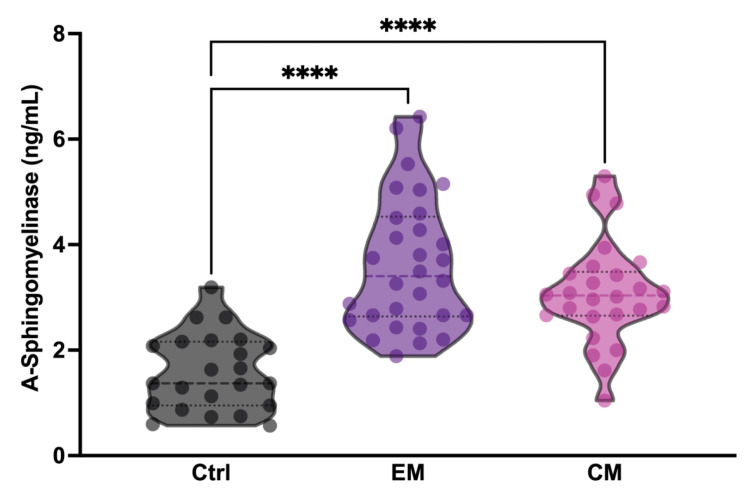 Figure 1
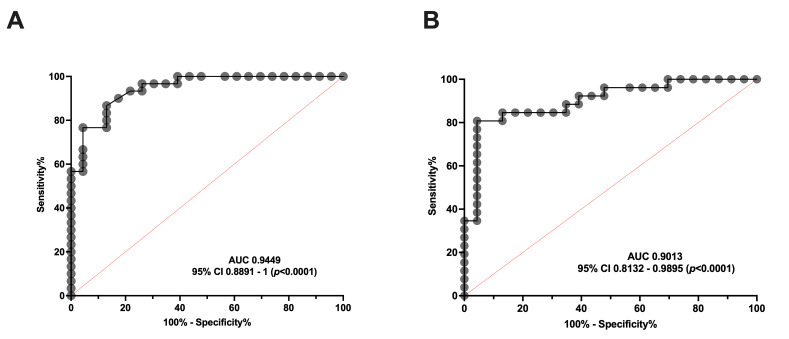 Figure 2
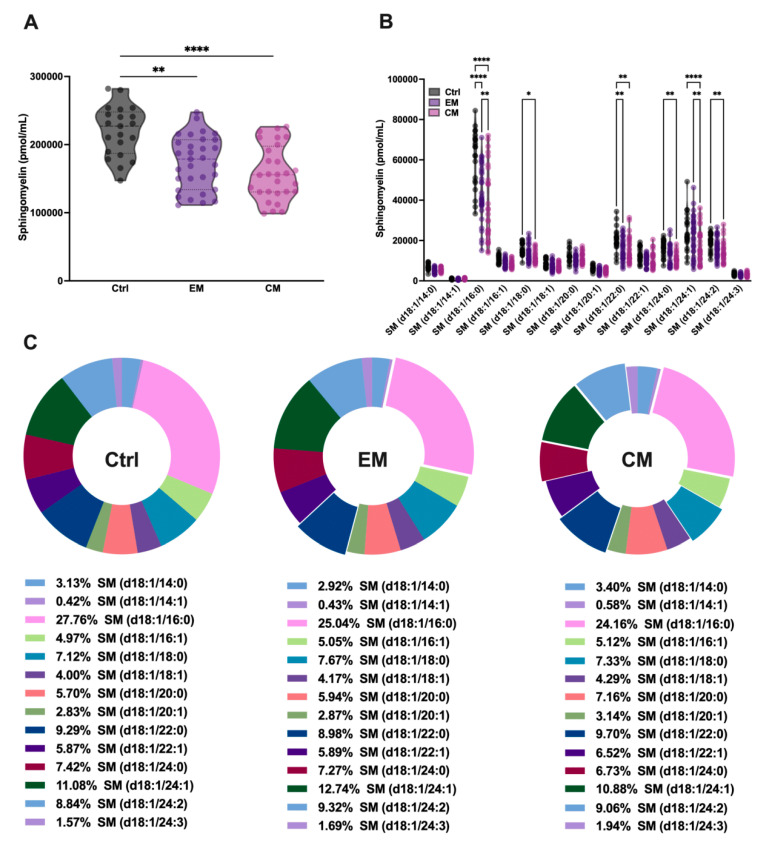 Figure 3
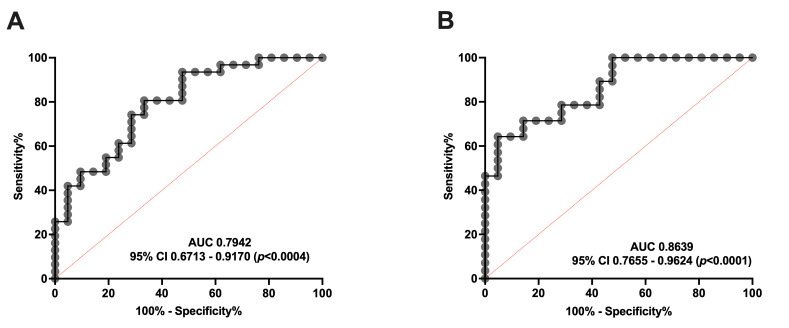 Figure 4
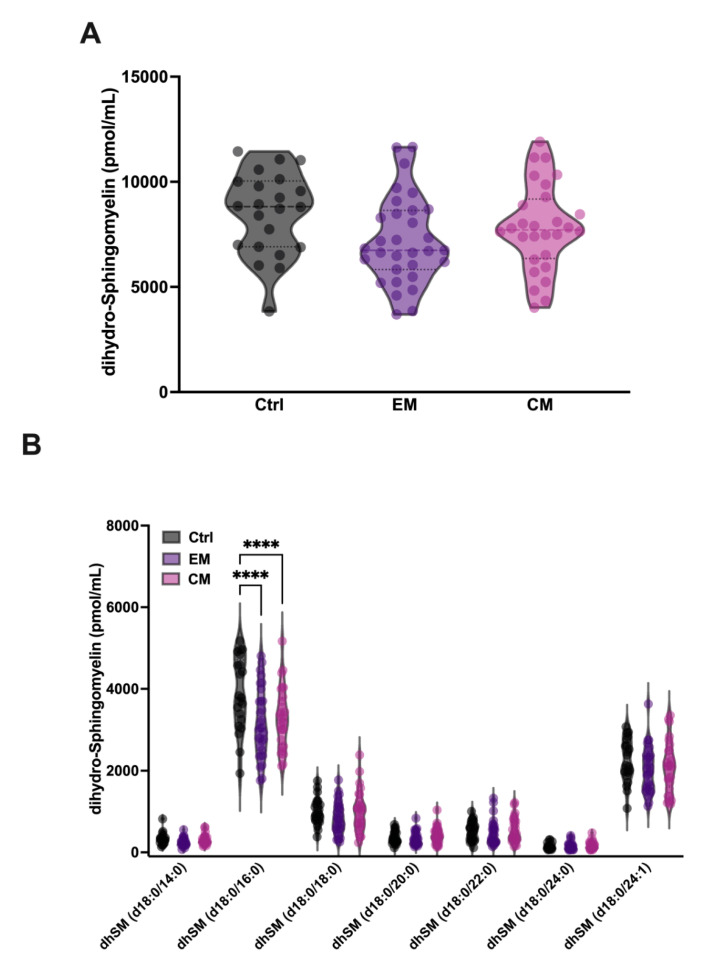 Figure 5
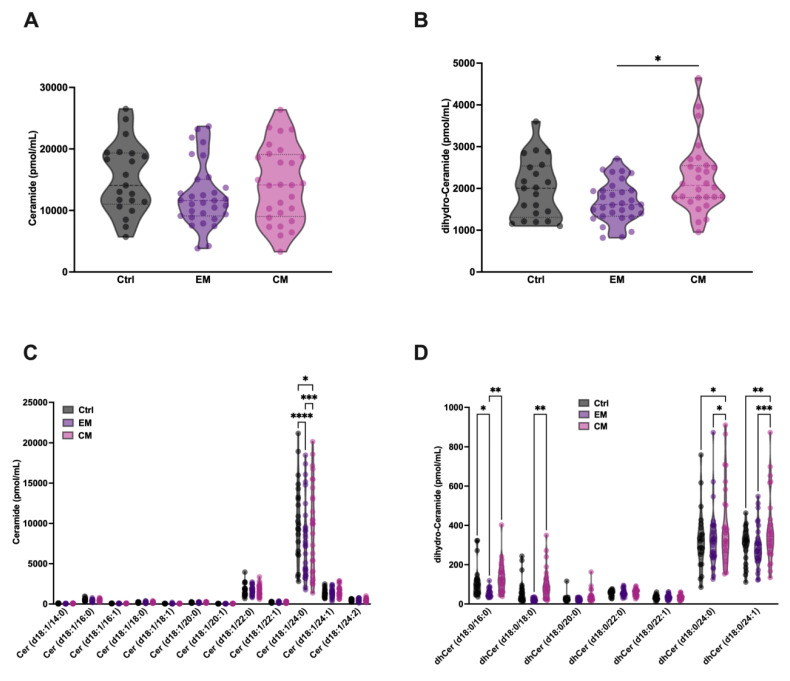 Figure 6
Peer Reviews
No public reviews on file for this paper yet. If you reviewed it on a platform where reviews are public (OpenReview, ICLR, NeurIPS, ICML), you can paste yours below so the community can read it here.
Videos
No videos yet. Explain this paper in a talk, walkthrough, or lecture? Add one.
Taxonomy
TopicsBiomedical Research and Pathophysiology · Migraine and Headache Studies · Ophthalmology and Eye Disorders