Effect of Media Composition and Oxygen Tension on Cellular Stress Response and Nrf2 Activation in HepG2ARE Cells
Rutt Taba, Marie Põlluaed, Karin Tein, Marju Puurand, Tuuli Käämbre, Anton Terasmaa

TL;DR
This study shows that changing cell media and oxygen levels affects how HepG2ARE cells respond to stress and activate Nrf2, a key factor in oxidative stress.
Contribution
The study reveals that Nrf2 activation and stress response in HepG2ARE cells are influenced by media composition and oxygen tension, which are often overlooked in standard cell culture.
Findings
Nrf2 activation by ferroptosis activators depends on cell media and oxygen tension.
Thapsigargin-induced Nrf2 activation occurs only in DMEM and low oxygen conditions.
Plasmax media increases glutathione and malondialdehyde levels compared to DMEM.
Abstract
Cell models play a central role in preclinical research aimed at the mechanism of disease and drug discovery. The outside environment of the cells, including levels of nutrients and oxygen tension, regulates cellular stress response pathways. Routinely used in vitro disease models often overlook cell growth conditions. This study aimed to evaluate the effect of substituting classic cell media (DMEM) with media matching the nutrient composition of human plasma (Plasmax) on cell viability, the activation of nuclear factor erythroid 2-related factor 2 (Nrf2), glutathione (GSH), and malondialdehyde (MDA) levels by different pharmacological inducers of cell stress. The cells were grown at ambient (~19%) and reduced (5%) oxygen levels. The activation of Nrf2 by ferroptosis activators (erastin and RSL3) was dependent on cell media and oxygen tension. The induction of Nrf2 by an inducer of…
Genes, proteins, chemicals, diseases, species, mutations and cell lines named across the full text — each resolved to its canonical identifier and authoritative record.
Click any figure to enlarge with its caption.
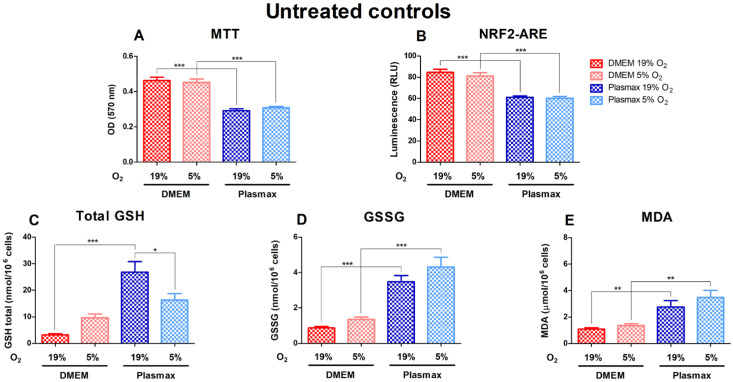 Figure 1
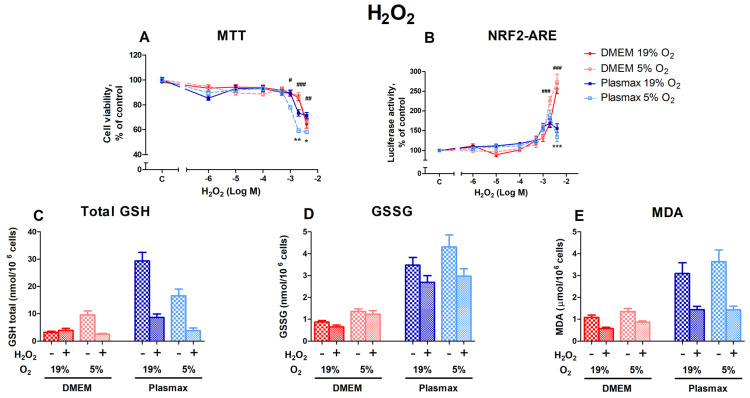 Figure 2
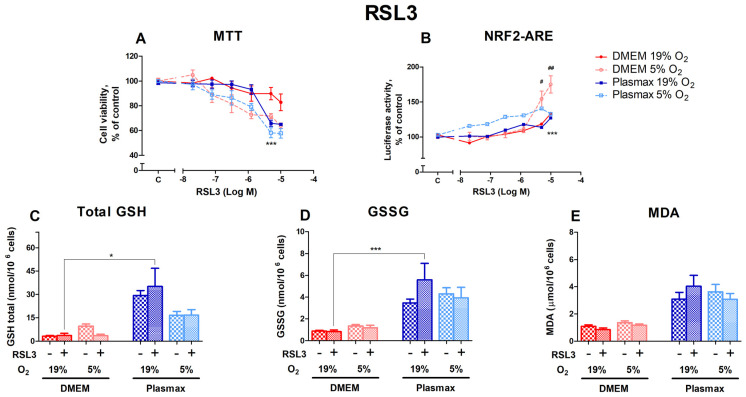 Figure 3
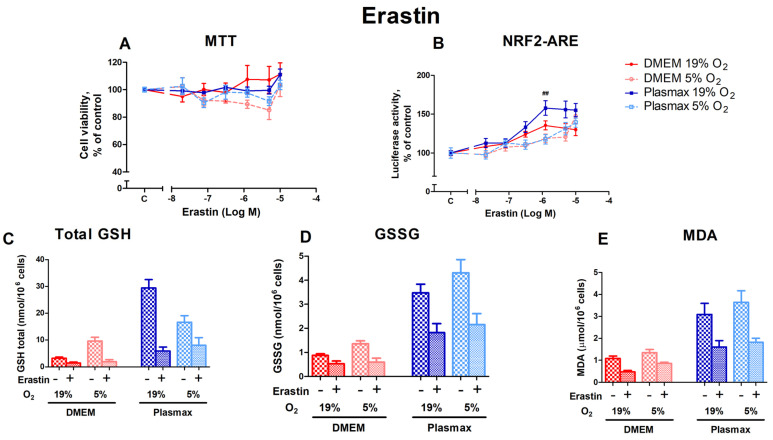 Figure 4
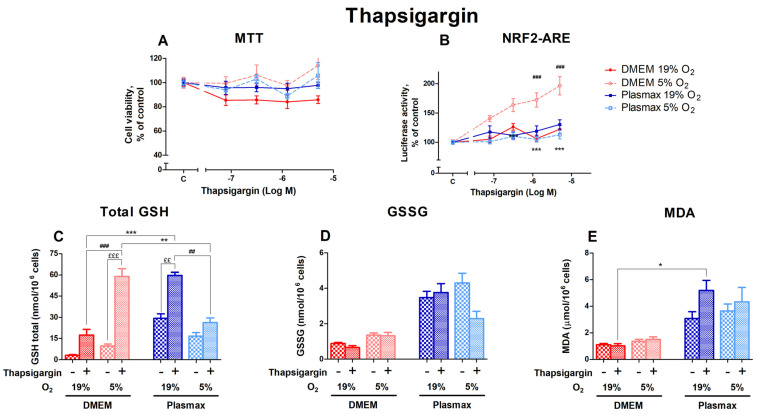 Figure 5
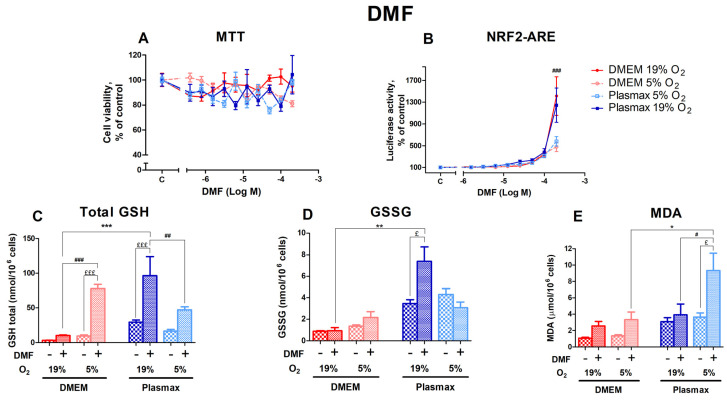 Figure 6
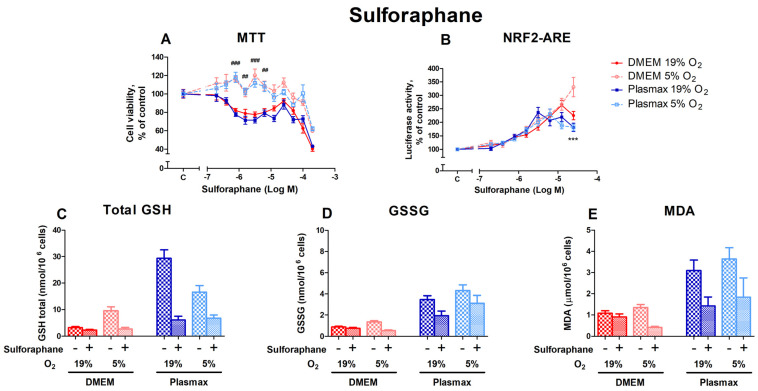 Figure 7
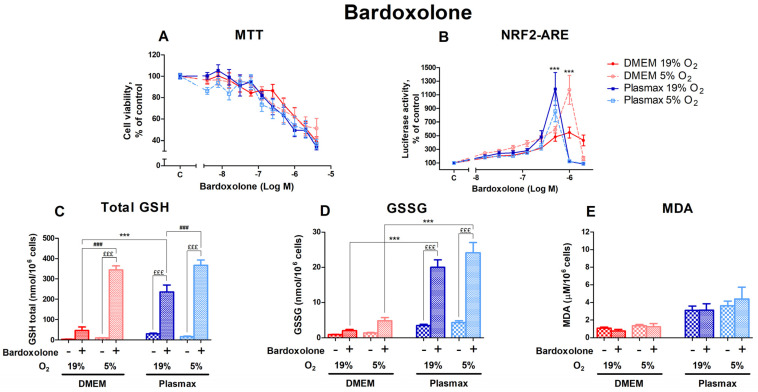 Figure 8
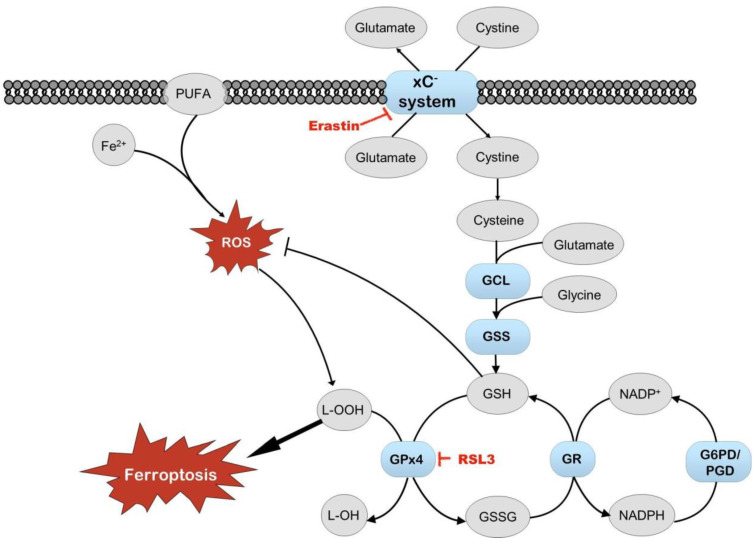 Figure 9
Peer Reviews
No public reviews on file for this paper yet. If you reviewed it on a platform where reviews are public (OpenReview, ICLR, NeurIPS, ICML), you can paste yours below so the community can read it here.
Videos
No videos yet. Explain this paper in a talk, walkthrough, or lecture? Add one.
Taxonomy
TopicsGenomics, phytochemicals, and oxidative stress · Epigenetics and DNA Methylation · Glutathione Transferases and Polymorphisms