Local Antimicrobial Potential of Bupivacaine and Tolfenamic Acid-Loaded Ultra-High Molecular Weight Polyethylene (UHMWPE) for Orthopedic Infection
Amita Sekar, Nicoletta Inverardi, Sashank Lekkala, Andrew Thomson, Vikram Daesety, Darina Trendafilova, Peyton Tierney, Jamie E. Collins, Orhun K. Muratoglu, Ebru Oral

TL;DR
Researchers tested bupivacaine and tolfenamic acid in a medical material to fight joint infections, finding they can act as local antimicrobials.
Contribution
The study reveals the antibacterial mechanism of bupivacaine and tolfenamic acid and evaluates their potential in drug-loaded UHMWPE for orthopedic infection prevention.
Findings
Bupivacaine and tolfenamic acid altered bacterial membrane properties and gene expression similar to antibiotics.
Higher drug concentrations in UHMWPE provided prolonged antibacterial effects against Staphylococcus aureus.
Drug release from UHMWPE was influenced by drug interactions and hydrophobicity, not just concentration.
Abstract
Peri-prosthetic joint infection (PJI) is a major post-arthroplasty complication that warrants alternative antibacterial approaches to improve prophylaxis and treatment outcomes. Local administration of analgesics post-surgery is common. Recent studies have demonstrated the antimicrobial potential of analgesics and the feasibility of dual drug-eluting ultra-high molecular weight polyethylene (UHMWPE) for local antibacterial applications. However, the antibacterial mechanism of action is poorly understood, and the translational value of antimicrobial dual drug-loaded UHMWPE has not been evaluated. In this study, we utilized the Laurdan assay and gene expression analysis to demonstrate the antibacterial action of bupivacaine hydrochloride (BP) and tolfenamic acid (TA) against Staphylococcus aureus. Furthermore, we incorporated BP and TA into UHMWPE at different weight concentrations and…
Genes, proteins, chemicals, diseases, species, mutations and cell lines named across the full text — each resolved to its canonical identifier and authoritative record.
Click any figure to enlarge with its caption.
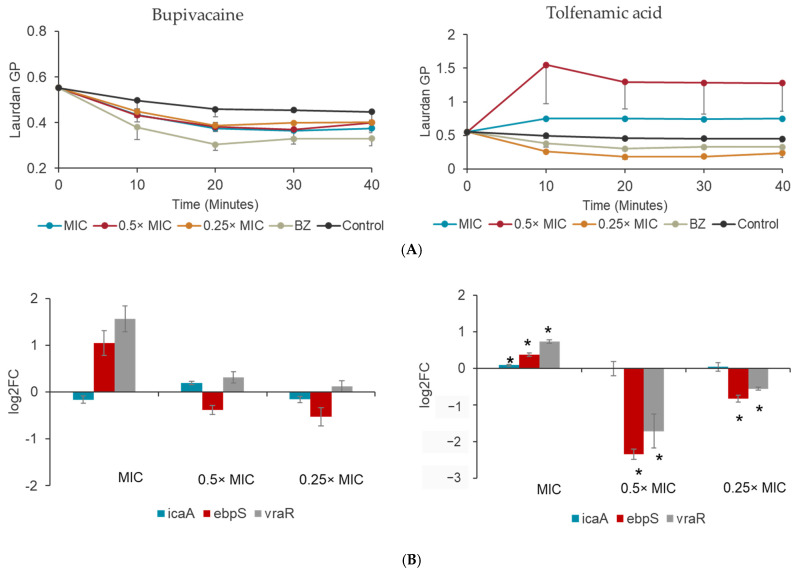 Figure 1
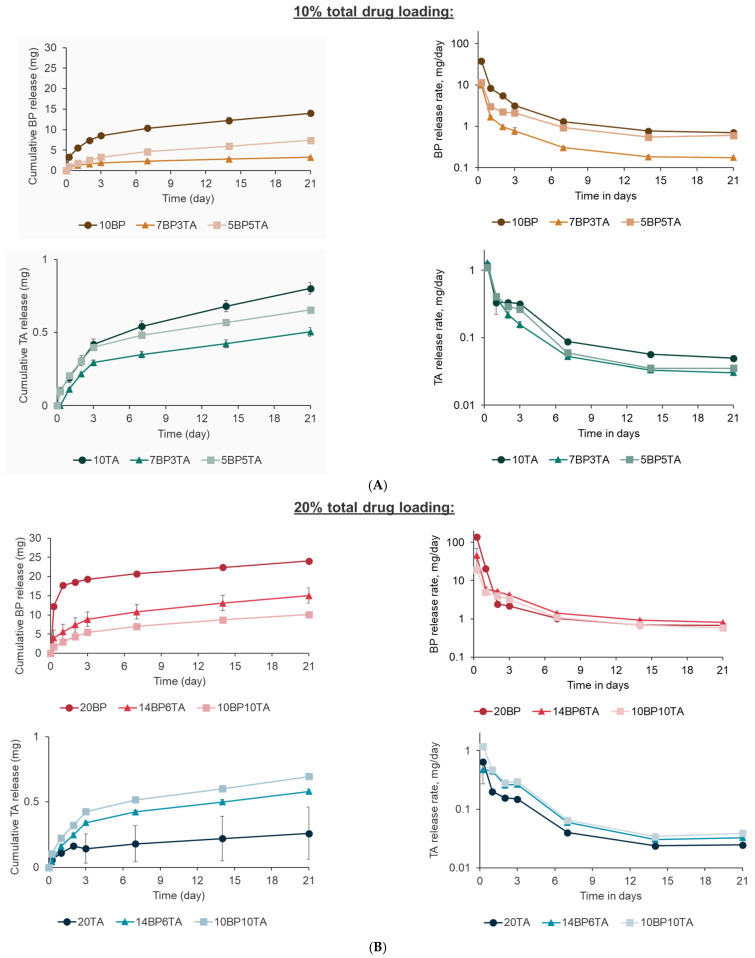 Figure 2
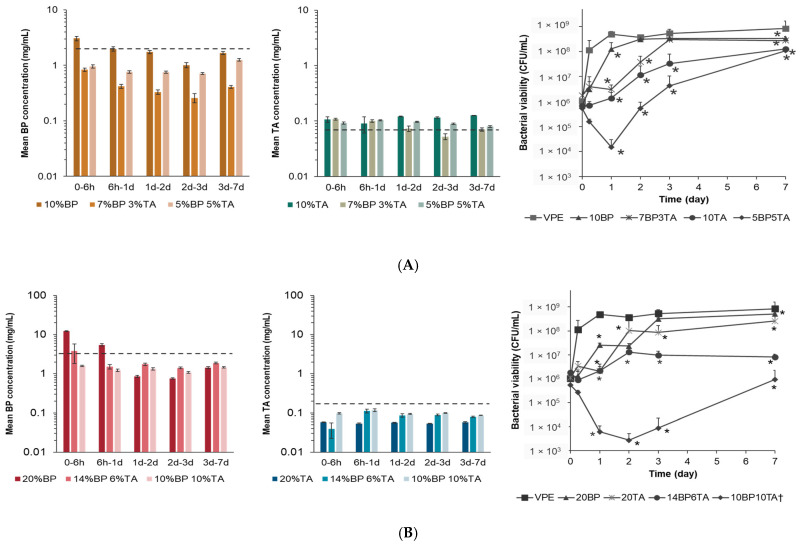 Figure 3
Peer Reviews
No public reviews on file for this paper yet. If you reviewed it on a platform where reviews are public (OpenReview, ICLR, NeurIPS, ICML), you can paste yours below so the community can read it here.
Videos
No videos yet. Explain this paper in a talk, walkthrough, or lecture? Add one.
Taxonomy
TopicsOrthopedic Infections and Treatments · Antimicrobial agents and applications · Orthopaedic implants and arthroplasty