SqueezeCall: nanopore basecalling using a Squeezeformer network
Zhongxu Zhu, Zhongxu ZHU, Zhongxu ZHU, Zhongxu ZHU

TL;DR
SqueezeCall is a new model for nanopore sequencing that improves accuracy by using a Squeezeformer network to handle electrical current data.
Contribution
The novel use of a Squeezeformer network for nanopore basecalling, which outperforms existing models.
Findings
SqueezeCall improves basecalling accuracy by effectively handling noise in nanopore sequencing data.
Combining three types of loss during training enhances basecalling performance.
SqueezeCall outperforms recurrent and Transformer-based models in basecalling accuracy.
Abstract
Nanopore sequencing, a third-generation sequencing technique, enables direct RNA sequencing, real-time analysis, and long-read length. Nanopore sequencers measure electrical current changes as nucleotides pass through nanopores; a basecaller identifies base sequences according to the raw current measurements. However, accurate basecalling remains challenging due to molecular variations and sequencing noise. Here, we introduce SqueezeCall, a novel Squeezeformer-based model for accurate nanopore basecalling. SqueezeCall uses convolution layers to down-sample raw signals and model local dependencies. A Squeezeformer network captures the global context, and a connectionist temporal classification (CTC) decoder with beam search generates DNA sequences. Experimental results demonstrated SqueezeCall’s ability to resist noise, improving basecalling accuracy. We trained SqueezeCall combining…
Genes, proteins, chemicals, diseases, species, mutations and cell lines named across the full text — each resolved to its canonical identifier and authoritative record.
Click any figure to enlarge with its caption.
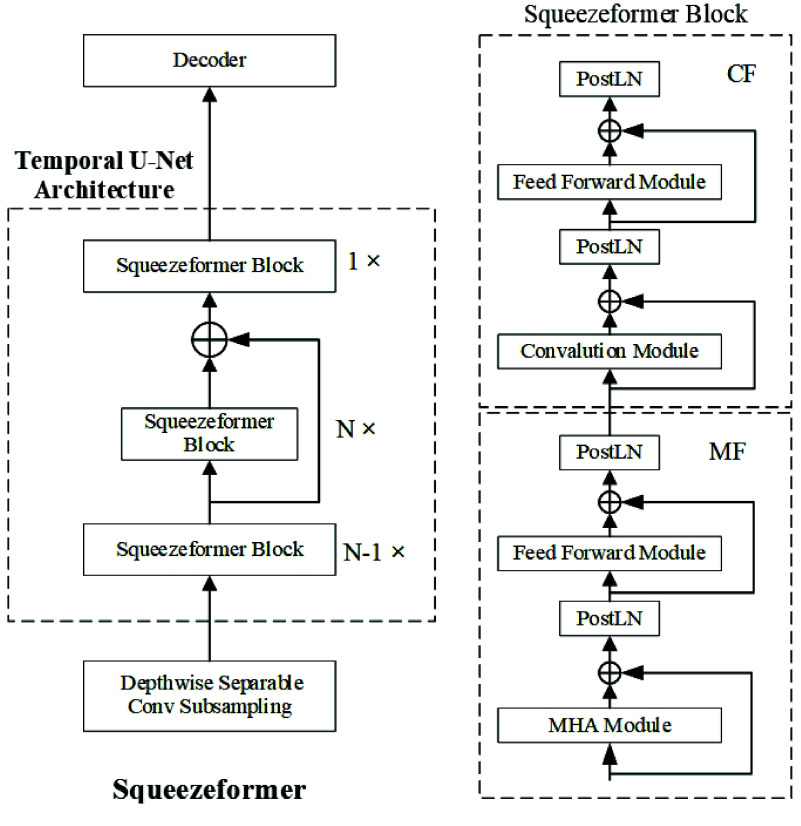 Figure 1
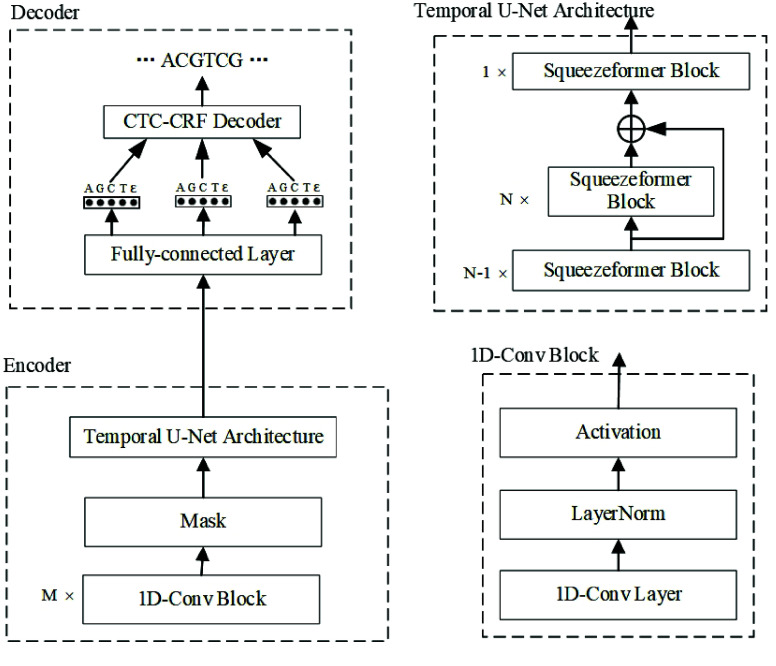 Figure 2
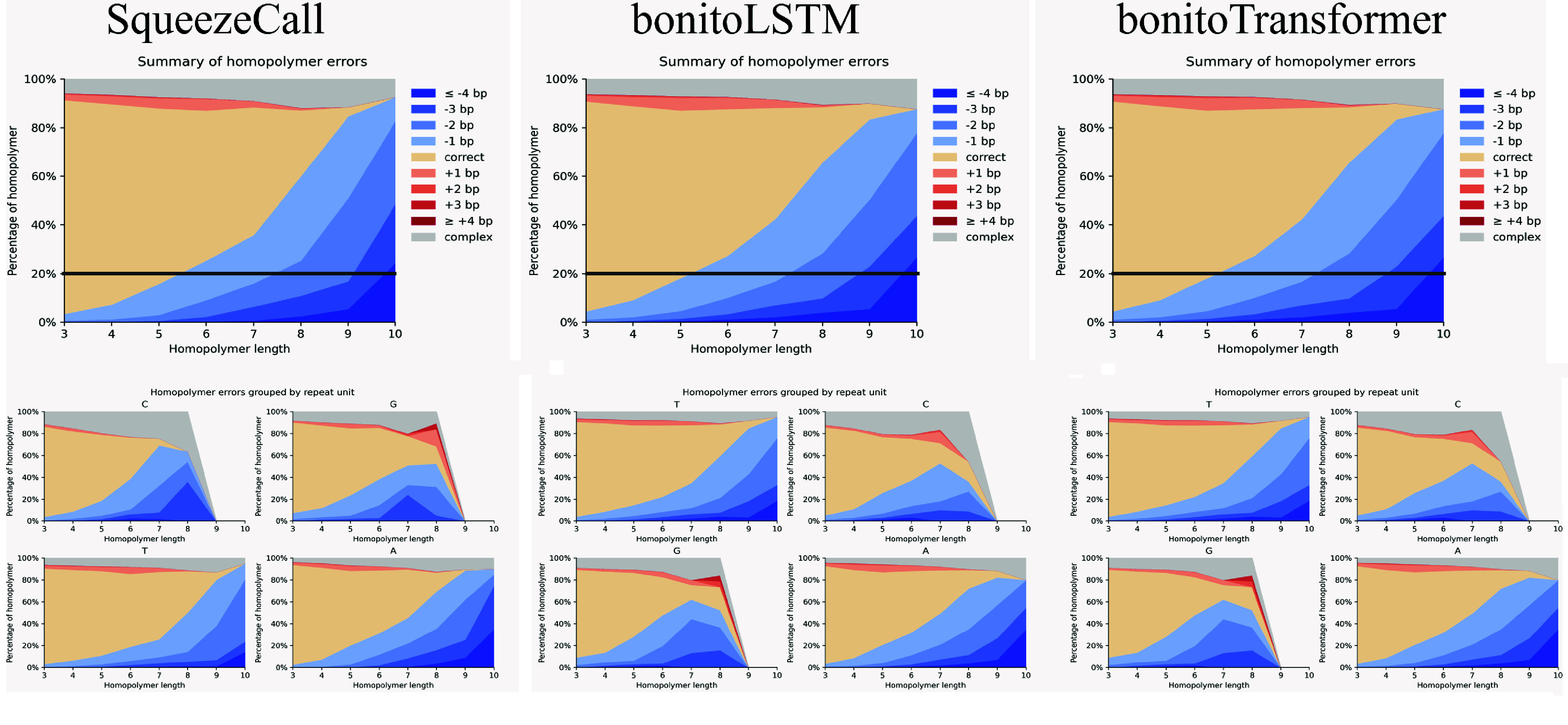 Figure 3
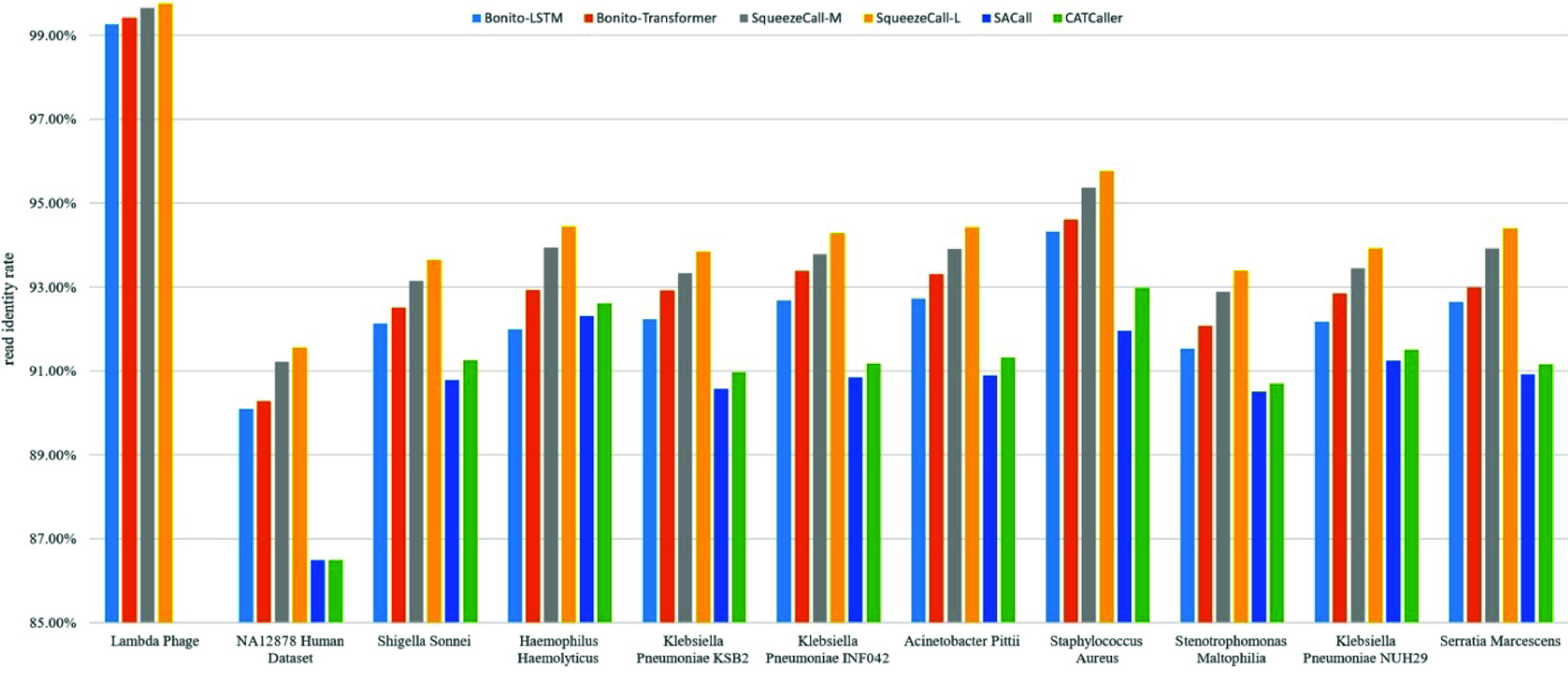 Figure 4
Peer Reviews
No public reviews on file for this paper yet. If you reviewed it on a platform where reviews are public (OpenReview, ICLR, NeurIPS, ICML), you can paste yours below so the community can read it here.
Videos
No videos yet. Explain this paper in a talk, walkthrough, or lecture? Add one.
Taxonomy
TopicsNon-Destructive Testing Techniques · Force Microscopy Techniques and Applications · Metal Forming Simulation Techniques