Context-dependent change in the fitness effect of (in)organic phosphate antiporter glpT during Salmonella Typhimurium infection
Noemi Santamaria de Souza, Yassine Cherrak, Thea Bill Andersen, Michel Vetsch, Manja Barthel, Sanne Kroon, Erik Bakkeren, Christopher Schubert, Philipp Christen, Patrick Kiefer, Julia A. Vorholt, Bidong D. Nguyen, Wolf-Dietrich Hardt

TL;DR
The study shows how Salmonella mutants lacking glpT have different survival advantages in the gut versus inside immune cells.
Contribution
The paper reveals antagonistic pleiotropy of glpT-deficiency in Salmonella during infection stages.
Findings
glpT-deficient mutants thrive in the gut lumen due to reduced phosphate import.
These mutants are counter-selected by macrophages, indicating niche-specific adaptation.
The study highlights spatial and temporal fitness heterogeneity in Salmonella infection.
Abstract
Salmonella enterica is a frequent cause of foodborne diseases, which is attributed to its adaptability. Even within a single host, expressing a gene can be beneficial in certain infection stages but neutral or even detrimental in others as previously shown for flagellins. Mutants deficient for the conserved glycerol-3-phosphate and phosphate antiporter glpT have been shown to be positively selected in nature, clinical, and laboratory settings. This suggests that different selective pressures select for the presence or absence of GlpT in a context dependent fashion, a phenomenon known as antagonistic pleiotropy. Using mutant libraries and reporters, we investigated the fitness of glpT-deficient mutants during murine orogastric infection. While glpT-deficient mutants thrive during initial growth in the gut lumen, where GlpT’s capacity to import phosphate is disadvantageous, they are…
Genes, proteins, chemicals, diseases, species, mutations and cell lines named across the full text — each resolved to its canonical identifier and authoritative record.
Click any figure to enlarge with its caption.
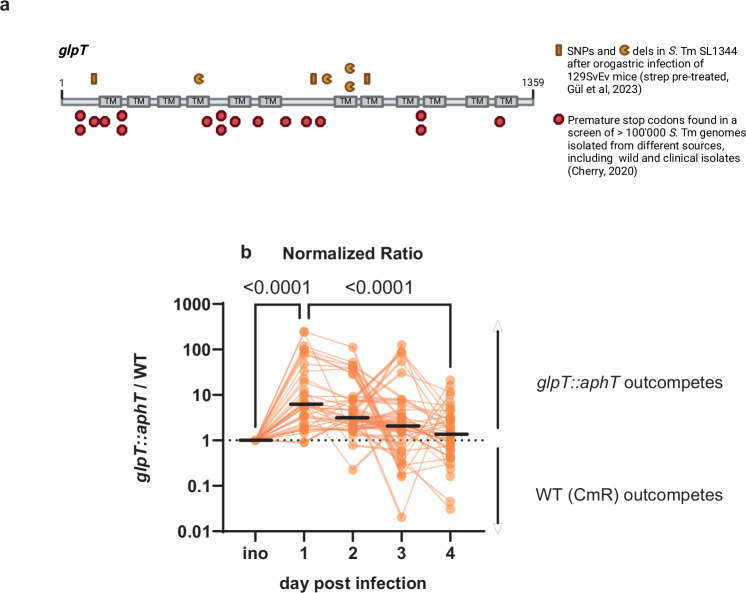 Figure 1
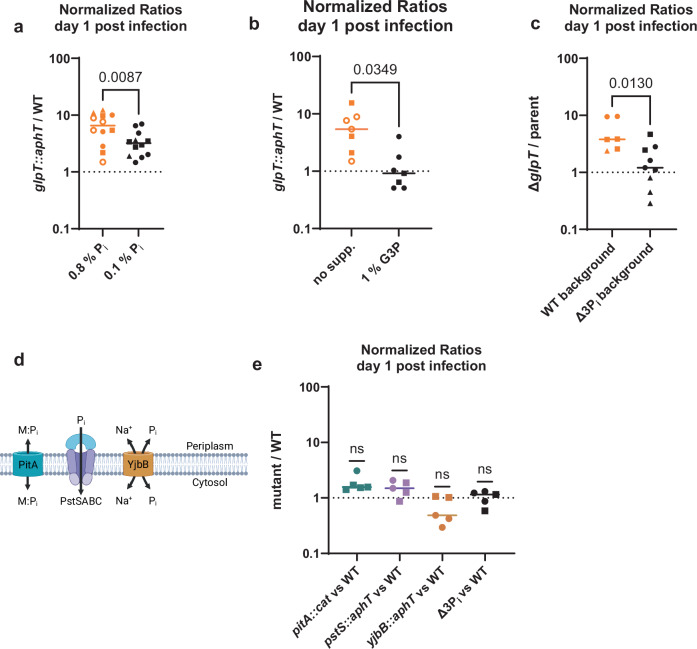 Figure 2
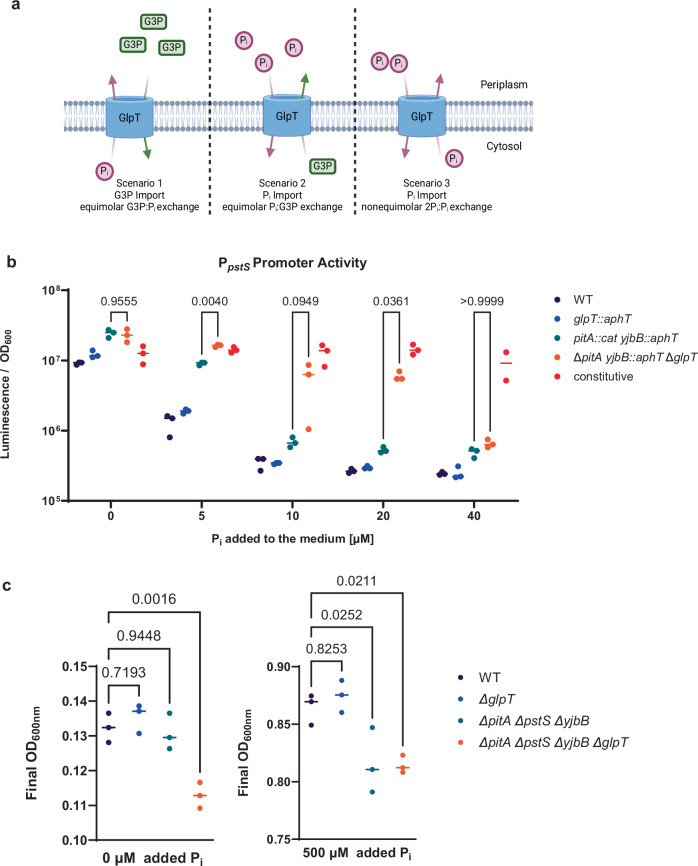 Figure 3
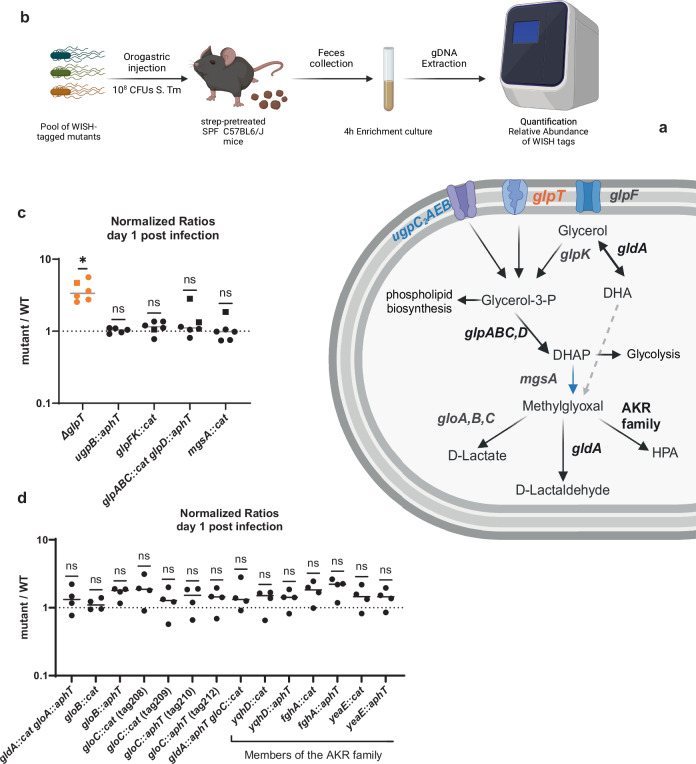 Figure 4
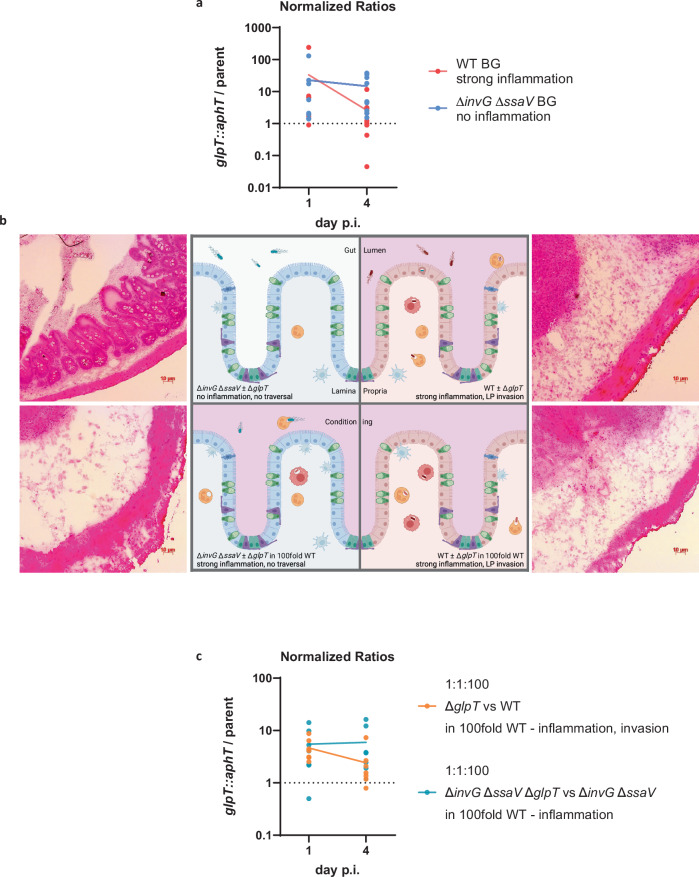 Figure 5
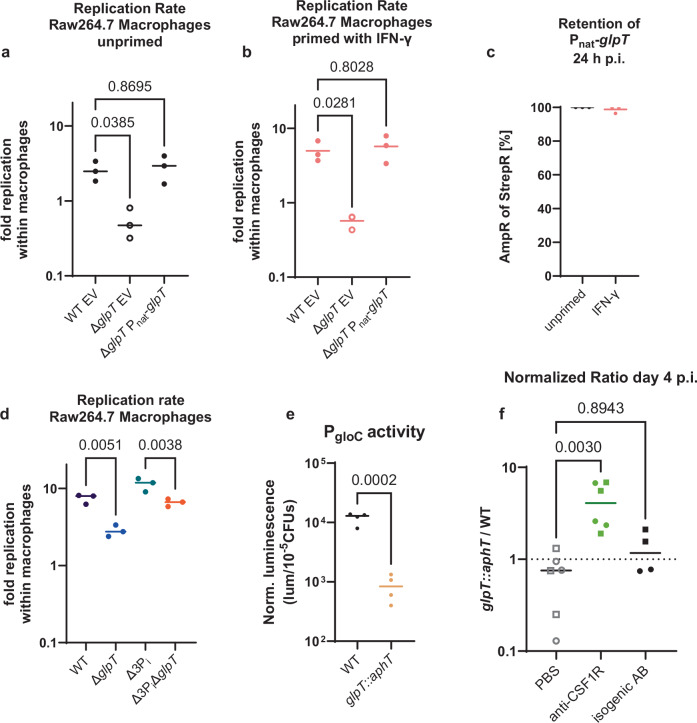 Figure 6
Peer Reviews
No public reviews on file for this paper yet. If you reviewed it on a platform where reviews are public (OpenReview, ICLR, NeurIPS, ICML), you can paste yours below so the community can read it here.
Videos
No videos yet. Explain this paper in a talk, walkthrough, or lecture? Add one.
Taxonomy
TopicsVibrio bacteria research studies · Salmonella and Campylobacter epidemiology · Bacterial Genetics and Biotechnology