Pre-existing cell subpopulations in primary prostate cancer tumors display surface fingerprints of docetaxel-resistant cells
Stanislav Drápela, Barbora Kvokačková, Eva Slabáková, Anna Kotrbová, Kristína Gömöryová, Radek Fedr, Daniela Kurfürstová, Martin Eliáš, Vladimír Študent jr, Frederika Lenčéšová, Ganji Sri Ranjani, Vendula Pospíchalová, Vítězslav Bryja, Wytske M. van Weerden, Martin Puhr

TL;DR
This study identifies a 6-molecule surface fingerprint in prostate cancer cells that predicts resistance to the drug docetaxel before treatment begins.
Contribution
The discovery of a pre-existing surface fingerprint linked to docetaxel resistance in primary prostate cancer tumors.
Findings
A 6-molecule surface fingerprint was found to be associated with docetaxel resistance in prostate cancer cells.
CD95 and SSEA-4 were consistently overexpressed in both resistant models and primary tumors with EMT features.
The fingerprint was detectable in primary tumors before treatment and correlated with poor survival outcomes.
Abstract
Docetaxel resistance is a significant obstacle in the treatment of prostate cancer (PCa), resulting in unfavorable patient prognoses. Intratumoral heterogeneity, often associated with epithelial-to-mesenchymal transition (EMT), has previously emerged as a phenomenon that facilitates adaptation to various stimuli, thus promoting cancer cell diversity and eventually resistance to chemotherapy, including docetaxel. Hence, understanding intratumoral heterogeneity is essential for better patient prognosis and the development of personalized treatment strategies. To address this, we employed a high-throughput single-cell flow cytometry approach to identify a specific surface fingerprint associated with docetaxel-resistance in PCa cells and complemented it with proteomic analysis of extracellular vesicles. We further validated selected antigens using docetaxel-resistant patient-derived…
Genes, proteins, chemicals, diseases, species, mutations and cell lines named across the full text — each resolved to its canonical identifier and authoritative record.
Click any figure to enlarge with its caption.
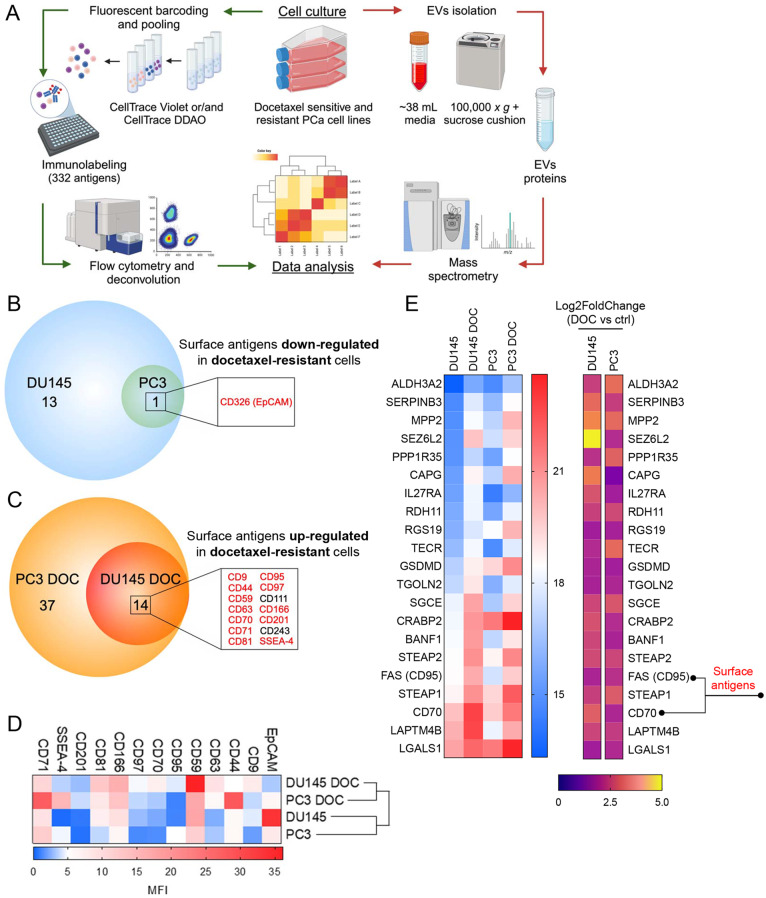 Figure 1
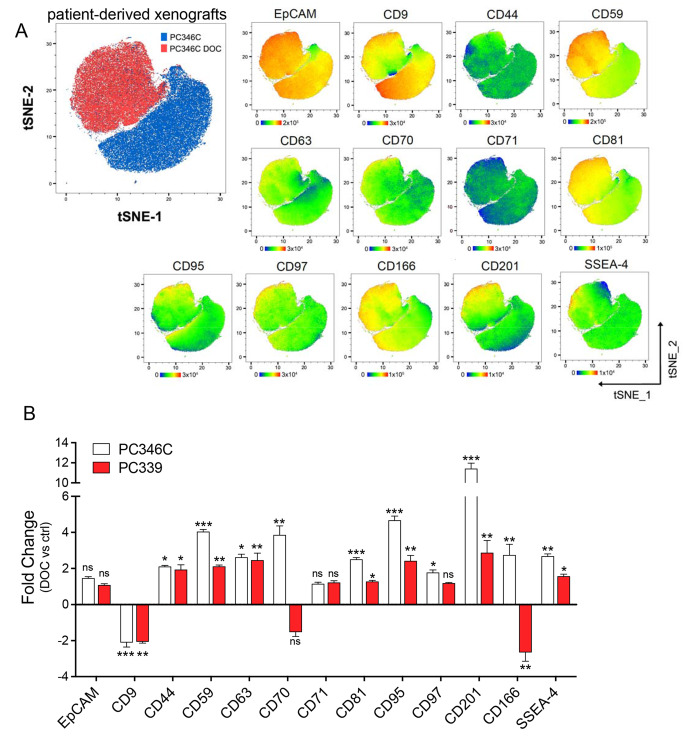 Figure 2
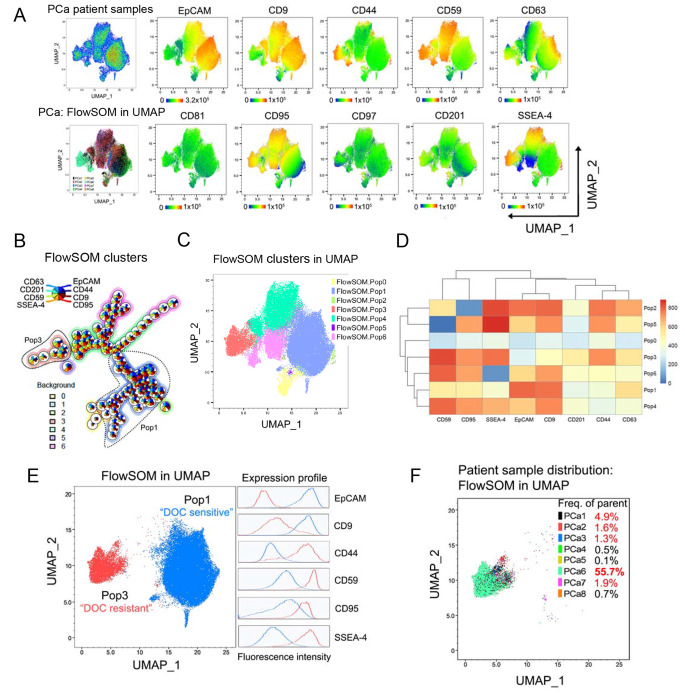 Figure 3
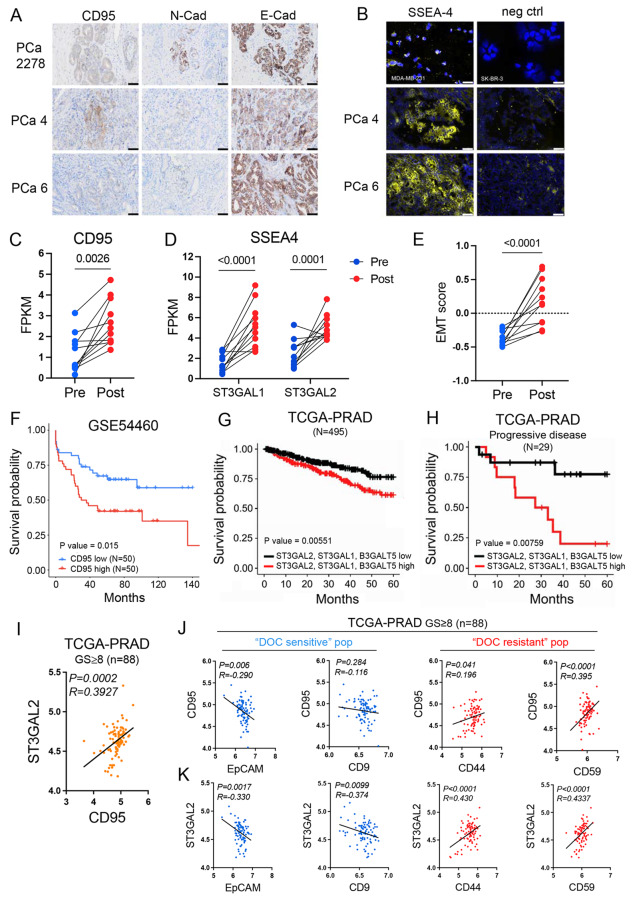 Figure 4
Peer Reviews
No public reviews on file for this paper yet. If you reviewed it on a platform where reviews are public (OpenReview, ICLR, NeurIPS, ICML), you can paste yours below so the community can read it here.
Videos
No videos yet. Explain this paper in a talk, walkthrough, or lecture? Add one.
Taxonomy
TopicsProstate Cancer Treatment and Research · Cancer Genomics and Diagnostics · RNA Research and Splicing