Posterior vault encephaloceles: from antenatal management to post-surgical follow-up—a cooperative study
Claudia Pasquali, Ulrich-Wilhelm Thomale, Alexandru Szathamri, Pier Aurelien Beuriat, Valentina Pennacchietti, Mélodie Anne Karnoub, Matthieu Vinchon, Federico Di Rocco

TL;DR
This study examines posterior encephaloceles in children, comparing outcomes of two types and highlighting differences in complications and developmental delays.
Contribution
A multi-center retrospective analysis of posterior encephaloceles with detailed clinical and radiological data from 79 cases.
Findings
Occipital encephaloceles had higher rates of cerebral anomalies and worse psychomotor outcomes compared to parietal encephaloceles.
Vascular anomalies were more common in parietal encephaloceles, while hydrocephalus and syndromic contexts increased developmental delay risks.
Most parietal encephalocele patients had mild developmental delays despite higher complication rates.
Abstract
Encephalocele is a herniation of intracranial structures associated with a skull anomaly. In Western countries, posterior encephaloceles are more common than anterior encephaloceles and may occur in the parietal (parietal encephalocele, PE) or occipital (occipital encephalocele, OE) region. Although those entities are relatively common in pediatric neurosurgery, large clinical series are scarce, and their clinical outcomes are poorly documented in the literature. We retrospectively analyzed the clinical and radiological findings, post-operative long-term outcomes of consecutive patients diagnosed with posterior encephaloceles from 2010 to 2021 in 3 centers: Hôpital Femme Mère Enfant (Lyon, France); Hôpital Roger Salengro (Lille, France); and Charité Universitätsmedizin (Berlin, Germany). We collected 79 observations, 46 PEs and 33 OEs. Cerebral anomalies were more common in OEs than…
Genes, proteins, chemicals, diseases, species, mutations and cell lines named across the full text — each resolved to its canonical identifier and authoritative record.
Click any figure to enlarge with its caption.
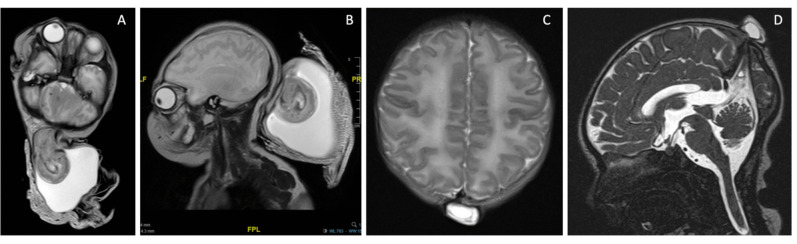 Figure 1
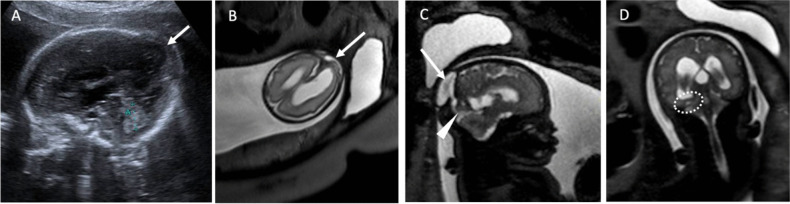 Figure 2
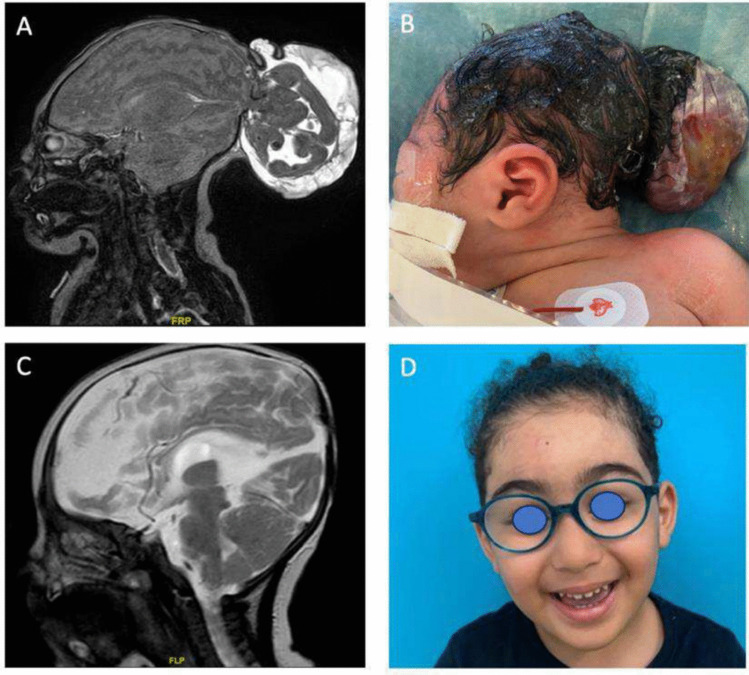 Figure 3
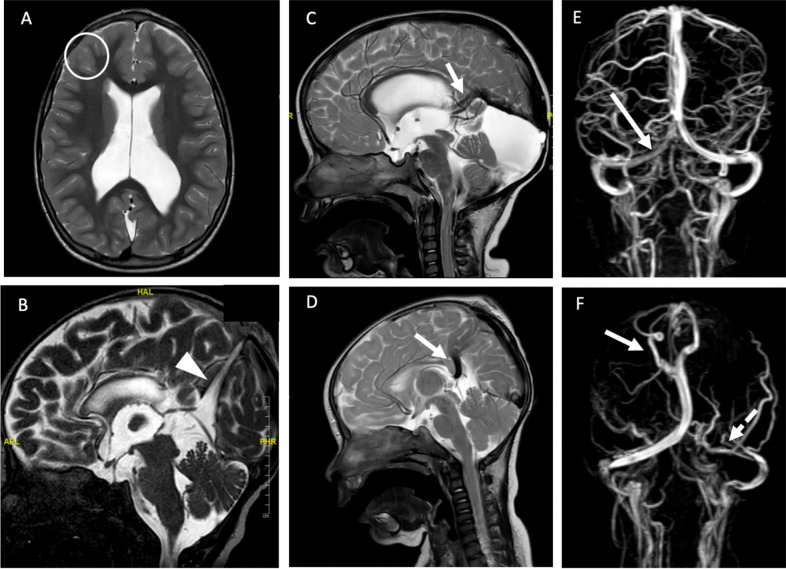 Figure 4
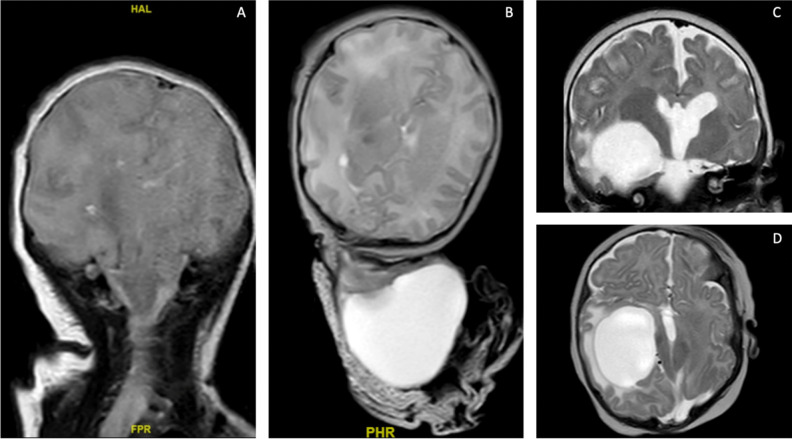 Figure 5
Peer Reviews
No public reviews on file for this paper yet. If you reviewed it on a platform where reviews are public (OpenReview, ICLR, NeurIPS, ICML), you can paste yours below so the community can read it here.
Videos
No videos yet. Explain this paper in a talk, walkthrough, or lecture? Add one.
Taxonomy
TopicsHead and Neck Surgical Oncology · Cerebrospinal fluid and hydrocephalus · Spinal Dysraphism and Malformations