Affective touch enhances low gamma activity during hand proprioceptive perception in children with different neurodevelopmental conditions
Álvaro Sabater-Gárriz, José Antonio Mingorance, Francesc Mestre-Sansó, Vicent Canals, Yannick Bleyenheuft, Pedro Montoya, Inmaculada Riquelme

TL;DR
Affective touch improves gamma brain activity related to body awareness in children with neurodevelopmental disorders like cerebral palsy.
Contribution
This study shows that affective touch modulates gamma oscillations and enhances proprioception in children with neurodevelopmental conditions.
Findings
Affective touch increased gamma power density during proprioceptive tasks in children.
Children with cerebral palsy had higher gamma power and worse proprioception than typically developing children.
Non-affective touch worsened proprioception in children with cerebral palsy.
Abstract
Gamma wave activity in the sensorimotor cortex is a critical neural mechanism associated with proprioceptive processing, which is essential for motor coordination, balance, and spatial orientation. The modulation of gamma oscillations by different types of tactile stimuli, including affective touch, is not well understood, particularly in children with neurodevelopmental disorders such as cerebral palsy and autism spectrum disorder. This study aims to explore how affective touch influences gamma oscillatory activity and proprioceptive performance in children with typical development, cerebral palsy and autism spectrum disorders. EEG data were recorded from participants during passive wrist mobilizations under three conditions: following an affective touch stimulus, after a non-affective touch stimulus, and with no tactile stimulation. Time-frequency analysis of low gamma activity…
Genes, proteins, chemicals, diseases, species, mutations and cell lines named across the full text — each resolved to its canonical identifier and authoritative record.
Click any figure to enlarge with its caption.
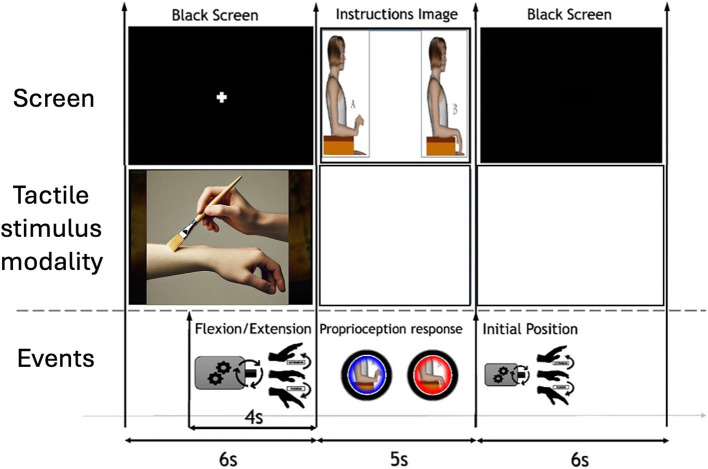 Figure 1
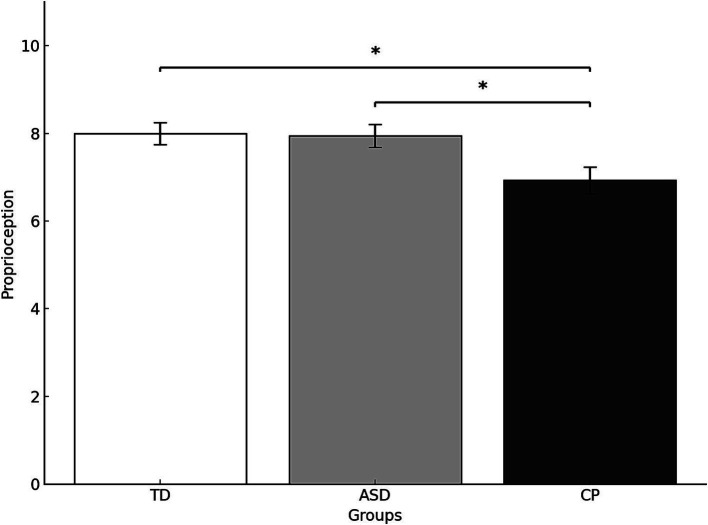 Figure 2
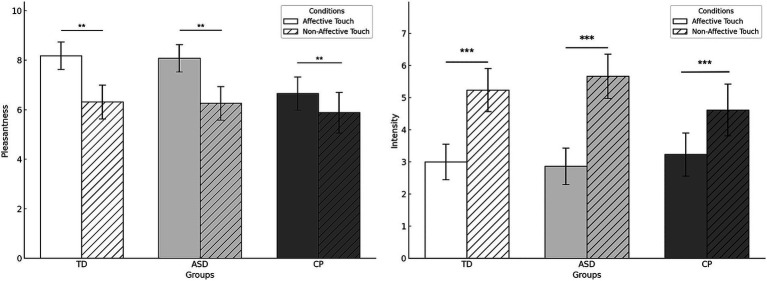 Figure 3
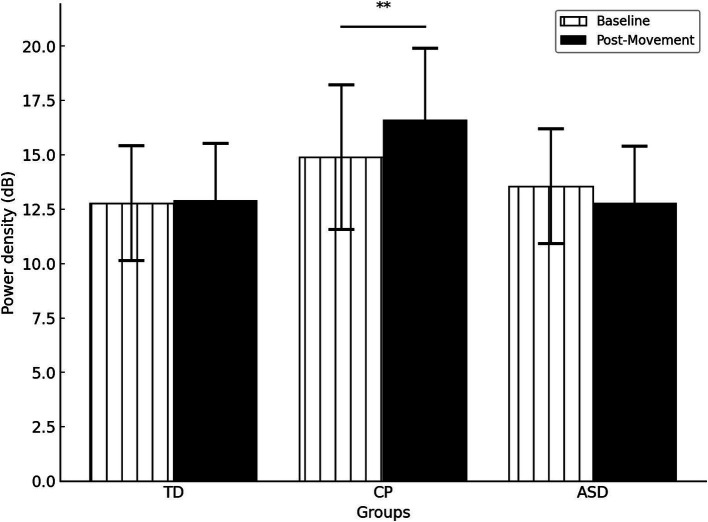 Figure 4
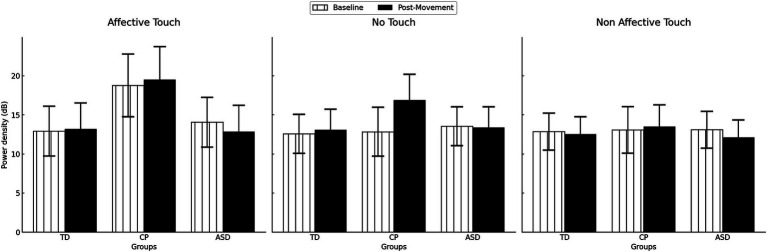 Figure 5
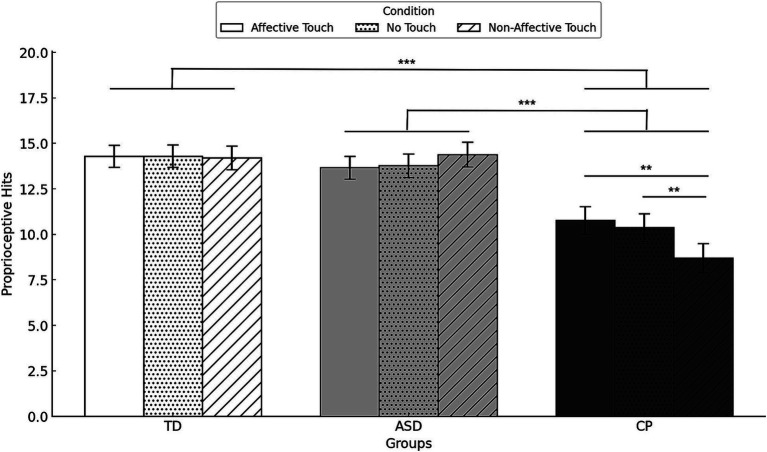 Figure 6
Peer Reviews
No public reviews on file for this paper yet. If you reviewed it on a platform where reviews are public (OpenReview, ICLR, NeurIPS, ICML), you can paste yours below so the community can read it here.
Videos
No videos yet. Explain this paper in a talk, walkthrough, or lecture? Add one.
Taxonomy
TopicsTactile and Sensory Interactions · EEG and Brain-Computer Interfaces · Muscle activation and electromyography studies