Predictive value of the monocyte count for determining the risk of postoperative moderate-to-severe ARDS in patients undergoing one-lung ventilation during radical treatment of esophageal cancer
Feng Zhang, Shunmei Lu, Guilong Wang, Hongyang Xu, Dongxiao Huang, Xiaomin Li

TL;DR
This study shows that a higher monocyte count after surgery can predict the risk of severe lung complications in patients undergoing esophageal cancer surgery.
Contribution
The study identifies postoperative monocyte count as an independent predictor of moderate-to-severe ARDS in esophageal cancer surgery patients.
Findings
Postoperative monocyte count was an independent predictor of moderate-to-severe ARDS (OR = 2.916, p < 0.05).
The optimal cut-off monocyte count for predicting ARDS was 0.56 × 10⁹/L with 67.4% sensitivity and 66.5% specificity.
A nonlinear relationship was found between monocyte count and ARDS severity using curve fitting.
Abstract
This study aimed to screen for risk factors and to assess the predictive value of the monocyte count for the development of moderate-to-severe acute respiratory distress syndrome (ARDS) in patients undergoing one-lung ventilation (OLV) during radical surgery for esophageal cancer. In this retrospective study, patients with esophageal cancer admitted to the Department of Thoracic Surgery of Wuxi People’s Hospital between January 2017 and January 2021 were selected. Demographic, preoperative, intraoperative, and postoperative (within 2 h) data were collected. Patients were categorized into moderate-to-severe ARDS and non-moderate-to-severe ARDS groups. Multifactorial logistic regression, receiver operating characteristic (ROC), curve-fitting, and Spearman correlation analysis were used to analyze the data. After screening, 255 patients were enrolled, with 18% in moderate-to-severe ARDS…
Genes, proteins, chemicals, diseases, species, mutations and cell lines named across the full text — each resolved to its canonical identifier and authoritative record.
Click any figure to enlarge with its caption.
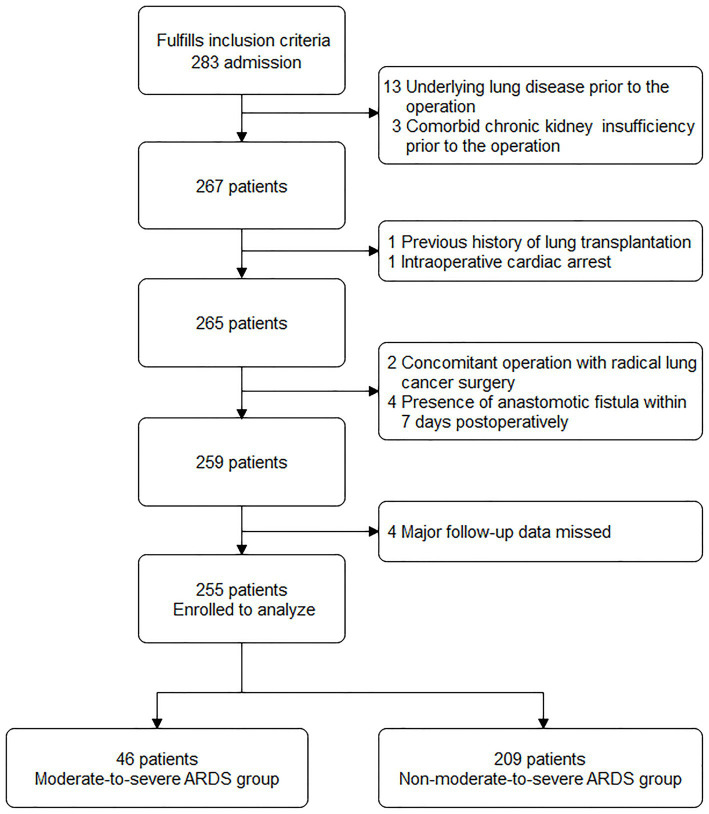 Figure 1
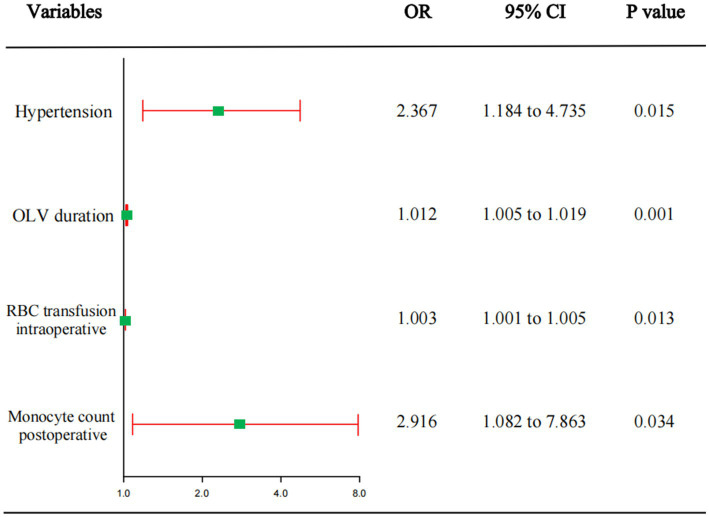 Figure 2
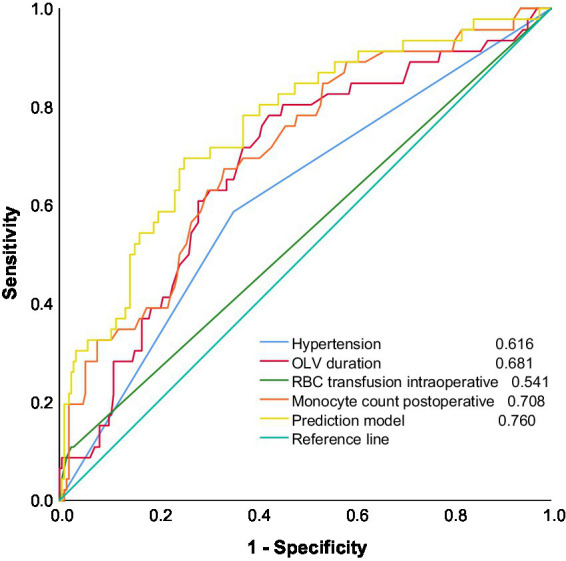 Figure 3
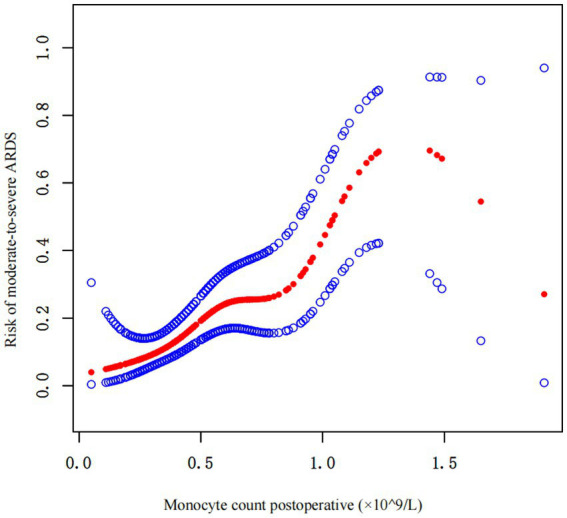 Figure 4
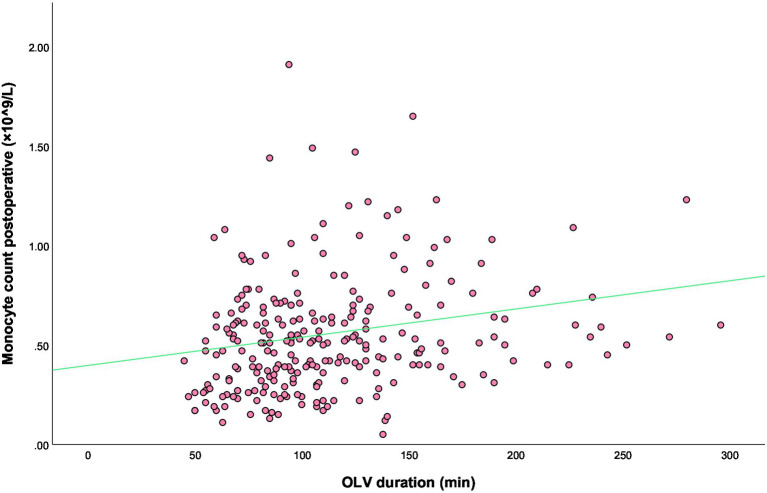 Figure 5
Peer Reviews
No public reviews on file for this paper yet. If you reviewed it on a platform where reviews are public (OpenReview, ICLR, NeurIPS, ICML), you can paste yours below so the community can read it here.
Videos
No videos yet. Explain this paper in a talk, walkthrough, or lecture? Add one.
Taxonomy
TopicsInflammatory Biomarkers in Disease Prognosis · Respiratory Support and Mechanisms · Inflammation biomarkers and pathways