From non-human to human primates: a translational approach to enhancing resection, safety, and indications in glioma surgery while preserving sensorimotor abilities
Matteo Gambaretti, Luca Viganò, Matteo Gallo, Giovanni Pratelli, Tommaso Sciortino, Lorenzo Gay, Marco Conti Nibali, Alberto Luigi Gallotti, Leonardo Tariciotti, Luca Mattioli, Lorenzo Bello, Gabriella Cerri, Marco Rossi

TL;DR
This paper reviews how research on non-human primates has improved brain tumor surgery by enhancing resection while preserving motor functions.
Contribution
It highlights the translational impact of primate research on refining brain mapping techniques for neurosurgery.
Findings
Brain mapping techniques have evolved from classical methods to include high- and low-frequency stimulation.
These techniques help preserve sensorimotor functions during tumor resection.
New tools have been developed to operate in previously 'untouchable' brain areas.
Abstract
Since the pivotal studies of neurophysiologists in the early 20th century, research on brain functions in non-human primates has provided valuable insights into the neural mechanisms subserving neurological function. By using data acquired on non-human primates as a reference, important progress in knowledge of the human brain and its functions has been achieved. The translational impact allowed by this scientific effort must be recognized in the implementation of the current surgical techniques particularly in support of the neurosurgical approach to brain tumors. In the surgical treatment of brain tumors, the ability to maximally extend the resection allows an improvement in overall survival, progression-free survival, and quality of life of patients. The main goal, and, at the same time, the main challenge, of oncological neurological surgery is to avoid permanent neurological…
Genes, proteins, chemicals, diseases, species, mutations and cell lines named across the full text — each resolved to its canonical identifier and authoritative record.
Click any figure to enlarge with its caption.
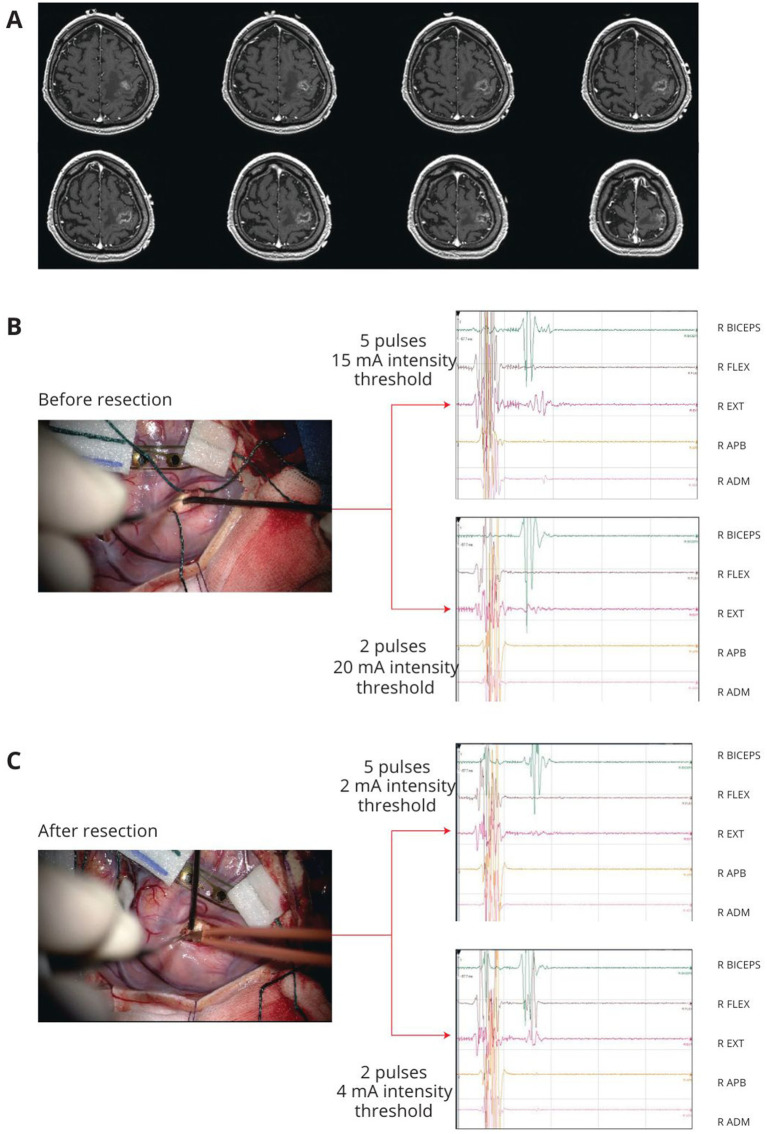 Figure 1
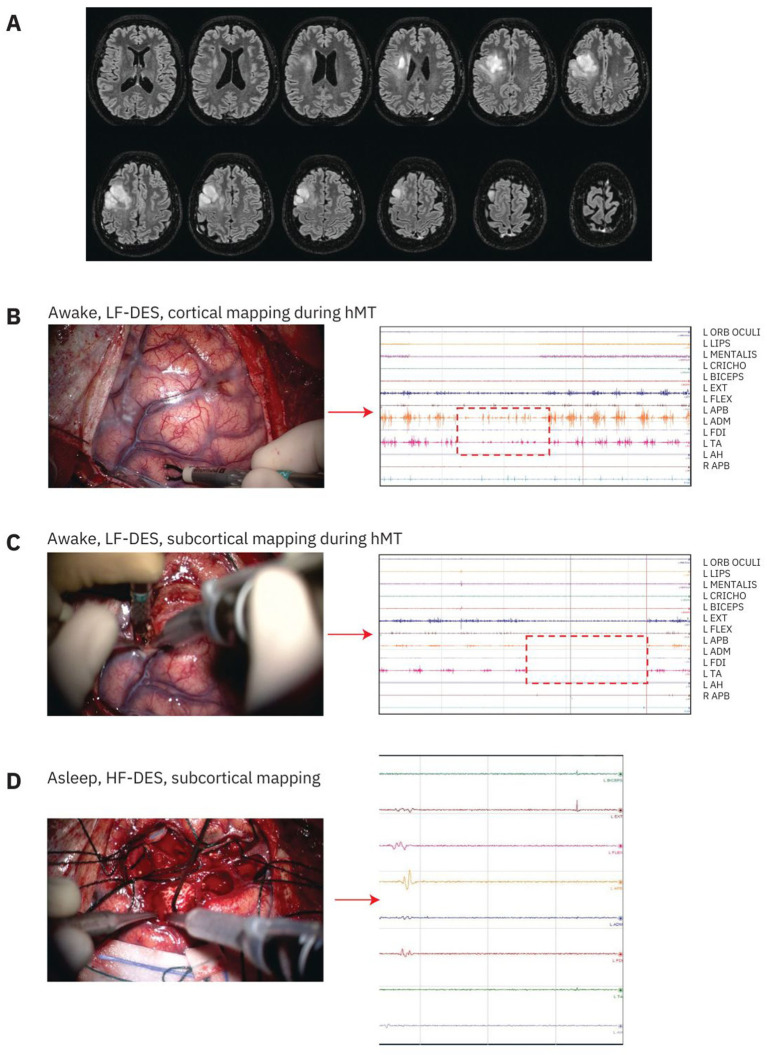 Figure 2
Peer Reviews
No public reviews on file for this paper yet. If you reviewed it on a platform where reviews are public (OpenReview, ICLR, NeurIPS, ICML), you can paste yours below so the community can read it here.
Videos
No videos yet. Explain this paper in a talk, walkthrough, or lecture? Add one.
Taxonomy
TopicsAdvanced Neuroimaging Techniques and Applications · Functional Brain Connectivity Studies · Transcranial Magnetic Stimulation Studies