Evaluating the relative predictive validity of measures of self-referential processing for depressive symptom severity
Ethel Siew Ee Tan, Hong Ming Tan, Kah Vui Fong, Sheryl Yu Xuan Tey, Nikita Rane, Chong Wei Ho, Zhao Yuan Tan, Rachel Jing Min Ong, Chloe Teo, Jerall Yu, Maxine Lee, An Rae Teo, Sin Kee Ong, Xin Ying Lim, Jin Lin Kee, Jussi Keppo, Geoffrey Chern-Yee Tan

TL;DR
This study evaluates how well different versions of a self-referential task predict depression symptoms, finding that modified versions are more accurate.
Contribution
The study introduces modified versions of the SRET task that improve predictive accuracy for depression symptoms.
Findings
Modified SRET measures like Matrix Endorsement Bias and Likert Endorsement Sum Bias achieved the lowest mean squared error in predicting depressive symptoms.
Standard SRET measures predicted depressive symptoms in clinical populations but not in healthy ones.
Task modifications and longer word lists may improve depression screening effectiveness.
Abstract
The self-referential encoding task (SRET) has a number of implicit measures which are associated with various facets of depression, including depressive symptoms. While some measures have proven robust in predicting depressive symptoms, their effectiveness can vary depending on the methodology used. Hence, understanding the relative contributions of population differences, word lists and calculation methods to these associations with depression, is crucial for translating the SRET into a clinical screening tool. This study systematically investigated the predictive accuracy of various SRET measures across different samples, including one clinical population matched with healthy controls and two university student populations, exposed to differing word lists. Participants completed the standard SRET and its variations, including Likert scales and matrix formats. Both standard and novel…
Genes, proteins, chemicals, diseases, species, mutations and cell lines named across the full text — each resolved to its canonical identifier and authoritative record.
Click any figure to enlarge with its caption.
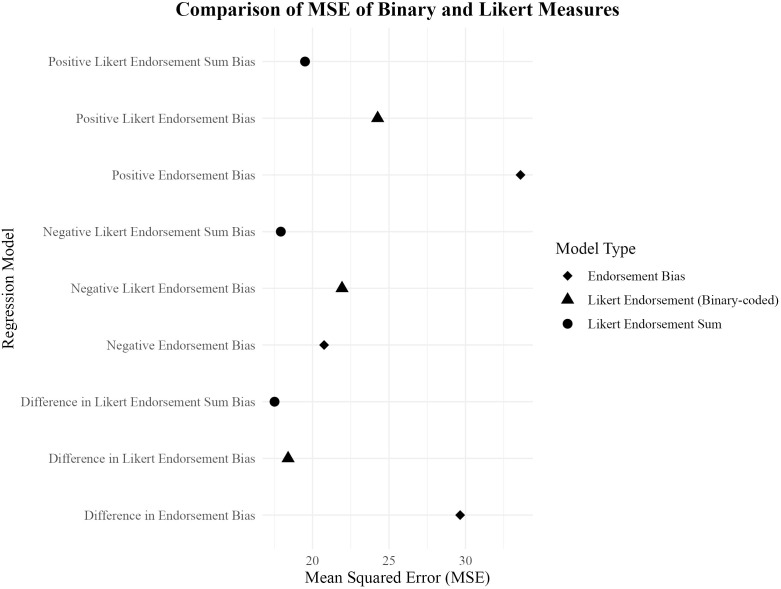 Figure 1
Peer Reviews
No public reviews on file for this paper yet. If you reviewed it on a platform where reviews are public (OpenReview, ICLR, NeurIPS, ICML), you can paste yours below so the community can read it here.
Videos
No videos yet. Explain this paper in a talk, walkthrough, or lecture? Add one.
Taxonomy
TopicsMental Health Research Topics · Treatment of Major Depression · Anxiety, Depression, Psychometrics, Treatment, Cognitive Processes