Functional analysis of a novel homozygous missense IVD gene variant: a case report with dual genetic diagnoses
Yuying Zhu, Ke Wu, Hanying Wen

TL;DR
A 5-year-old boy with multiple health issues was found to have two genetic disorders, Prader–Willi syndrome and isovaleric acidemia, through genomic sequencing and functional analysis of a novel IVD gene variant.
Contribution
This is the first report of a novel homozygous IVD gene variant causing isovaleric acidemia in a patient with Prader–Willi syndrome.
Findings
A novel homozygous missense variant c.1006T>C (p.Cys336Arg) in the IVD gene was identified as the cause of isovaleric acidemia.
The IVD variant leads to haploinsufficiency due to unstable mutant protein, not reduced mRNA expression.
The patient was diagnosed with two genetic disorders, Prader–Willi syndrome and isovaleric acidemia, highlighting the importance of dual genetic diagnoses.
Abstract
Genomic or exome sequencing is beneficial for identifying more than one pathogenic variation causing blended atypical and/or severe phenotypes. Herein, we are the first to report a 5-year-old boy with the blended phenotypes of infantile hypotonia, severe neurodevelopmental disorder, patent ductus arteriosus, cryptorchidism, obesity, distinctive facial features, and elevated isovaleryl carnitine. Trio-based whole-exome sequencing was performed on genomic DNA from peripheral blood samples from the boy and his parents. Functional analysis of the IVD variant in vitro was performed. Mutant IVD gene pcDNA3.1(+)-MUT-3xFlag and control pcDNA3.1(+)-WT-3xFlag mammalian expression vectors were constructed. Both vectors were transformed into HEK293T cells. The assays of relative IVD gene mRNA expression, IVD protein expression, and enzymatic activity were used. Whole-exome sequencing identified a…
Genes, proteins, chemicals, diseases, species, mutations and cell lines named across the full text — each resolved to its canonical identifier and authoritative record.
Click any figure to enlarge with its caption.
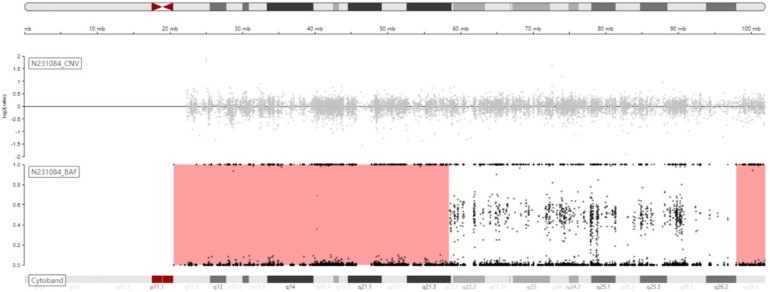 Figure 1
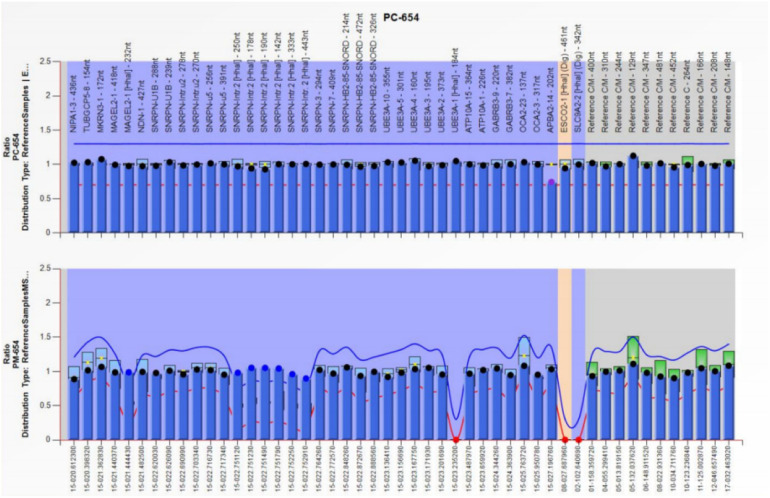 Figure 2
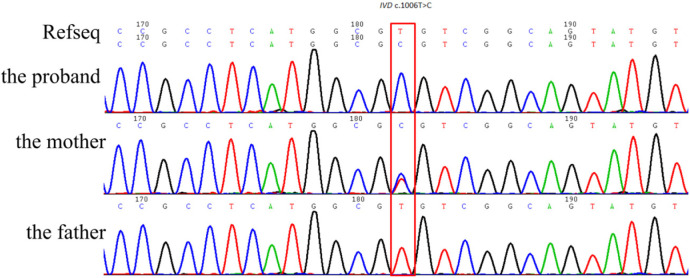 Figure 3
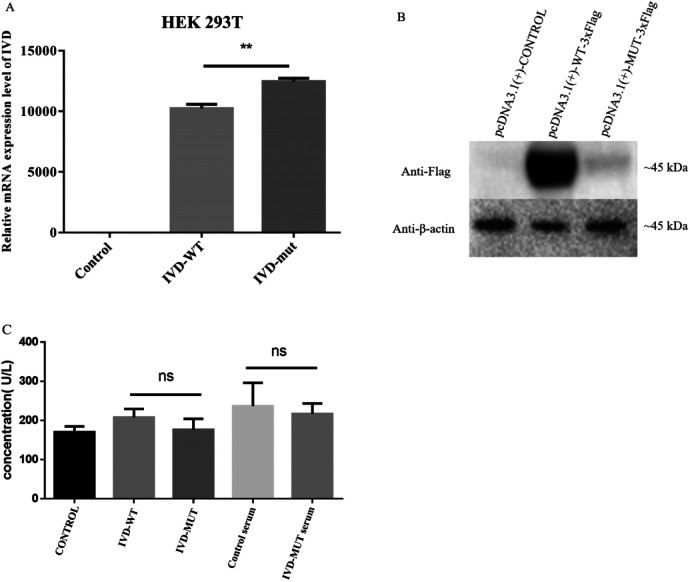 Figure 4
Peer Reviews
No public reviews on file for this paper yet. If you reviewed it on a platform where reviews are public (OpenReview, ICLR, NeurIPS, ICML), you can paste yours below so the community can read it here.
Videos
No videos yet. Explain this paper in a talk, walkthrough, or lecture? Add one.
Taxonomy
TopicsGenetic Syndromes and Imprinting · Congenital heart defects research · Genetics and Neurodevelopmental Disorders