Salvia deserti Decne., an endemic and rare subshrub from Arabian desert: antidiabetic and antihyperlipidemic effects of leaf hydroethanolic extracts
Arbi Guetat, Slimen Selmi, Abdelrhman T. Abdelwahab, Marwa A. Abdelfattah, Abd Ealrhman M. Elhaj, Roaa T. Mogharbel, M. J. A. Abualreish, Abdullah F. Alanazi, Karim Hosni, Naceur Mejri, Abdennacer Boulila

TL;DR
This study shows that Salvia deserti, a rare plant from the Arabian desert, may help manage diabetes and related conditions by improving blood sugar, liver and kidney function, and lipid levels.
Contribution
This is the first study to investigate the antidiabetic and antihyperlipidemic effects of Salvia deserti leaf extracts.
Findings
S. deserti extract significantly reduced blood glucose and improved liver and kidney function in diabetic mice.
The extract improved lipid profiles by lowering bad cholesterol and increasing good cholesterol.
Phenolic compounds in the extract may contribute to its antioxidant and therapeutic effects.
Abstract
Diabetes is a major health issue that has reached alarming levels worldwide. Although their effectiveness, the antidiabetic drugs have many side effects such as cardiovascular diseases, kidney failure, and hepatic complications. Many plant species of the genus Salvia L. such as “Arabian desert sage” (Salvia deserti) should began to be the focus of phytochemical and bioactivity studies. The study aims to investigate, first-ever, the antidiabetic and antihyperlipidemic effects of the leaf hydroethanolic extract of S. deserti, an endemic and rare subshrub from Arabian desert. A single intraperitoneal injection of alloxan monohydrate (160 mg/kg) was used to induce type-2 diabetes. Development of diabetes was confirmed by measuring the blood glucose collected from the tail vein after 72 h of alloxan injection. Oral administration of hydroethanolic extracts of S. deserti at 200 and 400 mg/kg…
Genes, proteins, chemicals, diseases, species, mutations and cell lines named across the full text — each resolved to its canonical identifier and authoritative record.
Click any figure to enlarge with its caption.
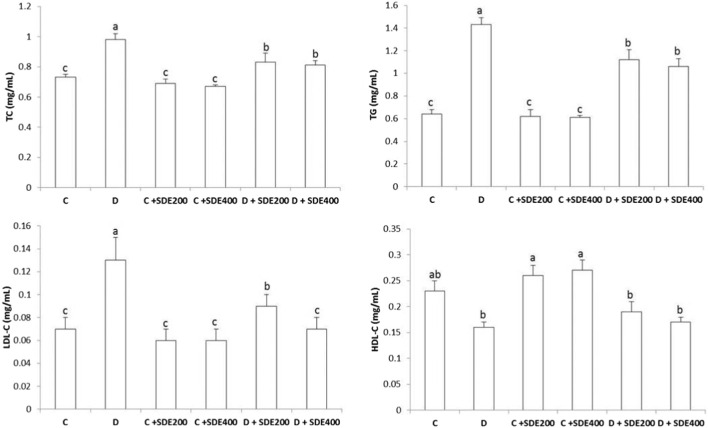 Figure 1
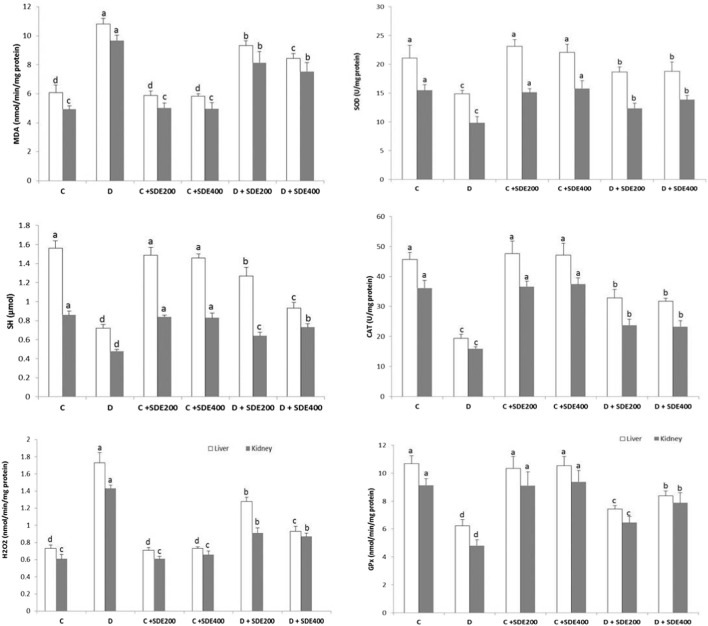 Figure 2
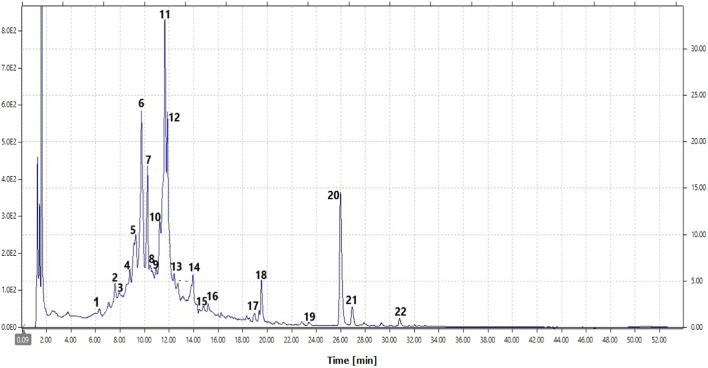 Figure 3
Peer Reviews
No public reviews on file for this paper yet. If you reviewed it on a platform where reviews are public (OpenReview, ICLR, NeurIPS, ICML), you can paste yours below so the community can read it here.
Videos
No videos yet. Explain this paper in a talk, walkthrough, or lecture? Add one.
Taxonomy
TopicsNatural Antidiabetic Agents Studies · Phytochemicals and Antioxidant Activities · Phytochemistry and biological activity of medicinal plants