Three-Plug Technique for Mitral Paravalvular Leak Closure in Marfan Syndrome
Vlasis Ninios, Georgios E Papadopoulos, Andreas Ioannides, Sotirios Evangelou, Ilias Ninios

TL;DR
A 32-year-old woman with Marfan syndrome successfully had a mitral paravalvular leak closed using a three-plug technique, avoiding high-risk surgery.
Contribution
The paper introduces a novel three-plug technique for percutaneous closure of mitral paravalvular leaks in connective tissue disorders.
Findings
The three-plug technique using Amplatzer Vascular Plug III devices effectively reduced regurgitation to trace levels.
The patient achieved NYHA class I functional status six months post-procedure with durable closure confirmed by echocardiography.
Multimodality imaging and strategic device selection were critical for successful outcomes in high-risk patients.
Abstract
Paravalvular leaks (PVLs) represent a challenging complication following surgical mitral valve replacement, particularly in patients with connective tissue disorders such as Marfan syndrome. This report presents the case of a 32-year-old female with Marfan syndrome who presented with progressive dyspnea and New York Heart Association (NYHA) functional class II-III symptoms 10 years post-mitral valve replacement for severe mitral regurgitation. Transthoracic and transesophageal echocardiography identified an 8 × 9 mm paravalvular defect with compliant borders, deemed suitable for percutaneous closure. Surgical re-intervention was considered high risk by the Heart Team, leading to the decision to proceed with a minimally invasive approach. Under general anesthesia, the defect was crossed using a steerable guide catheter and stabilized with a super-stiff wire. A stepwise closure strategy…
Genes, proteins, chemicals, diseases, species, mutations and cell lines named across the full text — each resolved to its canonical identifier and authoritative record.
Click any figure to enlarge with its caption.
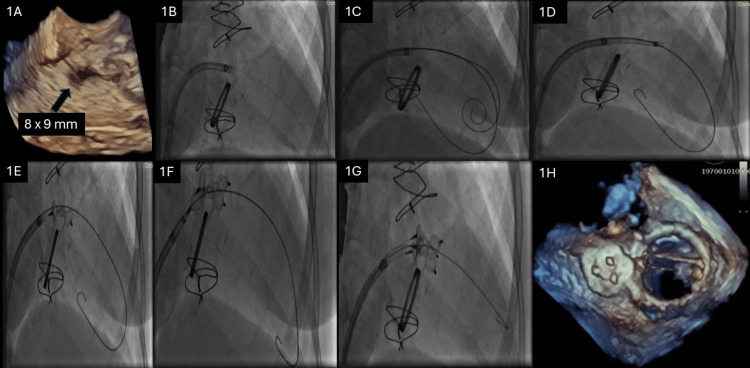 Figure 1
Peer Reviews
No public reviews on file for this paper yet. If you reviewed it on a platform where reviews are public (OpenReview, ICLR, NeurIPS, ICML), you can paste yours below so the community can read it here.
Videos
No videos yet. Explain this paper in a talk, walkthrough, or lecture? Add one.
Taxonomy
TopicsCardiac Valve Diseases and Treatments · Cardiac Structural Anomalies and Repair · Cardiac Arrhythmias and Treatments