Plants used by Brazilian communities of African descent for women's health
Letícia Francine Silva Ramos, Ananda Gomes de Sousa, Rebeca de Siqueira Amorim, Alan de Araújo Roque, Israel Luís Diniz Carvalho, Ana Laura Vilela de Carvalho, Maiara Bernardes Marques, Milena Evangelista dos Santos, Moan Jéfter Fernandes Costa, Luiza Rayanna Amorim de Lima

TL;DR
This paper explores how Brazilian communities of African descent use plants for women's health, focusing on sexual and postpartum care passed down by women.
Contribution
The study systematically identifies and documents medicinal plants used by Quilombola women for women's health, highlighting cultural preservation.
Findings
44 medicinal plants from 23 families were identified for women's health in these communities.
The plants are used in various forms and for sexual, menstrual, and postpartum care.
Oral transmission by women preserves cultural identity and ethnopharmacological knowledge.
Abstract
•Ethnopharmacological knowledge is passed down through generations by women in the community, who use plants especially for sexual and postpartum care. Ethnopharmacological knowledge is passed down through generations by women in the community, who use plants especially for sexual and postpartum care. Quilombola women are primarily responsible for maintaining ethnopharmacological knowledge. Their knowledge is transmitted orally to their descendants, preserving cultural identity and ensuring the survival of Quilombola communities. Was conducting a scoping review on the use of medicinal plants by Quilombola women. Based on the PPC strategy (population, concept, and context) and the “Joanna Briggs Institute Reviewer's Manual”, this systematic scoping review sought to answer the guiding question: which medicinal plants are used for diseases that compromise women's health in Brazilian…
Genes, proteins, chemicals, diseases, species, mutations and cell lines named across the full text — each resolved to its canonical identifier and authoritative record.
Click any figure to enlarge with its caption.
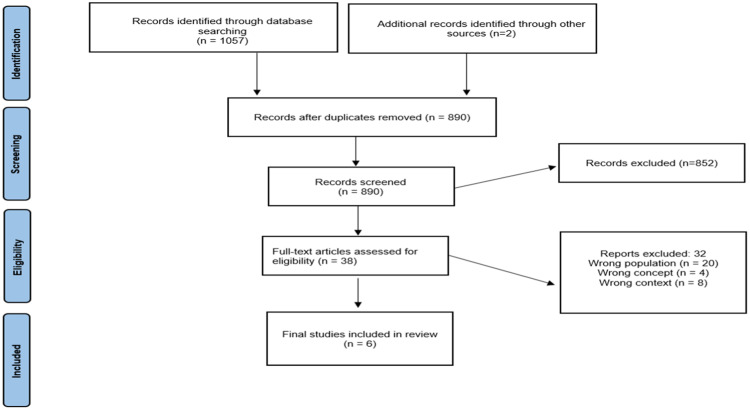 Figure 1
 Figure 2
Peer Reviews
No public reviews on file for this paper yet. If you reviewed it on a platform where reviews are public (OpenReview, ICLR, NeurIPS, ICML), you can paste yours below so the community can read it here.
Videos
No videos yet. Explain this paper in a talk, walkthrough, or lecture? Add one.
Taxonomy
TopicsPhytochemistry Medicinal Plant Applications · Ethnobotanical and Medicinal Plants Studies · Phytochemistry and Bioactivity Studies