Laboratory data on the interfacial tension, viscosity, and density of two naphthenic acids in n-hexadecane across varying temperatures and concentrations
Mohammad Sarlak, Alan J. McCue, Yukie Tanino

TL;DR
This study measures how two naphthenic acids in n-hexadecane affect oil-brine interfacial tension, viscosity, and density at different temperatures and concentrations.
Contribution
New experimental data on interfacial tension, viscosity, and density of naphthenic acid solutions in n-hexadecane under varying conditions.
Findings
Interfacial tension measurements were taken using the pendant drop method across temperatures and concentrations.
Viscosity and density data were collected using rotational viscometry at different temperatures.
Results show how acid concentration and temperature influence oil-brine interfacial properties.
Abstract
This paper presents oil-brine interfacial tensions measured using the pendant drop method at temperatures ranging from T = 25.0 to 60.0°C. Test oils were solutions of stearic acid or cyclohexanepentanoic acid in n-hexadecane at concentrations ranging from 0 to 2200 mg/L; the test brine was 5 wt.% NaCl and 1 wt.% KCl in deionized water for all measurements. Also presented are viscosity and density measurements by rotational viscometry at temperatures ranging from T = 20.0 to 80.0°C.
Genes, proteins, chemicals, diseases, species, mutations and cell lines named across the full text — each resolved to its canonical identifier and authoritative record.
Click any figure to enlarge with its caption.
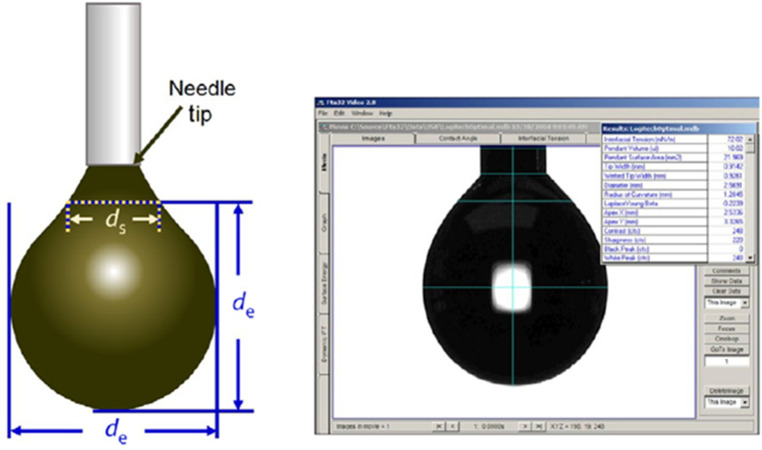 Figure 1
Peer Reviews
No public reviews on file for this paper yet. If you reviewed it on a platform where reviews are public (OpenReview, ICLR, NeurIPS, ICML), you can paste yours below so the community can read it here.
Videos
No videos yet. Explain this paper in a talk, walkthrough, or lecture? Add one.
Taxonomy
TopicsPetroleum Processing and Analysis · Enhanced Oil Recovery Techniques · Hydrocarbon exploration and reservoir analysis