Mediastinal Lymphadenopathy Diagnosed as Prostate Cancer via Endobronchial Ultrasound-Guided Transbronchial Needle Aspiration (EBUS-TBNA) in a Patient With a History of Renal Cell Carcinoma: A Case Report
Naoaki Tsuji, Hirai Soichi, Kano Yukari, Tanimura Mai, Shiotsu Shinsuke

TL;DR
A patient with a history of kidney cancer was found to have prostate cancer through a minimally invasive biopsy method, highlighting the importance of accurate diagnosis in atypical cases.
Contribution
Demonstrates the utility of EBUS-TBNA in distinguishing secondary malignancies from metastatic recurrence in patients with prior RCC.
Findings
EBUS-TBNA confirmed metastatic prostate cancer in a patient with a history of RCC.
Accurate diagnosis was achieved through histopathological analysis and tumor marker testing.
EBUS-TBNA is a minimally invasive and effective method for tissue sampling in atypical lymphadenopathy cases.
Abstract
In individuals with a history of renal cell carcinoma (RCC), mediastinal lymphadenopathy is frequently attributed to metastatic recurrence. However, secondary malignancies, despite their rarity, should also be considered. During routine follow-up examinations, a 63-year-old male with a history of renal cell carcinoma demonstrated progressive mediastinal lymphadenopathy. This was initially suspected to be a recurrence of renal cell carcinoma (RCC). The diagnosis of metastatic prostate adenocarcinoma was confirmed by prostate biopsy and elevated prostate-specific antigen (PSA) levels, as determined by endobronchial ultrasound-guided transbronchial needle aspiration (EBUS-TBNA). Treatment with androgen deprivation therapy (ADT) and chemotherapy was initiated after the patient was diagnosed with metastatic prostate cancer. This case underscores the critical role of EBUS-TBNA in the accurate…
Genes, proteins, chemicals, diseases, species, mutations and cell lines named across the full text — each resolved to its canonical identifier and authoritative record.
Click any figure to enlarge with its caption.
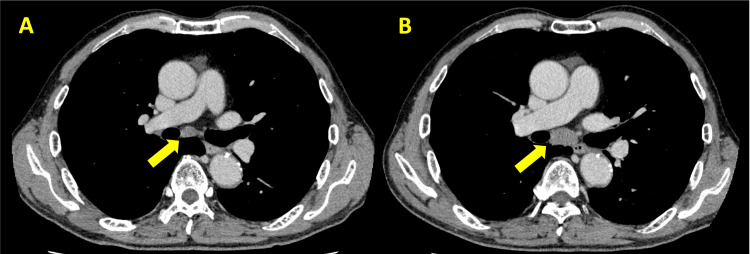 Figure 1
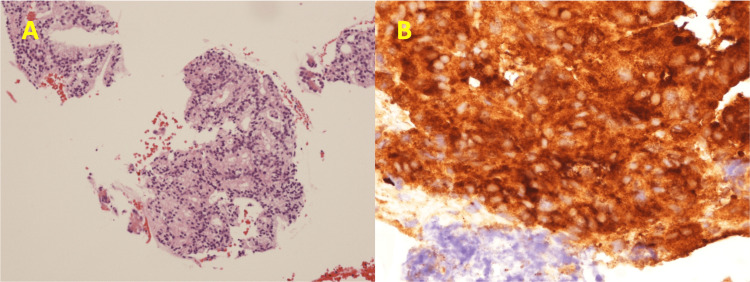 Figure 2
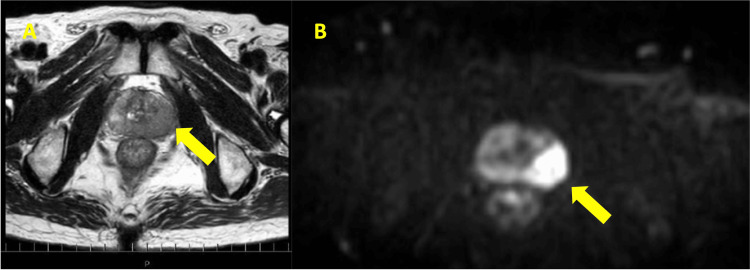 Figure 3
Peer Reviews
No public reviews on file for this paper yet. If you reviewed it on a platform where reviews are public (OpenReview, ICLR, NeurIPS, ICML), you can paste yours below so the community can read it here.
Videos
No videos yet. Explain this paper in a talk, walkthrough, or lecture? Add one.
Taxonomy
TopicsLung Cancer Diagnosis and Treatment · Lymphoma Diagnosis and Treatment · Lymphadenopathy Diagnosis and Analysis