Dentition of the Mugharet El'Aliya Fossil Human Maxilla, Morocco
Carolin Röding, Sireen El‐Zaatari, Fernando V. Ramirez Rozzi, Chris Stringer, M. Loring Burgess, Rodrigo S. Lacruz, Katerina Harvati

TL;DR
This study analyzes the teeth of a fossil human maxilla from Morocco to determine its evolutionary relationships, finding it most similar to early and later Homo sapiens.
Contribution
The study provides the first comparative analysis of a permanent upper canine from the Aterian fossil record.
Findings
The Mugharet el'Aliya fossil shows the greatest similarities in tooth morphology with Homo sapiens.
Perikymata counts on the upper canine align with Homo sapiens.
The canine and fourth premolar are unusually large, atypical for Homo sapiens.
Abstract
This study follows up on our recent morphological analysis of the juvenile maxilla from Mugharet el'Aliya, Morocco. Although this specimen shows a reportedly archaic morphology, likely due to its large size, 3D shape analyses indicated affinities with early Homo sapiens . Here, we conducted an in‐depth comparative investigation of the associated dentition to further clarify this individual's phylogenetic and taxonomic affinities. Our analyses were based on three kinds of data: (a) external crown dimensions and non‐metric features, analyzed via summary statistics; (b) CT scan data enabling the study of internal structures (enamel‐dentine junction) via geometric morphometrics; and (c) high‐resolution replicas of the external surface of the upper canine enabling the study of perikymata numbers via probability functions. The comparative samples included Middle Pleistocene (Chibanian)…
Genes, proteins, chemicals, diseases, species, mutations and cell lines named across the full text — each resolved to its canonical identifier and authoritative record.
Click any figure to enlarge with its caption.
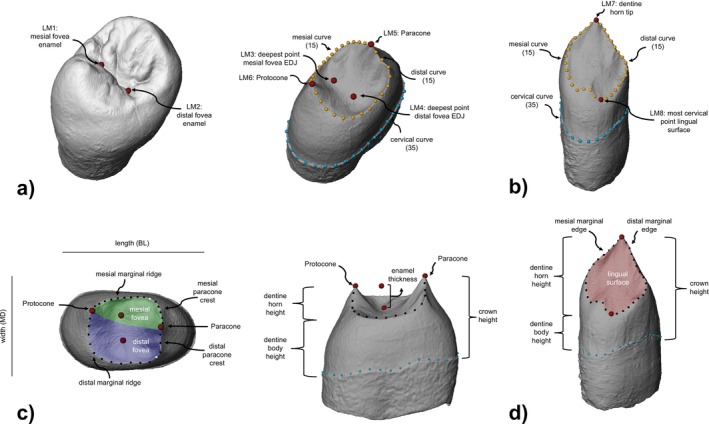 Figure 1
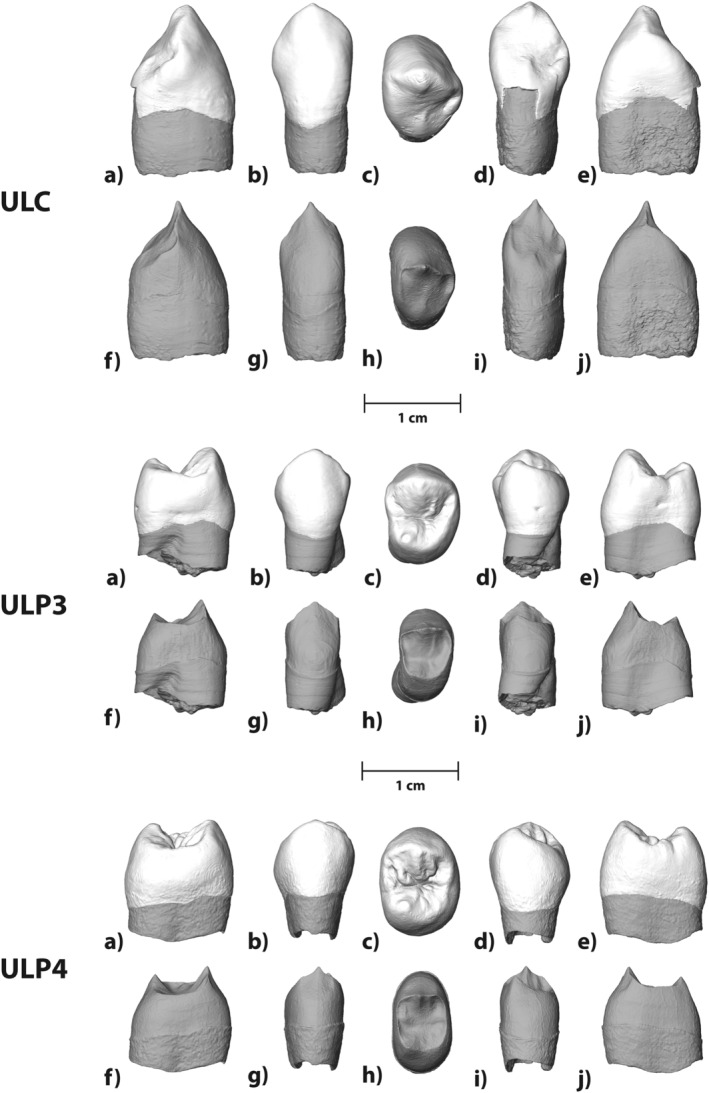 Figure 2
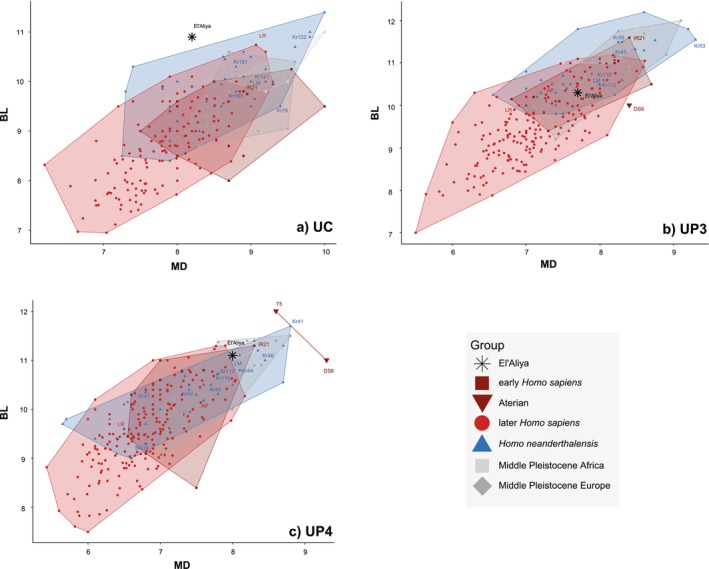 Figure 3
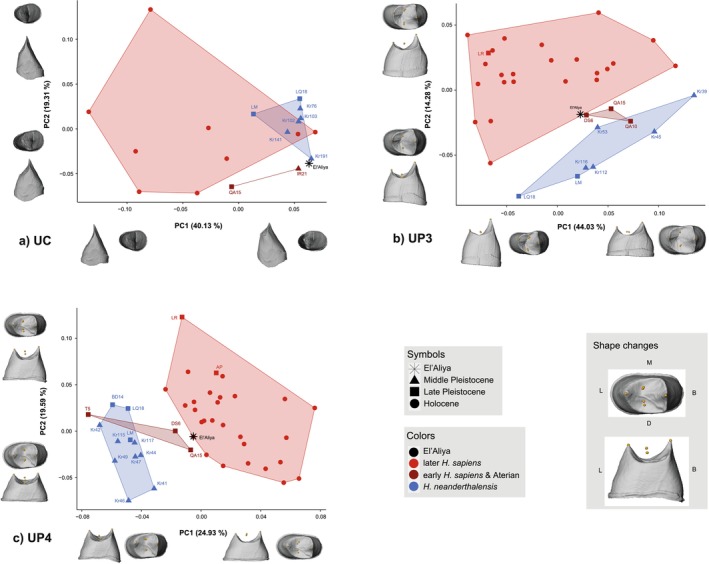 Figure 4
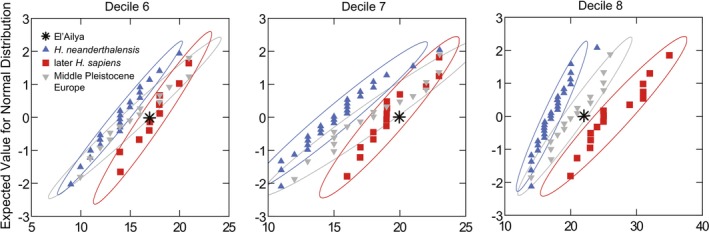 Figure 5
Peer Reviews
No public reviews on file for this paper yet. If you reviewed it on a platform where reviews are public (OpenReview, ICLR, NeurIPS, ICML), you can paste yours below so the community can read it here.
Videos
No videos yet. Explain this paper in a talk, walkthrough, or lecture? Add one.
Taxonomy
TopicsForensic Anthropology and Bioarchaeology Studies · Pleistocene-Era Hominins and Archaeology · dental development and anomalies