Cervical ectopic pregnancy of 11 amenorrhea weeks: clinical image
Aboubakr Benjilany, Jaouad Kouach

Abstract
Genes, proteins, chemicals, diseases, species, mutations and cell lines named across the full text — each resolved to its canonical identifier and authoritative record.
Click any figure to enlarge with its caption.
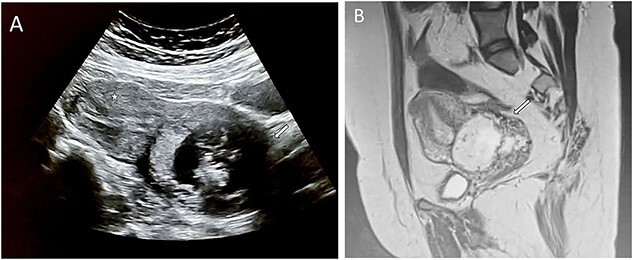 Figure 1
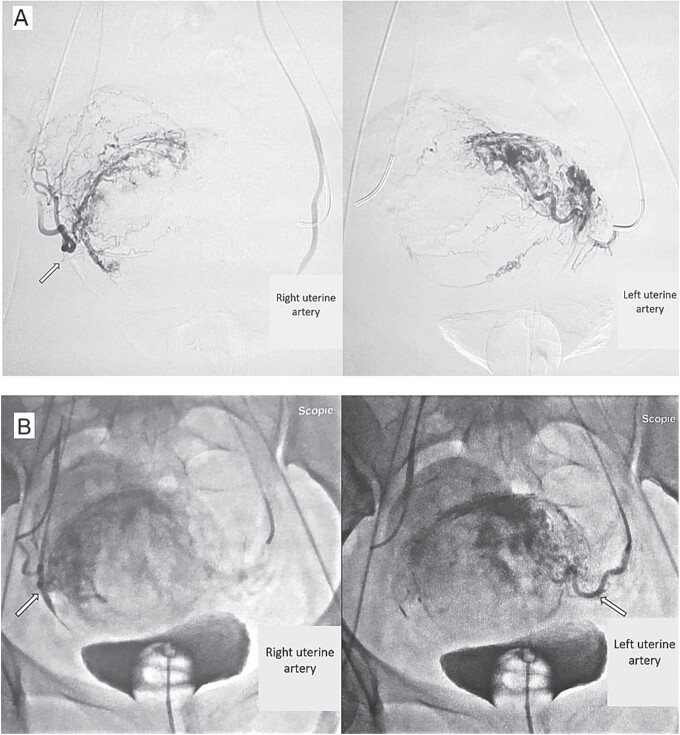 Figure 2
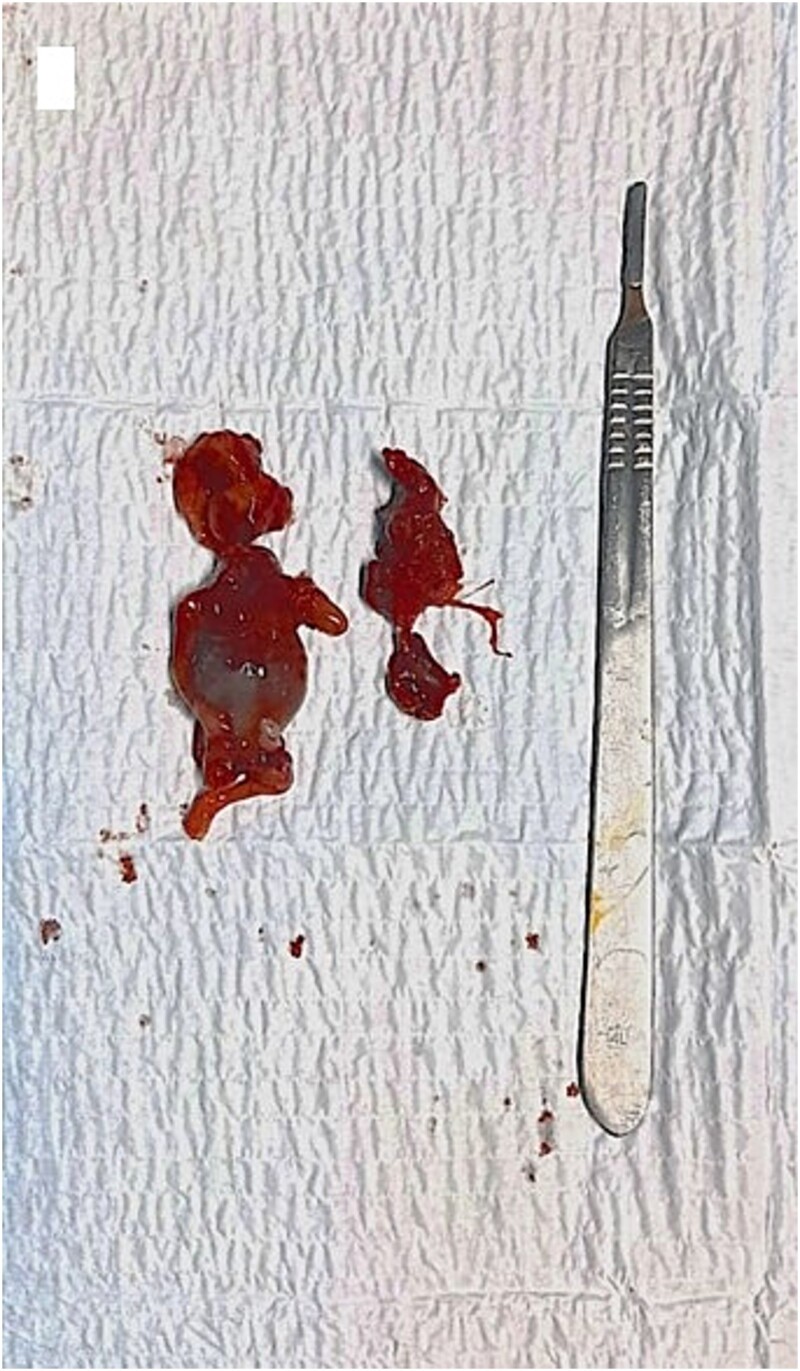 Figure 3
Peer Reviews
No public reviews on file for this paper yet. If you reviewed it on a platform where reviews are public (OpenReview, ICLR, NeurIPS, ICML), you can paste yours below so the community can read it here.
Videos
No videos yet. Explain this paper in a talk, walkthrough, or lecture? Add one.
Taxonomy
TopicsEctopic Pregnancy Diagnosis and Management · Gestational Trophoblastic Disease Studies · Homicide, Infanticide, and Child Abuse
Cervical ectopic pregnancy (CEP) is a rare location of ectopic pregnancy in which implantation and nidation occur in the endocervical canal [1]. Several management strategies have been reported, medical treatment whenever possible (Methotrexate, Potassium chloride, etc.). Radical surgical treatment, however, is indicated in the presence of hemodynamic instability or failure of medical treatment [2]. Selective embolization of the uterine arteries constitutes a new therapeutic approach, which is of great interest in young patients and/or those wishing to preserve their fertility [3].
We reported a case of a 30-year-old patient, nulliparous, with a history of endouterine curettage for spontaneous hemorrhagic abortion of 8 amenorrhea weeks, 2 years ago. Consulted our emergency department with moderate pelvic pain 2 weeks old, minimal reddish metrorrhagia and 11 weeks’ amenorrhea. General examination revealed a hemodynamically stable patient. Gynecological examination found a soft, bulging, shortened cervix with a partially open external cervical ostium. Conception product is perceptible through it. Endovaginal ultrasound (Fig. 1A) exposed an empty uterus with decidualized endometrium (asterisk), an evolving intra-cervical pregnancy of 11 weeks’ amenorrhea with a closed internal cervical ostium (arrow). Magnetic resonance imaging (MRI) (Fig. 1B) confirmed the endocervical location of the pregnancy with thinning of the posterior cervical stroma (arrow). The diagnosis of cervical ectopic pregnancy -extremely rare- was retained. Given the high risk of maternal haemorrhage, the decision was to perform a selective uterine artery embolization as a preventive and possibly therapeutic measure. Pelvic angiography (Fig. 2A) revealed that the ectopic pregnancy was principally supplied by the right uterine artery (arrow). Post-embolization imaging showed satisfactory bilateral occlusion of uterine arterial flow (Fig. 2B: arrows). Additional medical treatment with methotrexate and surgical curettage (Fig. 3) were successfully established, with no clinical and biological blood loss. The post-operative course was without abnormalities.
CEP is a very rare pathology, with a high hemorrhagic risk. Selective embolization of uterine arteries can be used as part of a minimally invasive treatment strategy of CEP. Whenever patient’s status allows it, technical platform and qualified personnel are available, obstetricians should consider this new approach in consultation with interventional radiologists.
Consent For Publication
Written consent has been obtained from the patient for the publication of this clinical report and images.
Guarantor
Aboubakr Benjilany.
The reference list from the paper itself. Each links out to its DOI / PubMed record.
- 1Chrestiana D, Cheng AB, Panebianco NL. et al. Pitfalls in cervical ectopic pregnancy diagnosis by emergency physicians using bedside ultrasonography. Am J Emerg Med 2013;32:397.e 1–3. 10.1016/j.ajem.2013.10.055.24342865 · doi ↗ · pubmed ↗
- 2Hosni MM, Herath RP, Rashid M. Diagnostic and therapeutic dilemmas of cervical ectopic pregnancy. Obstetrical & Gynecological Survey 2014;69:261–76. 10.1097/OGX.0000000000000062.25101692 · doi ↗ · pubmed ↗
- 3Zakaria MA, Abdallah ME, Shavell VI. et al. Conservative management of cervical ectopic pregnancy: utility of uterine artery embolization. Fertil Steril 2011;95:872–6. 10.1016/j.fertnstert.2010.12.024.21227415 · doi ↗ · pubmed ↗