Modification of the existing maximum residue levels for oxathiapiprolin in various crops
Giulia Bellisai, Giovanni Bernasconi, Luis Carrasco Cabrera, Irene Castellan, Monica del Aguila, Lucien Ferreira, Luna Greco, Samira Jarrah, Renata Leuschner, Andrea Mioč, Stefanie Nave, Hermine Reich, Silvia Ruocco, Alessia Pia Scarlato, Andrea Simonati, Marta Szot

TL;DR
This paper discusses the modification of maximum residue levels for the pesticide oxathiapiprolin in various crops to ensure consumer safety.
Contribution
The study provides updated MRLs for oxathiapiprolin in specific crops and confirms safety for consumer health.
Findings
Sufficient data were submitted to derive MRL proposals for the assessed crops.
The existing MRL in honey covers potential residue carry-over from treated crops.
EFSA concluded that long-term residue intake is unlikely to pose a health risk.
Abstract
In accordance with Article 6 of Regulation (EC) No 396/2005, the applicant Syngenta Crop Protection AG submitted a request to the competent national authority in France to modify the existing maximum residue levels (MRLs) for the active substance oxathiapiprolin in Brussels sprouts, kales, watercresses, herbs and edible flowers (excluding basil and edible flowers). The data submitted in support of the request were found to be sufficient to derive MRL proposals for all the crops under assessment. The potential carry‐over of residues into honey from the relevant intended uses on mellifluous crops is covered by the existing MRL in honey. Adequate analytical methods for enforcement are available to control the residues of oxathiapiprolin in plant matrices and in honey matrix at the validated limit of quantification (LOQ) of 0.01 mg/kg. Based on the risk assessment results, EFSA concluded…
Genes, proteins, chemicals, diseases, species, mutations and cell lines named across the full text — each resolved to its canonical identifier and authoritative record.
Click any figure to enlarge with its caption.
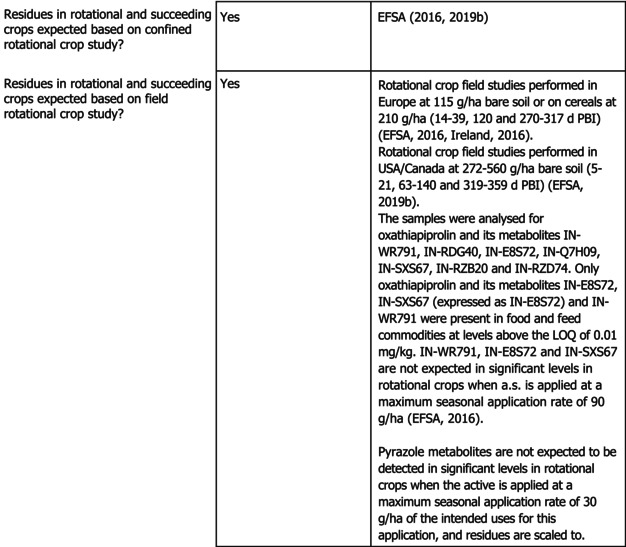 Figure 1
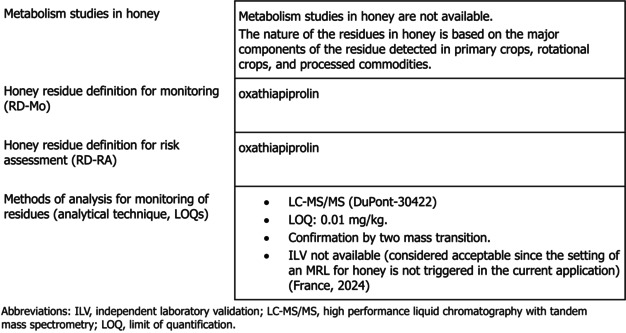 Figure 2
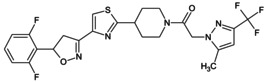 Figure 3
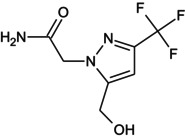 Figure 4
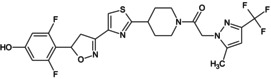 Figure 5
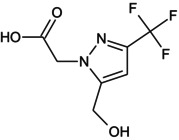 Figure 6
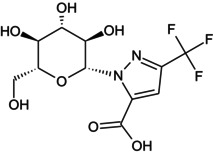 Figure 7
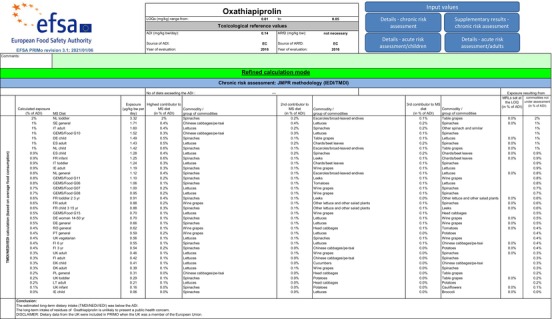 Figure 8
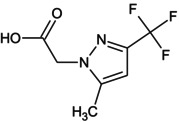 Figure 9
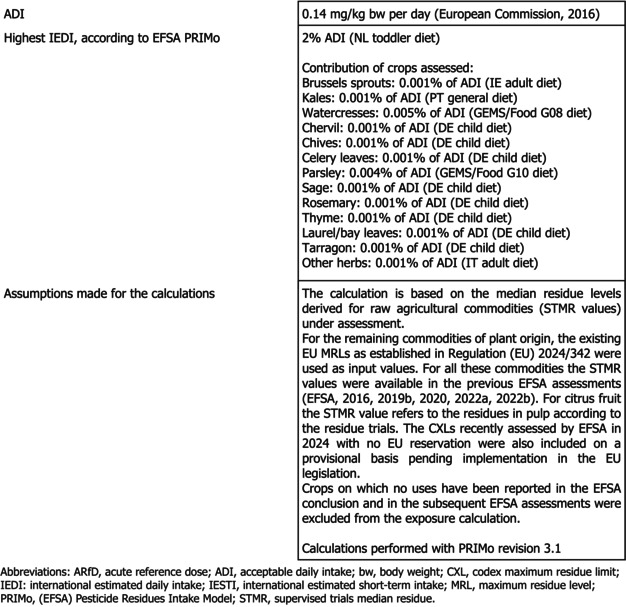 Figure 10
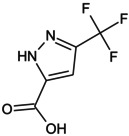 Figure 11
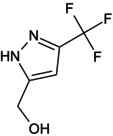 Figure 12
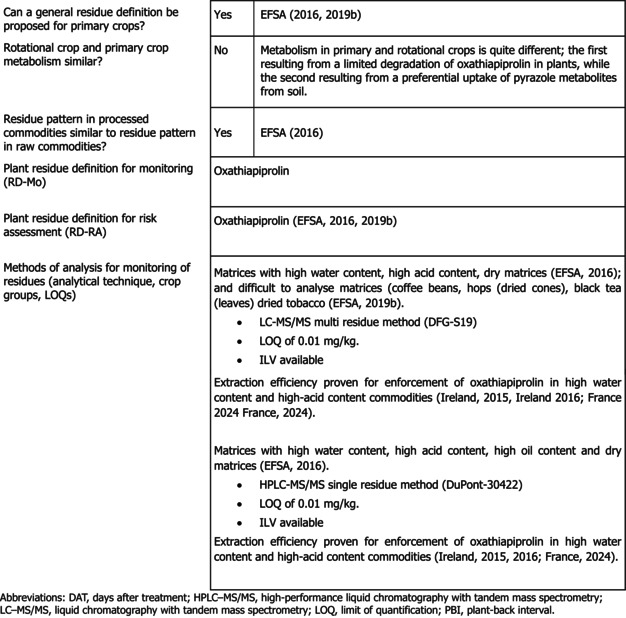 Figure 13
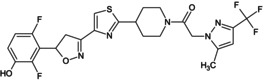 Figure 14
Peer Reviews
No public reviews on file for this paper yet. If you reviewed it on a platform where reviews are public (OpenReview, ICLR, NeurIPS, ICML), you can paste yours below so the community can read it here.
Videos
No videos yet. Explain this paper in a talk, walkthrough, or lecture? Add one.
Taxonomy
TopicsAgricultural safety and regulations · Pesticide Residue Analysis and Safety · Vitamin K Research Studies
SUMMARY
In accordance with Article 6 of Regulation (EC) No 396/2005, Syngenta Crop Protection AG submitted an application to the competent national authority in France (evaluating Member State, EMS) to modify the existing maximum residue levels (MRLs) for the active substance oxathiapiprolin in Brussels sprouts, kales, watercresses, herbs and edible flowers (except of basil and edible flowers).
The application, alongside the dossier containing the supporting data in IUCLID format, was submitted through the European Food Safety Authority (EFSA) Central Submission System on 6 September 2021. The appointed EMS, France, assessed the dossier and declared its admissibility on 14 November 2022. Subsequently, following the implementation of the EFSA's confidentiality decision, the non‐confidential version of the dossier was published by EFSA, and a public consultation launched on the dossier. The consultation aimed to consult stakeholders and the public on the scientific data, studies and other information part of, or supporting, the submitted application, in order to identify whether other relevant scientific data or studies are available. The consultation run from 1 June 2023 to 22 June 2023. No additional data nor comments were submitted in the framework of the consultation.
At the end of the commenting period, the EMS proceeded drafting the evaluation report in accordance with Article 8 of Regulation (EC) No 396/2005, which was submitted to the European Commission and to EFSA on 26 September 2024. To accommodate for the intended uses of oxathiapiprolin, the EMS proposed to raise the existing MRLs from the respective limits of quantification (LOQ) to 0.015 mg/kg for Brussels sprouts, 0.04 mg/kg for kales and 1.5 mg/kg for watercresses and herbs and edible flowers subgroup (excluding basil and edible flowers).
The European Commission sent a mandate to EFSA on 10 October 2024 to assess the application and the evaluation report as required by Article 10 of the MRL regulation.
Based on the conclusions derived by EFSA in the framework of Regulation (EC) No 1107/2009, the data evaluated under previous MRL assessments and the additional data provided by the EMS in the framework of this application, the following conclusions are derived.
The metabolism of oxathiapiprolin following foliar and soil applications was investigated in primary crops belonging to the groups of fruit, leafy and root crops. The metabolism of oxathiapiprolin in rotational crops was investigated in leafy crops, root/tuber crops and cereals after bare soil applications. The results of these studies indicate a limited degradation of oxathiapiprolin in plants in primary metabolism and a preferential uptake of pyrazole metabolites from soil in the rotational crop metabolism. Studies investigating the effect of processing on the nature of oxathiapiprolin (hydrolysis studies) demonstrated that the active substance is stable under standard hydrolysis conditions.
Based on the metabolic pattern identified in the metabolism studies, hydrolysis studies and the toxicological relevance of metabolites, the residue definitions for plant products were proposed as ‘oxathiapiprolin’ for enforcement and risk assessment. These residue definitions are applicable to primary crops, rotational crops, processed products.
EFSA concluded that, for the crops assessed in this application, the metabolism of oxathiapiprolin in primary and in rotational crops and the possible degradation in processed products have been sufficiently addressed and that the previously derived residue definitions are applicable.
Sufficiently validated analytical methods based on liquid chromatography with tandem mass spectrometry (LC–MS/MS) are available to quantify residues of oxathiapiprolin in the commodities assessed in this application according to the enforcement residue definition. The methods enable quantification of residues at or above 0.01 mg/kg (LOQ) in the crops assessed (high water content matrices). Extraction efficiency of the methods proposed for enforcement has been proven in high water content commodities.
The available residue trials are sufficient to derive the MRL proposals of 0.015 mg/kg for Brussels sprouts, 0.04 mg/kg for kales and 1.5 mg/kg for watercresses and herbs and edible flowers subgroup (excluding basil and edible flowers) by extrapolation from indoor residue trials on lettuces.
Specific studies investigating the magnitude of oxathiapiprolin residues in processed commodities to refine the dietary exposure calculation are not necessary for the crops under assessment according to the OECD Guidance on the magnitude of pesticide residues in processed commodities.
As kale leaves are used as livestock feed item (forage), a potential carry‐over into food of animal origin of residues of oxathiapiprolin needed to be assessed. Therefore, the previous assessment of residues in livestock was updated, whereby considering the residues from the intended use on kales. The results of the dietary burden calculation demonstrated that expected dietary burdens for all livestock species are below the trigger value of 0.004 mg/kg body weight/day and, therefore according to the applicable data requirements, the magnitude of oxathiapiprolin residues in livestock was not further investigated. Investigation on the transfer of oxathiapiprolin to fish products is also not required, since kales are not used in fish feeds.
Studies investigating the magnitude of residues in honey, storage stability studies and a method of analysis with its validation data were submitted within the current application. For honey, the same residue definitions as for plants is derived. Based on the available residue trials, a modification of the existing MRL for oxathiapiprolin in honey, which is currently set at the LOQ of 0.05 mg/kg, is not needed. Noteworthy is that the method of analysis submitted in this application enables monitoring residues of oxathiapiprolin at a lower LOQ of 0.01 mg/kg.
The toxicological profile of oxathiapiprolin was assessed in the framework of the EU pesticides peer review under Regulation (EC) No 1107/2009 and the data were sufficient to derive an acceptable daily intake (ADI) of 0.14 mg/kg bw per day. An acute reference dose (ARfD) was deemed unnecessary.
The consumer risk assessment was performed with revision 3.1 of the EFSA Pesticide Residues Intake Model (PRIMo). The estimated chronic exposures were compared with the ADI of oxathiapiprolin. The estimated long‐term dietary intake accounted for a maximum of 2% of the ADI (Dutch toddler diet). The contribution of residues expected in the crops under assessment from the intended uses individually do not exceed 0.01% of the ADI.
EFSA concluded that the proposed uses of oxathiapiprolin on Brussels sprouts, kales, watercresses, herbs and edible flowers subgroup (excluding basil and edible flowers), and the potential carry‐over of residues into honey, resulting from the proposed and authorised uses of oxathiapiprolin on melliferous crops, will not result in a consumer exposure exceeding the toxicological reference value and therefore is unlikely to pose a risk to consumers' health.
EFSA proposes to amend the existing MRLs as reported in the summary table below.
Full details of all end points and the consumer risk assessment can be found in Appendices B, C, D Codea CommodityExisting, EU MRL (mg/kg)Proposed EU MRL (mg/kg)Comment/justification Enforcement residue definition: Oxathiapiprolin0242010Brussels sprouts0.01* 0.015The submitted data are sufficient to derive an MRL proposal for the intended NEU use. Risk for consumers unlikely.0243020Kales0.01* 0.04The submitted data are sufficient to derive an MRL proposal for the intended NEU use. Risk for consumers unlikely.0254000Watercresses0.01* 1.5The submitted data on open‐leaf lettuces are sufficient to derive by extrapolation an MRL proposal for the intended NEU and indoor use on watercresses. The MRL proposal reflects the more critical residue situation of the indoor use. Risk for consumers unlikely.0256000 (except of 0256080)Herbs and edible flowers (excluding basil and edible flowers)0.02* 1.5The submitted data on open leaf lettuces are sufficient to derive by extrapolation an MRL proposal for the intended NEU and indoor use on Herbs and edible flowers subgroup. The MRL proposal reflects the more critical residue situation of the indoor use. Risk for consumers unlikely.1040000Honey and other apiculture productsb 0.05* No changeThe submitted data do not provide evidence that the existing MRL has to be modified.Abbreviations: MRL, maximum residue level; NEU, northern Europe.*Indicates that the MRL is set at the limit of analytical quantification (LOQ). ^a^ Commodity code number according to Annex I of Regulation (EC) No 396/2005. ^b^ According to Regulation (EC) No 396/2005 (as amended by Commission Regulation (EU) 2018/62) MRLs are not applicable to other apiculture products until individual products have been identified and listed within this group.
ASSESSMENT
The European Food Safety Authority (EFSA) received an application to modify the existing maximum residue levels (MRLs) for oxathiapiprolin in Brussels sprouts, kales, watercresses, herbs and edible flowers (except of basil and edible flowers). The detailed description of the intended uses of oxathiapiprolin, which are the basis for the current MRL application, are reported in Appendix A.
Oxathiapiprolin is the ISO common name for (5RS)‐5‐(2,6‐difluorophenyl)‐4,5‐dihydro‐3‐[2‐(1‐{[5‐methyl‐3‐(trifluoromethyl)‐1H‐pyrazol‐1‐yl]acetyl}‐4‐piperidyl)thiazol‐4‐yl]isoxazole (IUPAC). The chemical structures of the active substance and its metabolites are reported in Appendix E.
Oxathiapiprolin1 was evaluated in the framework of Regulation (EC) No 1107/20092 with Ireland designated as rapporteur Member State (RMS) for the representative uses as a foliar treatment on grapes, potatoes, tomatoes and aubergines. The draft assessment report (DAR) prepared by the RMS has been peer reviewed by EFSA (EFSA, 2016). Oxathiapiprolin was approved3 for the use as fungicide on 3 March 2017. The EU MRLs for oxathiapiprolin are established in Annex II of Regulation (EC) No 396/2005.4 The review of existing MRLs according to Article 12 of Regulation (EC) No 396/2005 (MRL review) is not required, as proposals for setting MRLs covering the uses according to good agricultural practices (GAP) in the EU were assessed during the approval of oxathiapiprolin under Regulation (EC) No 1107/2009 and implemented in Regulation in accordance with Article 11(2) of the Regulation (EC) 1107/2009. EFSA has issued several reasoned opinions on the modification of MRLs for oxathiapiprolin (EFSA, 2019b, 2020, 2022a, 2022b). The proposals from these reasoned opinions have been considered in recent MRL regulations.5 Also, certain Codex maximum residue limits (CXLs) have been assessed (EFSA, 2017, 2019c, 2024). Only the CXLs on tree nuts, bush berries and avocados, which were recently assessed (EFSA, 2024), are still to be implemented in the EU MRL legislation. Nevertheless, they are considered in the current risk assessment.
In accordance Article 6 of Regulation (EC) No 396/2005 and following the provisions set by the ‘Transparency Regulation’ (EU) 2019/1381,6 the applicant Syngenta Crop Protection AG submitted on 6 September 2021 an application to the competent national authority in France, alongside the dossier containing the supporting data using the IUCLID format.
The appointed EMS, France, assessed the dossier and declared its admissibility on 14 November 2022. Subsequently, following the implementation of the EFSA's confidentiality decision, the non‐confidential version of the dossier was published by EFSA, and a public consultation launched on the dossier. The consultation aimed to consult stakeholders and the public on the scientific data, studies and other information part of, or supporting, the submitted application, in order to identify whether other relevant scientific data or studies are available. The consultation run from 1 June 2023 to 22 June 2023. No additional data nor comments were submitted in the framework of the consultation.
At the end of the commenting period, the EMS proceeded drafting the evaluation report in accordance with Article 8 of Regulation (EC) No 396/2005, which was submitted to the European Commission and to EFSA on 26 September 2024. To accommodate for the intended uses of oxathiapiprolin, the EMS proposed to raise the existing MRLs from the respective limits of quantification (LOQs) to 0.015 mg/kg for Brussels sprouts, 0.04 mg/kg for kales and 1.5 mg/kg for watercresses and the herbs and edible flowers subgroup (excluding basil and edible flowers).
The European Commission sent a mandate to EFSA on 10 October 2024 to assess the application and the evaluation report as required by Article 10 of the MRL regulation.
EFSA based its assessment on the evaluation report submitted by the EMS (France, 2024), the draft assessment report (DAR) and its addenda (Ireland, 2015, 2016) prepared under Regulation (EC) 1107/2009, the Commission review report on oxathiapiprolin (European Commission, 2016, revised in 2021), the conclusion on the peer review of the pesticide risk assessment of the active substance oxathiapiprolin (EFSA, 2016) and the outcome on the pesticide risk assessment for oxathiapiprolin in light of confirmatory data (EFSA, 2018b), as well as the conclusions from previous EFSA opinions on oxathiapiprolin (EFSA, 2017, 2019b, 2019c, 2020, 2022a, 2022b). Some CXLs (tree nuts, bush berries, and avocados) have been recently assessed (EFSA, 2024) and are currently under consideration for the implementation in the EU MRL legislation.
For this application, the data requirements established in Regulation (EU) No 283/20137 and the guidance documents applicable at the date of submission of the IUCLID application are applicable (European Commission, 2010, 2013, 2018, 2020, 2021, 2023; OECD, 2007a, 2007b, 2007c, 2007d, 2007e, 2007f, 2007g, 2008a, 2008b, 2009, 2011, 2016, 2021). The assessment is performed in accordance with the legal provisions of the Uniform Principles for the Evaluation and the Authorisation of Plant Protection Products adopted by Commission Regulation (EU) No 546/2011.8
It is noted that crops belonging to the herbs and edible flowers subgroup are of melliferous capacity, and the uses of oxathiapiprolin described in the current application are relevant to the possible carry‐over of oxathiapiprolin residues from these crops to honey (European Commission, 2018). In this view, the applicant has submitted studies investigating the magnitude of residues in honey, storage stability studies and a method of analysis with its validation. According to the evaluation performed by the EMS, those studies demonstrate that the modification of the existing MRL for oxathiapiprolin in honey, which is currently set at the LOQ of 0.05 mg/kg, is not needed.
A selected list of end points of the studies assessed by EFSA in the framework of this MRL application including the end points of relevant studies assessed previously, is presented in Appendix B.
The evaluation report submitted by the EMS (France, 2024) and the exposure calculations using the EFSA Pesticide Residues Intake Model (PRIMo) are made publicly available as background documents to this reasoned opinion.9
RESIDUES IN PLANTS
1
Nature of residues and methods of analysis in plants
1.1
Nature of residues in primary crops
1.1.1
The metabolism of oxathiapiprolin following foliar applications (3 applications of 70 g/ha) was investigated in primary crops belonging to the groups of fruit (grapes), leafy (lettuces) and root (potatoes) crops in the framework of the EU pesticides peer review of approval of the active substance oxathiapiprolin (EFSA, 2016). The metabolism pattern was similar in all plant groups investigated with the parent oxathiapiprolin being the major compound, accounting for 25%–85% of total radioactive residue (TRR) in grapes, lettuce and potato leaves. In potato tubers, the metabolism was not investigated due to the low TRR at harvest. In mature grapes, the main components were identified as metabolites INE8S72 and IN‐WR791, representing 14.4% and 18.6% TRR, respectively. Chiral analysis of samples indicated that the enantiomeric ratio (ca. 1:1) of the active substance remained unchanged in plants.
Additional studies were evaluated in the framework of the previous EFSA assessment (EFSA, 2019b), where the nature of oxathiapiprolin was investigated after soil application (600 g a.s./ha) in the root (potatoes), leafy (lettuces) and fruit (courgettes) crops. The main components of the TRR in immature and mature edible matrices that exceeded the trigger value of 10% were metabolites IN‐E8S72, IN‐WR791, IN‐RZB20 and IN‐RZB21/IN‐RZD74. The actual amounts, however, were low (below 0.01 mg eq/kg), and only for metabolite IN‐WR791 in courgettes above 0.01 mg/kg (0.016 mg eq/kg) (EFSA, 2019b).
Since the crops under consideration belong to the leafy crop group and since the applications patterns tested in the metabolism studies cover the application rates of the critical GAPs under assessment, EFSA concluded that the metabolic behaviour in primary crops is sufficiently addressed, and further studies are not required for the intended uses.
Nature of residues in rotational crops
1.1.2
The intended uses evaluated in this application are on leafy crops, which can be grown in rotation with other crops. The nature of oxathiapiprolin in rotational crops was investigated in the EU pesticides peer review of approval of the active substance oxathiapiprolin, in studies where bare soil was treated at the application rate of 210 g/ha, sowing wheat, lettuces and turnips as rotational crops 30, 120 and 365 days after the soil treatment (EFSA, 2016). The metabolism of oxathiapiprolin was found to be different as compared to the primary crops and exclusively composed of the metabolites containing the pyrazole moiety. The two metabolites of oxathiapiprolin, IN‐E8S72 and its glucose‐conjugate IN‐SXS67, were main residues in rotational crops accounting for more than 50% of the TRR. Chiral analysis of samples indicated that the enantiomeric ratio (ca. 1:1) remained unchanged in plants. Moreover, the pyrazole metabolite IN‐E8S72 was concluded of lower toxicity than oxathiapiprolin in the framework of the EU pesticides peer review (EFSA, 2016).
An additional metabolism study in rotational crops evaluated in the framework of the previous EFSA assessment (EFSA, 2019b) confirmed the conclusions of the EU pesticides peer review. In these metabolism studies, the nature of [^14^C]‐oxathiapiprolin was investigated in turnips, lettuces and wheat grown as rotational crops 30, 120 and 365 days following the soil treatment with oxathiapiprolin at the rate higher rate of 600 g/ha. The main metabolites present in rotational crops were IN‐E8S72 (and IN‐SXS67), IN‐WR791, IN‐RZB20 and INRZB21/IN‐RZD74. A comparison of both studies indicated that there is no significant difference in the magnitude of residues in crops from the low‐ and high‐dose‐rate studies.
Nature of residues in processed commodities
1.1.3
The effect of processing on the nature of oxathiapiprolin was investigated in the framework of the EU pesticides peer review of approval of the active substance oxathiapiprolin (EFSA, 2016). These studies showed that oxathiapiprolin is hydrolytically stable under standard processing conditions. Therefore, the processing by the standard hydrolysis conditions of pasteurisation, baking/brewing/boiling and sterilisation is not expected to have a significant impact on the composition of residues in matrices of plant origin.
Analytical methods for enforcement purposes in plant commodities
1.1.4
The liquid chromatography with tandem mass spectrometry (LC–MS/MS) methods coded DFG‐S19 and method coded DuPont‐30422 are sufficiently validated for the determination of the residues of oxathiapiprolin in high water, high acid and dry matrices. In addition, DFG‐S19 method is also sufficiently validated in high oil content commodities group (EFSA, 2016), and in difficult to analyse matrices (coffee beans, hops, black tea and dried tobacco) (EFSA, 2019b). The methods allow quantification of residues of oxathiapiprolin at or above the limit of quantification (LOQ) of 0.01 mg/kg (EFSA, 2016, 2019b).
The extraction efficiency of the solvent systems of both enforcement methods was demonstrated by a cross‐validation against the solvents used in the metabolism studies in lettuce (high water content commodity) and grapes (high acid content commodity). For wheat (dry commodity), no metabolism study is available, meaning that no conclusion can be set regarding extraction efficiency (France, 2024; Ireland, 2015, 2016). This data gap on extraction efficiency for the dry commodities group does not affect the current assessment since the crops under consideration belong to the high water content group.
EFSA concluded that sufficiently validated analytical methods using LC‐MS/MS are available for the determination of oxathiapiprolin at the validated LOQ of 0.01 mg/kg in leafy crops (high water matrix), which are under assessment in the current application.
Storage stability of residues in plants
1.1.5
The storage stability of oxathiapiprolin in plant parts stored under frozen conditions was investigated in the framework of the EU pesticides peer review of approval of the active substance oxathiapiprolin (EFSA, 2016). For plant parts belonging to high water matrices, such as leafy crops assessed in the framework of this application, the freezer storage stability of oxathiapiprolin is proven for 18 months when stored at −20°C.
Proposed residue definitions
1.1.6
Based on the metabolic pattern identified in metabolism studies, the results of hydrolysis studies and the toxicological relevance of the metabolites, the residue definitions for enforcement and risk assessment in all plant commodities following foliar and soil applications were proposed as ‘oxathiapiprolin’. The same residue definitions are applicable to rotational crops and processed products (EFSA, 2016, 2019b).
The residue definition for enforcement set in Regulation (EC) No 396/2005 is identical with the above‐mentioned residue definition. Taking in account the proposed uses assessed in this application, EFSA concluded that these residue definitions are appropriate and no modification or further information is required.
Magnitude of residues in plants
1.2
Magnitude of residues in primary crops
1.2.1
In support of the MRL application, the applicant submitted residue trials performed in Brussels sprouts, kales and lettuces. The residue trials on lettuces were proposed for extrapolation to derive MRLs on watercresses and herbs and edible flowers subgroup (excluding basil and edible flowers). The samples were analysed for the parent compound oxathiapiprolin in line with the residue definitions for enforcement and risk assessment using LC‐MS/MS method (DuPont‐30422). The EMS confirmed that the analytical method was sufficiently validated and fit for purpose (France, 2024). Since the method is the same as the monitoring analytical method, its extraction efficiency can be considered demonstrated in the high‐water commodities group (see Section 1.1.4). The samples of the submitted residue trials were stored under conditions for which the integrity of the samples had been demonstrated (France, 2024). The detailed residue trials data are reported in Appendix B.1.2.
Brussels sprouts (NEU, outdoor use, foliar broadcast): 2 × 15 g a.s./ha; interval between applications: 7–10 days; preharvest interval (PHI): 20 days.
In support of the MRL application, the applicant submitted four independent and GAP‐compliant residue trials performed on Brussels sprouts. Trials were conducted in Austria, France and Poland during growing season of 2020 and all trials were considered as representative of the NEU zone. Samples were obtained from sprouts. Two trials were performed as decline trials with samples analysed for residues at 0, 7, 14, 20 and 28 days after last application. No residues of oxathiapiprolin above the LOQ (0.01 mg/kg) were found in any of the untreated samples.
It is concluded that an MRL of 0.015 mg/kg would suffice to support the foliar outdoor uses of oxathiapiprolin on Brussels sprouts.
Kales (NEU, outdoor use, foliar broadcast): 2 × 15 g a.s./ha; interval between applications: 7–10 days; preharvest interval (PHI): 20 days.
In support of the MRL application, the applicant submitted four GAP‐compliant residue trials performed on kales. Trials were conducted in the United Kingdom, Austria and France during growth season of 2020–2021 and all trials were considered as representative of the NEU zone. Samples were obtained from the whole kale plants. Two trials were performed as decline trials with samples analysed for residues at 0, 7, 14, 20 and 28 days after last treatment. No residues of oxathiapiprolin above the LOQ (0.01 mg/kg) were found in any of the untreated samples.
It is concluded that an MRL of 0.04 mg/kg would suffice to support the foliar outdoor uses of oxathiapiprolin on kales.
Watercresses and herbs and edible flowers (excluding basil and edible flowers):
A data set of 16 indoor and eight NEU outdoor residue trials on open‐leaf lettuces was submitted to support the intended GAPs for MRL setting on watercresses and herbs and edible flowers subgroup (excluding basil and edible flowers). Not all trials submitted were complaint with the intended uses. Extrapolation from a major crop to a single minor crop requires four trials per zone and from open leaf lettuces to other leafy crops and to herbs and edible flowers; thus, the proposed extrapolation is acceptable according to the EU technical guidelines (European Commission, 2020).
- NEU, outdoor use, foliar broadcast: 2 × 15 g a.s./ha; interval between applications: 7 days; preharvest interval (PHI): 10 days.
The trials were conducted in field conditions on open‐leaf lettuce varieties in France, Germany and the United Kingdom in 2011 (eight residue trials). The selected data set considered trials with ±25% doses, and trials with the last application performed 10 days prior to the harvest, which added up to a total of four trials. Samples were obtained from the whole lettuce plant. No residues of oxathiapiprolin above the LOQ (0.01 mg/kg) were found in any of the untreated samples.
The remaining four trials did not meet the intended GAP and were excluded from the current assessment by the EMS (France, 2024), since they deviated in terms of PHI (European Commission, 2020). The disregarded four trials were performed in 2011 with ±25% doses and at a lower PHI of 7 days with respect to the intended GAP. Some of the trials were conducted using an oil dispersion (OD) formulation, which differs from the one reported in the intended GAP (dispersible concentrate – DC). For this reason, additional studies have been carried out and submitted by the applicant to show comparability of oxathiapiprolin formulations. Both OD and DC formulations are oil/organic solvent based. After evaluating the studies, the EMS concluded that, according to SANTE/2019/12752 (European Commission, 2020) and OECD 509, OD and DC formulations can be considered equivalent.
Even though the number of four trials on open‐leaf lettuces would be sufficient to propose an MRL for oxathiapiprolin on watercresses and the herbs and edible flowers subgroup (excluding basil and edible flowers), the indoor use data set reported below resulted in a more critical residue level.
- EU, indoor use, foliar broadcast: 2 × 15 g a.s./ha; interval between applications: 7 days; preharvest interval (PHI): 10 days.
The trials were conducted in protected conditions on open‐leaf lettuce varieties in Germany, Poland, Hungary, Denmark, France and Italy in 2020 (eight residue trials) and in France, Spain, Italy, Poland, Austria and Greece in 2022 (eight residue trials). The selected data set considered trials with ±25% doses, and trials with the last application performed 10 days prior to the harvest, which added up to a total of nine trials. Samples were obtained from the whole lettuce plant. No residues of oxathiapiprolin above the LOQ (0.01 mg/kg) were found in any of the untreated samples. Two of the nine selected trials were conducted using a suspension concentrate (SC) formulation, which differs from the one reported in the intended GAP (dispersible concentrate – DC). However, since SC and DC formulations are diluted in water and free of oils or organic solvents, they are considered equivalent (OECD, 2021).
Some trials did not meet the intended GAP and were excluded from the current assessment by the EMS (France, 2024), since they deviated in terms of both the application dose and the PHI (European Commission, 2020). The disregarded seven trials were performed in 2020 (six trials) and 2022 (one trial) with ±25% doses and at a lower PHI of 7 days with respect to the intended GAP. Nevertheless, the sufficient number of nine trials on open‐leaf lettuces is available to propose an MRL for oxathiapiprolin on watercresses and the herbs and edible flowers subgroup (excluding basil and edible flowers) by extrapolation.
It is concluded that an MRL of 1.5 mg/kg supports the foliar indoor and NEU outdoor uses on watercresses and the herbs and edible flowers subgroup (excluding basil and edible flowers) by extrapolation from lettuces. The indoor data set was the more critical one for residues and therefore used to calculate the proposed MRL value.
Magnitude of residues in rotational crops
1.3
Leafy crops under assessment in this application can be grown in rotation with other crops. The maximum seasonal application for those intended EU uses is 30 g a.i./ha.
The possible transfer of oxathiapiprolin residues to crops that are grown in crop rotation has been assessed in the EU pesticides peer review of approval of the active substance oxathiapiprolin. In the rotational crop studies (European field trials) assessed, oxathiapiprolin was either applied on a bare soil or on cereals as a primary crop at application rates ranging from 115 to 210 g a.i./ha (EFSA, 2016; Ireland, 2016). It was concluded that residues of oxathiapiprolin, IN‐WR791, IN‐E8S72 and IN‐SXS67 are not expected in significant levels in rotational crops when a.s. is applied at a maximum seasonal application rate of 90 g/ha (EFSA, 2016).
A wide range of rotational crop field studies (European and non‐European field trials) were also submitted in the framework of the previous EFSA assessment (EFSA, 2019b). Oxathiapiprolin was applied on a bare soil at application rates ranging from 272 to 560 g a.i./ha and, the magnitude of residues was investigated on several succeeding crops sown at three different plant back intervals (PBIs). It was concluded that, for the PBI of 30 days, residues of oxathiapiprolin will be below 0.01 mg/kg in food commodities and below 0.05 mg/kg in feed commodities grown in a crop rotation. However, based on the available data, for the metabolites, IN‐WR791, IN‐E8S72 and IN‐SXS67, quantifiable residues may occur in feed commodities at the application rates tested in these rotational studies (EFSA, 2019b).
Since the maximum seasonal application rate for the crops under consideration (i.e.30 g a.i./ha) is considerably lower than the application rate tested in the rotational crop studies, it is concluded that quantifiable residues of oxathiapiprolin, as well as IN‐WR791, IN‐E8S72 and IN‐SXS67 in rotational crops are not expected, provided that the substance is applied according to the intended GAP.
Magnitude of residues in processed commodities
1.4
The supervised residue trials on lettuces (extrapolated to watercress and herbs and edible flowers subgroup) show residues of oxathiapiprolin above 0.1 mg/kg. Therefore, the magnitude of residues in processing commodities should in principle be considered, according to the criteria set out in Regulation (EC) No 283/2013. However, according to the OECD Guidance on Magnitude of Pesticide Residues in Processed Commodities (OECD, 2008b), there are no major industrial processes relevant to the crops under consideration in this assessment. Anyway, it should also be noted that none of the commodities contributes ≥ 10% of the ADI10 of 0.14 mg/kg bw per day to the TMDI. Specific processing studied are therefore not required, as exposure from the consumption of the commodities under assessment (raw or processed) is not expected to be significant to consumers (see Appendix B.3).
Proposed MRLs
1.4.1
The available residues data are considered sufficient to derive an MRL proposal for Brussels sprouts, kales, watercresses and the herbs and edible flowers subgroup (excluding basil and edible flowers) according to the intended uses of oxathiapiprolin.
In Section 4, EFSA assessed whether residues on the commodities under assessment resulting from the intended uses are likely to pose a consumer health risk.
RESIDUES IN LIVESTOCK AND FISH
2
According to the EU Guidance document on livestock feeding studies, kale leaves may be used for feed purposes (OECD, 2007e). Therefore, the previous dietary burden calculations for livestock (EFSA, 2020) were updated to estimate whether the intended outdoor use of oxathiapiprolin on kales would impact the residues expected in food of animal origin.
The calculated dietary burden still did not exceed the trigger value of 0.004 mg/kg bw per day (see Appendix B.2, D.1). Thus, the nature and magnitude of oxathiapiprolin residues in livestock was not investigated further.
Residues of oxathiapiprolin in fish were not assessed since the commodities under consideration in this MRL application are normally not used in aquaculture (European Commission, 2013).
RESIDUES IN HONEY
3
Nature of residues in honey
3.1
Honey is produced by bees from sugary secretions of plants (floral nectar mainly) through regurgitation, enzymatic conversion and water evaporation and followed by storage in the bee hives for a certain time period. In the absence of specific metabolism studies with honey bees, studies investigating the nature of residues in primary crops and rotational crops and studies investigating the degradation during pasteurisation should be considered to determine the nature of residues in honey (European Commission, 2018). It is likely that the nature of residues in pollen and nectar collected from primary and rotational crops, as well as in honey (resulting from the residues in floral nectar), is the same as in primary and rotational crops.
Considering that sufficient data investigating the metabolic profile in primary fruit crops and rotational crops and the degradation of the active substance under standard hydrolysis conditions are available, no further information is required for the current application according to the guidelines.
Analytical methods for enforcement in honey
3.1.1
In the framework of the present assessment, the applicant submitted a new method for enforcement of oxathiapiprolin residues in honey (France, 2024). The method, based on liquid chromatography with tandem mass spectrometry (LC‐MS/MS) coded DuPont‐30422, is sufficiently validated for the determination of the residues of oxathiapiprolin in honey matrix. The method allows the quantification of residues at or above the limit of quantification (LOQ) of 0.01 mg/kg (France, 2024).
It is to be noted that no independent laboratory validation (ILV) is available for the method DuPont‐30422. This is considered acceptable as the modification of the existing MRL currently set at the LOQ of 0.05 mg/kg for oxathiapiprolin in honey is not proposed within this application. In case, the raise of the existing MRL above level of LOQ is needed in the future; the availability of an ILV for the enforcement method will be required.
Furthermore, information on extraction efficiency of the analytical methods for enforcement of residues in honey is not provided and it is not required according to the guidance document on extraction efficiency (European Commission, 2023).
Storage stability of residues in honey
3.1.2
The storage stability of residues of oxathiapiprolin in honey samples stored under frozen conditions was investigated in the current MRL application (France, 2024). The applicant has submitted the results of the two storage stability studies in which the stability of oxathiapiprolin residues in honey was investigated for storage interval of 3 months (112 days) and 5 months (153 days). In both studies, honey matrix samples were fortified with 0.1 mg oxathiapiprolin/kg and stored frozen at −18°C.
The triplicate samples were analysed at zero time and duplicate samples after 112 days in the first study and after 96 days and 153 days in the second study. In addition, also one control sample was analysed for each time interval.
It was demonstrated that residues of oxathiapiprolin were stable for at least 5 months when stored at −18°C in honey (OECD, 2007c).
Proposed residue definitions
3.1.3
In the absence of specific metabolism studies on honey, the studies investigating the nature of residues in primary and rotational crops and studies investigating the degradation of the active substance during pasteurisation are considered to derive the residue definitions for honey; the same residue definitions as set for plant commodities are therefore applicable.
Magnitude of residues in honey
3.2
In the framework of the current application, the applicant submitted results of two studies investigating the magnitude of oxathiapiprolin residues in honey.
The critical GAPs selected by the applicant are included in the current application and are for herbs and edible flowers (excluding basil and edible flowers) consisting of two foliar applications at a nominal application rate of 15 g a.s./ha, performed at BBCH 12‐49, and with the interval between the applications of 7 days. This selection is considered justified, since oxathiapiprolin is characterised as systemic active substance, and thus, the applications performed before and during the flowering contribute to the residues carry‐over from the plant to honey.
In total, nine independent residue trials were performed in Northern France (5), Southern France (3) and Spain (1) in the growing seasons of 2020 and 2021. Among these, six trials were considered valid, while three trials were disregarded since no sufficient amount of honey sample could be collected from two trials in Southern France; and one other trial in Northern France was terminated after the surrogate crop became infested with beetles.
Oxathiapiprolin was applied to spring and winter oilseed rapes under semi‐tunnel conditions. Each trial consisted of one control plot and one treatment plot. The active substance was applied twice on oilseed rapes as oil dispersion formulation via foliar application, at the rate of 60 g a.s./ha for each application. The two applications were performed at the flowering stage of oilseed rapes. Bee hives were introduced to the tunnels the day before or on the day of the second application, prior to the application. The intended interval between the two applications was 7 days; however, the second application occurred in five trials between 6 and 9 days and in one trial after 28 days. Although the interval between the two applications deviated significantly from the intended GAP on herbs and edible flowers and the recommendations of the Technical Guidelines on Pesticide Residues in Honey (European Commission, 2018) for one of the trials, this is considered a minor adjustment made to ensure maximum nectar collection for the bees. It was observed that the crop developed slower due to cold weather conditions; therefore, the application was delayed for the plant to reach an appropriate growth stage. The results of this trial with longer interval between application were therefore accepted.
The samples of honey were collected from control and treated plots at the end of flowering, between 6 and 13 days after the last application when honey has reached harvest maturity (i.e. comb‐closure or water content < 20%). The amount of honey collected from the six valid trials ranged from 43.3 to 126.6 g. It is to be noted that the weights of the majority of the collected samples were below the recommended minimum amount of 100 g (European Commission, 2018). However, it is commonly acknowledged that obtaining the recommended sample weight is difficult under semi‐field conditions; therefore, this deviation is considered minor and not affecting the validity of the trials.
The samples of the residue trials were stored for a maximum storage interval of 86 days prior to the analyses under conditions for which integrity of the samples has been demonstrated (France, 2024). According to the assessment of the EMS, the methods used for the analysis are sufficiently validated and fit for purpose for the quantification of residues of oxathiapiprolin in honey matrix. Information on extraction efficiency of the analytical methods for data generation in honey samples is not available and is not required according to the guidance document on extraction efficiency (European Commission, 2023).
No quantifiable (above the LOQ of 0.01 mg/kg) residues of oxathiapiprolin were measured in honey samples collected from both untreated and treated plots. Therefore, based on the available trials, a modification of the existing MRL for oxathiapiprolin in honey, which is currently set at the LOQ of 0.05 mg/kg, is not needed. The submitted trials are four times overdosed as compared to intended use on herbs and edible flowers (excluding basil and edible flowers), and thus, trials are covering the use pattern of the intended GAPs. Furthermore, it is to be noted that the application rate tested in the residue trials is compliant with the critical GAP (GAP: 2 × 60 mg/kg, interval between the applications: 10 days) for honey based on the authorised uses assessed by EFSA (EFSA, 2016). Therefore, EFSA considered that the submitted honey trials are also sufficiently representative of the worst‐case critical GAP(s) with respect to residues in honey.
Proposed MRLs in honey
3.2.1
Based on the available residue trials, a modification of the existing MRL for oxathiapiprolin in honey, which is set currently at the LOQ of 0.05 mg/kg, is not needed (see Appendix B.3.2.1). In Section 4, EFSA assessed whether the carryover of potential residues into this product are likely to pose a consumer health risk.
It should be noted that currently, MRLs set for honey are not applicable to other apicultural products according to Annex I of Regulation (EC) No 396/2005 as amended by Commission Regulation (EU) 2018/62.11
CONSUMER RISK ASSESSMENT
4
EFSA performed a dietary risk assessment using revision 3.1 of the EFSA PRIMo (EFSA, 2018a, 2019a). This exposure assessment model contains food consumption data for different subgroups of the EU population and allows the acute and chronic exposure assessment to be performed in accordance with the internationally agreed methodology for pesticide residues (FAO, 2016).
The toxicological reference value for oxathiapiprolin used in the risk assessment (i.e. ADI value of 0.14 mg /kg bw per day) was derived in the framework of the EU pesticides peer review of approval of the active substance oxathiapiprolin. An ARfD was deemed unnecessary for oxathiapiprolin (EFSA, 2016; European Commission, 2016).
Short‐term (acute) dietary risk assessment
Considering the toxicological profile of the active substance, a short‐term dietary risk assessment was not required.
Long‐term (chronic) dietary risk assessment
The long‐term exposure assessment was performed, considering the supervised trials median residue (STMR) values derived for the commodities assessed in this application. For the remaining commodities, the existing EU MRLs as established in Reg. (EU) 2024/342,12 were used as input values. For all these commodities, the STMR values were available as derived in the previous EFSA assessments (EFSA, 2016, 2019b, 2020, 2022a, 2022b, 2024). The complete list of input values is presented in Appendix D.2.
The estimated long‐term dietary intake accounted for a maximum of 2% of the ADI for NL toddler diet. The contribution of residues expected in the commodities assessed in this application to the overall long‐term exposure is presented in more detail in Appendix B.4.
EFSA concluded that the long‐term intake of residues of oxathiapiprolin resulting from the proposed and the authorised uses is unlikely to present a risk to consumer health. For further details on the exposure calculations, a screenshot of the Report sheet of the PRIMo is presented in Appendix C.
CONCLUSION AND RECOMMENDATIONS
5
The data submitted in support of this MRL application were found to be sufficient to derive MRL proposals for Brussels sprouts and kales (based on outdoor uses), and on watercresses, and herbs and edible flowers subgroup (excluding basil and edible flowers) by extrapolation from open‐leaf lettuces. The possible transfer of residues to honey from the relevant uses was also evaluated and it was concluded that quantifiable residue are unlikely to occur in this product.
EFSA concluded that the proposed outdoor and indoor uses of oxathiapiprolin on crops under consideration and residues expected in honey, resulting from the proposed and authorised uses of oxathiapiprolin on melliferous crops, will not result in a consumer exposure exceeding the toxicological reference value and therefore are unlikely to pose a risk to consumers' health.
The MRL recommendations are summarised in Appendix B.5.ABBREVIATIONSADIacceptable daily intakeARapplied radioactivityARfDacute reference dosea.s.active substanceBBCHgrowth stages of mono‐ and dicotyledonous plantsbwbody weightCACCodex Alimentarius CommissionCASChemical Abstract ServiceCCPRCodex Committee on Pesticide ResiduesCENEuropean Committee for Standardisation (Comité Européen de Normalisation)CFconversion factor for enforcement to risk assessment residue definitioncGAPcritical GAPCIPACCollaborative International Pesticide Analytical CouncilCIRCA(EU) Communication & Information Resource Centre AdministratorCIRCABCCommunication and Information Resource Centre for Administrations, Businesses and CitizensCScapsule suspensionCVcoefficient of variation (relative standard deviation)CXLCodex maximum residue limitDALAdays after last applicationDARdraft assessment reportDATdays after treatmentDMdry matterDPdustable powderDSpowder for dry seed treatmentDT_90_ period required for 90% dissipation (define method of estimation)dwdry weightECemulsifiable concentrateECDelectron capture detectorEDIestimated daily intakeEMSevaluating Member Stateeqresidue expressed as a.s. equivalentESIelectrospray ionisationEURLEU Reference Laboratory (former Community Reference Laboratory (CRL))FAOFood and Agriculture Organization of the United NationsFIDflame ionisation detectorFLDfluorescence detectorFPDflame photometric detectorGAPGood Agricultural PracticeGCgas chromatographyGCPFGlobal Crop Protection Federation (formerly International Group of National Associations of Manufacturers of Agrochemical Products (GIFAP))GC‐ECDgas chromatography with electron capture detectorGC‐FIDgas chromatography with flame ionisation detectorGC‐FPDgas chromatography with flame photometric detectorGC‐MSgas chromatography with mass spectrometryGC‐MS/MSgas chromatography with tandem mass spectrometryGC‐NPDgas chromatography with nitrogen/phosphorous detectorGLPGood Laboratory PracticeGRgranuleGSgrowth stageHPLChigh performance liquid chromatographyHPLC‐MShigh performance liquid chromatography with mass spectrometryHPLC‐MS/MShigh performance liquid chromatography with tandem mass spectrometryHPLC‐UVDhigh performance liquid chromatography with ultra‐violet detectorHRhighest residueIEDIinternational estimated daily intakeIESTIinternational estimated short‐term intakeILVindependent laboratory validationIPCSInternational Programme of Chemical SafetyISOInternational Organisation for StandardisationIUPACInternational Union of Pure and Applied ChemistryJMPRJoint FAO/WHO Meeting on Pesticide Residues K oc organic carbon adsorption coefficientLCliquid chromatographyLOAELlowest observed adverse effect levelLODlimit of detectionLOQlimit of quantificationMRLmaximum residue levelMSMember StatesMSmass spectrometry detectorMS/MStandem mass spectrometry detectorMWmolecular weightNEUnorthern EuropeNOAELno observed adverse effect levelNPDnitrogen/phosphorous detectorOECDOrganisation for Economic Co‐operation and DevelopmentPAFFStanding Committee on Plants, Animals, Food and FeedPBIplant back intervalPFprocessing factorPHIpre‐harvest intervalP_ow_ partition coefficient between n‐octanol and waterPRIMo(EFSA) Pesticide Residues Intake ModelRArisk assessmentRACraw agricultural commodityRDresidue definitionRMSrapporteur Member StateRPFrelative potency factorSANCODirectorate‐General for Health and ConsumersSCsuspension concentrateSCPAFFStanding Committee on Plants, Animals, Food and Feed (formerly: Standing Committee on the Food Chain and Animal Health; SCFCAH)SEUsouthern EuropeSGwater‐soluble granuleSLsoluble concentrateSPwater‐soluble powderSTMRsupervised trials median residueTARtotal applied radioactivityTMDItheoretical maximum daily intakeTRRtotal radioactive residueUVultraviolet (detector)WGwater‐dispersible granuleWHOWorld Health OrganizationWPwettable powderYFyield factorZCmixed CS and SC formulation
REQUESTOR
European Commission
QUESTION NUMBER
EFSA‐Q‐2022‐00806
COPYRIGHT FOR NON‐EFSA CONTENT
EFSA may include images or other content for which it does not hold copyright. In such cases, EFSA indicates the copyright holder and users should seek permission to reproduce the content from the original source.
The reference list from the paper itself. Each links out to its DOI / PubMed record.
- 1EFSA (European Food Safety Authority) . (2016). Conclusion on the peer review of the pesticide risk assessment of the active substance oxathiapiprolin. EFSA Journal, 14(7), 4504. 10.2903/j.efsa.2016.4504 · doi ↗
- 2EFSA (European Food Safety Authority) . (2017). Scientific Report of EFSA on scientific support for preparing an EU position in the 49th session of the codex committee on pesticide residues (CCPR). EFSA Journal, 15(7), 4929. 10.2903/j.efsa.2017.4929 PMC 700987832625585 · doi ↗ · pubmed ↗
- 3EFSA (European Food Safety Authority) , Brancato, A. , Brocca, D. , Ferreira, L. , Greco, L. , Jarrah, S. , Leuschner, R. , Medina, P. , Miron, I. , Nougadere, A. , Pedersen, R. , Reich, H. , Santos, M. , Stanek, A. , Tarazona, J. , Theobald, A. , & Villamar‐Bouza, L. (2018 a). Guidance on use of EFSA pesticide residue intake model (EFSA PRI Mo revision 3). EFSA Journal, 16(1), 5147. 10.2903/j.efsa.2018.5147 PMC 700936132625691 · doi ↗ · pubmed ↗
- 4EFSA (European Food Safety Authority) . (2018 b). Technical report on the outcome of the consultation with Member States, the applicant and EFSA on the pesticide risk assessment for oxathiapiprolin in light of confirmatory data. EFSA Supporting Publications, 15(7), EN‐1434. 10.2903/sp.efsa.2018.EN-1434 · doi ↗
- 5EFSA (European Food Safety Authority) , Anastassiadou, M. , Brancato, A. , Carrasco Cabrera, L. , Ferreira, L. , Greco, L. , Jarrah, S. , Kazocina, A. , Leuschner, R. , Magrans, J. O. , Miron, I. , Pedersen, R. , Raczyk, M. , Reich, H. , Ruocco, S. , Sacchi, A. , Santos, M. , Stanek, A. , Tarazona, J. , … Verani, A. (2019 a). Pesticide Residue Intake Model‐ EFSA PRI Mo revision 3.1. EFSA Supporting Publications, 16(3), EN‐1605. 10.2903/sp.efsa.2019.EN-1605 · doi ↗
- 6EFSA (European Food Safety Authority) , Anastassiadou, M. , Brancato, A. , Carrasco Cabrera, L. , Greco, L. , Jarrah, S. , Kazocina, A. , Leuschner, R. , Magrans, J. O. , Miron, I. , Nave, S. , Pedersen, R. , Raczyk, M. , Reich, H. , Ruocco, S. , Sacchi, A. , Santos, M. , Stanek, A. , Theobald, A. , … Verani, A. (2019 b). Reasoned opinion on the modification of the existing maximum residue levels and setting of import tolerances for oxathiapiprolin in various commodities. EFSA · doi ↗ · pubmed ↗
- 7EFSA (European Food Safety Authority) . (2019 c). Scientific Report on scientific support for preparing an EU position in the 51st session of the codex committee on pesticide residues (CCPR). EFSA Journal, 17(7), 5797. 10.2903/j.efsa.2019.5797 PMC 700916832626398 · doi ↗ · pubmed ↗
- 8EFSA (European Food Safety Authority) , Anastassiadou, M. , Bernasconi, G. , Brancato, A. , Carrasco Cabrera, L. , Greco, L. , Jarrah, S. , Kazocina, A. , Leuschner, R. , Magrans, J. O. , Miron, I. , Nave, S. , Pedersen, R. , Reich, H. , Rojas, A. , Sacchi, A. , Santos, M. , Stanek, A. , Theobald, A. , … Verani, A. (2020). Reasoned Opinion on the setting of import tolerances for oxathiapiprolin in various crops. EFSA Journal, 18(6), 6155. 10.2903/j.efsa.2020.6155 PMC 744809332 · doi ↗ · pubmed ↗