Echocardiographic Grading of Right Ventricular Afterload in Left Heart Disease: Relation to Right Ventricular Function, Pulsatile and Resistant Load, and Outcome
Bettia Edith Celestin

Abstract
Genes, proteins, chemicals, diseases, species, mutations and cell lines named across the full text — each resolved to its canonical identifier and authoritative record.
Click any figure to enlarge with its caption.
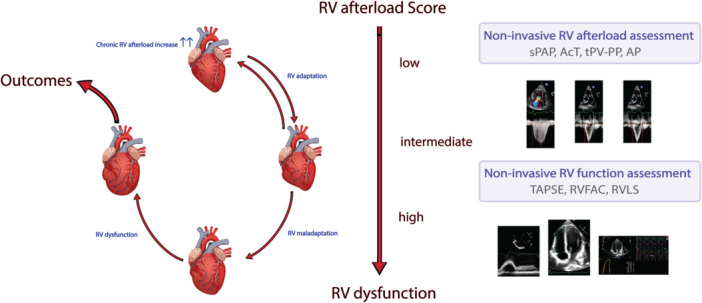 Figure 1
- —The author received no specific funding for this work.
Peer Reviews
No public reviews on file for this paper yet. If you reviewed it on a platform where reviews are public (OpenReview, ICLR, NeurIPS, ICML), you can paste yours below so the community can read it here.
Videos
No videos yet. Explain this paper in a talk, walkthrough, or lecture? Add one.
Taxonomy
TopicsCardiovascular Function and Risk Factors · Pulmonary Hypertension Research and Treatments · Cardiac Valve Diseases and Treatments
In the study “Echocardiographic grading of right ventricular afterload in left heart disease: relation to right ventricular function, pulsatile and resistant load, and outcome,” Bech‐Hanssen et al. addressed an interesting topic about severity gradation using right ventricular (RV) afterload echocardiographic assessment. In a population of group 2 pulmonary hypertension (PH), resistant and pulsatile RV afterload metrics were incorporated in an original score based on echocardiographic doppler analysis.
In daily clinical practice, pulmonary vascular resistance, is commonly measured using invasive technique during right heart catheterization in severe patients. However, as the authors mentioned, the RV afterload has resistive and pulsative component [1]. The overlooked pulsative component assesses the ability of the pulmonary artery to stretch and expand in response to pressure applied on the pulmonary artery wall. As we know, the pulsative and resistive component of RV afterload have an inverse hyperbolic relationship [2]. Thus, different RV afterload phenotypes can be defined. This novel RV afterload score is based on four echo Doppler parameters with three levels of severity: low, intermediate, and high RV afterload (Figure 1).
The authors demonstrated well that an intermediate to a high RV afterload score was associated to RV dysfunction (using FAC and RVLS) and low RVD score but also incremented the predictive risk of outcomes beyond NtproBNP, LVEF and NYHA.
This score, focus on RV afterload, is a novelty in the field. In the literature, echocardiographic scores for PH severity have been developed for RV dysfunction [3, 4]. Using RV afterload noninvasive assessment is crucial and may help us to detect early stage of disease before the development of RV dysfunction. The next challenge for future studies will be to explore this score on earlier stage patients and be able to predict RV dysfunction and outcomes for this earlier stage population who remains clinically challenging for diagnosis.
Author Contributions
The author is solely responsible for the conceptualization, writing, and design of the figure included in this editorial.
Ethics Statement
The author has nothing to report.
Conflicts of Interest
The author declares no conflicts of interest.
The reference list from the paper itself. Each links out to its DOI / PubMed record.
- 1S. R. Reuben , “Compliance of the Human Pulmonary Arterial System in Disease,” Circulation Research 29, no. 1 (1971): 40–50.5561407 10.1161/01.res.29.1.40 · doi ↗ · pubmed ↗
- 2A. Vonk Noordegraaf , B. E. Westerhof , and N. Westerhof , “The Relationship Between the Right Ventricle and Its Load in Pulmonary Hypertension,” Journal of the American College of Cardiology 69, no. 2 (2017): 236–243.28081831 10.1016/j.jacc.2016.10.047 · doi ↗ · pubmed ↗
- 3O. Bech‐Hanssen , M. Fredholm , M. Astengo , et al., “A Novel Echocardiographic Right Ventricular Dysfunction Score Can Identify Hemodynamic Severity Profiles in Left Ventricular Dysfunction,” Cardiovascular Ultrasound 20, no. 1 (2022): 20.35915497 10.1186/s 12947-022-00290-5PMC 9344733 · doi ↗ · pubmed ↗
- 4K. El‐Kersh , C. Zhao , G. Elliott , et al., “Derivation of a Risk Score (REVEAL‐ECHO) Based on Echocardiographic Parameters of Patients With Pulmonary Arterial Hypertension,” Chest 163, no. 5 (2023): 1232–1244.36634897 10.1016/j.chest.2022.12.045PMC 10268808 · doi ↗ · pubmed ↗