The Use of WALANT Technique in the Osteosynthesis of Ankle Fractures: A Clinical Case Video
Grigorios Kastanis, Constantinos Chaniotakis, Mikela‐Rafaella Siligardou, Ioannis Stavrakakis, Petros Kapsetakis

TL;DR
This paper presents a first-of-its-kind video demonstrating the WALANT technique for ankle fracture surgery, which allows surgery without a tourniquet and under active movement.
Contribution
The paper introduces the first clinical case video showcasing the use of WALANT in ankle fracture osteosynthesis.
Findings
The WALANT technique allows surgery without a tourniquet.
The ankle can be evaluated under physiological forces during the procedure.
This is the first reported case video of its kind in the literature.
Abstract
The Wide‐Awake Local Anesthesia No Tourniquet (WALANT) technique enables the creation of a suitable surgical field without the need for a tourniquet, while also allowing for the evaluation of the ankle under physiological forces (active ankle movement) after fixation. Data on the use of the WALANT technique in open reduction and internal fixation of ankle fractures are limited. This case video is the first to be presented in the literature.
Genes, proteins, chemicals, diseases, species, mutations and cell lines named across the full text — each resolved to its canonical identifier and authoritative record.
Click any figure to enlarge with its caption.
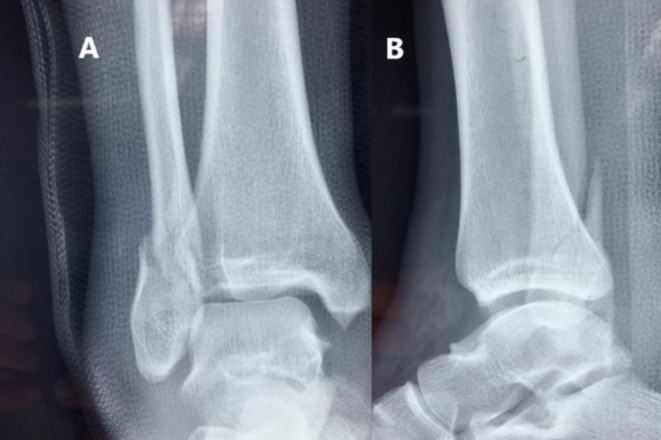 FIGURE 1
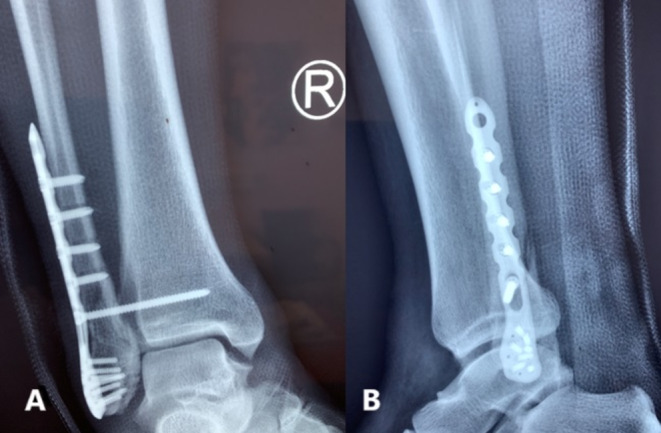 FIGURE 2
Peer Reviews
No public reviews on file for this paper yet. If you reviewed it on a platform where reviews are public (OpenReview, ICLR, NeurIPS, ICML), you can paste yours below so the community can read it here.
Videos
No videos yet. Explain this paper in a talk, walkthrough, or lecture? Add one.
Taxonomy
TopicsOrthopedic Surgery and Rehabilitation · Bone fractures and treatments · Surgical Sutures and Adhesives
Case Video
1
A 60‐year‐old male underwent open reduction and internal fixation of the lateral malleolus fracture with a plate and screws, along with the placement of an ankle syndesmosis screw, under local anesthesia using the Wide‐Awake Local Anesthesia No Tourniquet technique [1, 2] and without sedation (Figures 1 and 2). The components of the mixture (analgesic and hemostatic) used were 1% lidocaine with 1:100,000 adrenaline and 1 mL of 8.4% sodium bicarbonate. A total of 30 mL of this mixture was injected into the surgical field in successive stages of the procedure. The video focuses on the active intraoperative movements of the ankle after the completion of the osteosynthesis (Video 1).
(A) Anteroposterior and (B) lateral preoperative x‐ray views of the right ankle, showing a lateral malleolar fracture and distal tibiofibular syndesmosis injury.
(A) Anteroposterior and (B) lateral postoperative x‐ray views of the ankle. open reduction and internal fixation of the lateral malleolar fracture with a plate and screws and placement of an ankle syndesmosis screw.
The video shows intraoperative active movements of the ankle after the completion of the osteosynthesis. The patient was awake and followed the commands given to him intraoperatively. We were able to assess both active and passive movements of the ankle (ankle dorsiflexion, plantarflexion, inversion, eversion), as well as the stability of the osteosynthesis after its completion. Video content can be viewed at https://onlinelibrary.wiley.com/doi/10.1002/ccr3.70267
Author Contributions
Grigorios Kastanis: conceptualization, data curation, formal analysis, investigation, methodology, supervision, validation, writing – original draft, writing – review and editing. Constantinos Chaniotakis: conceptualization, data curation, formal analysis, investigation, methodology, supervision, validation, writing – original draft, writing – review and editing. Mikela‐Rafaella Siligardou: data curation, investigation, methodology, validation, writing – review and editing. Ioannis Stavrakakis: data curation, investigation, methodology, validation, writing – review and editing. Petros Kapsetakis: data curation, investigation, methodology, validation, writing – review and editing.
Ethics Statement
The authors have nothing to report.
Consent
Written informed consent was obtained from the patient to publish this report in accordance with the journal's patient consent policy.
Conflicts of Interest
The authors declare no conflicts of interest.
The reference list from the paper itself. Each links out to its DOI / PubMed record.
- 1H. Zimmermann , C. Quemeneur , T. Goetsch , F. Le Saché , and S. Bloc , “Wide‐Awake Local Anesthesia no Tourniquet in Hand Surgery: A Systematic Review and Meta‐Analysis,” Hand Surgery and Rehabilitation 43, no. 5 (2024): 101778, 10.1016/j.hansur.2024.101778.39322182 · doi ↗ · pubmed ↗
- 2Y. S. Li , C. Y. Chen , K. C. Lin , Y. W. Tarng , C. J. Hsu , and W. N. Chang , “Open Reduction and Internal Fixation of Ankle Fracture Using Wide‐Awake Local Anaesthesia no Tourniquet Technique,” Injury 50, no. 4 (2019): 990–994, 10.1016/j.injury.2019.03.011.30904247 · doi ↗ · pubmed ↗